Used Machinery Commissioning Checklist: 2026 Guide

Industry data indicates that 60% to 70% of early-stage failures in relocated machinery aren’t caused by component age, but by improper installation. Relying on a robust commissioning checklist for used machinery is the only way to mitigate risks like poor mechanical alignment or unverified electrical utility quality. Bringing a piece of legacy equipment back into a production line is a high-stakes investment that requires more than just a standard power-on test.

You’re likely familiar with the frustration of missing OEM manuals or the lingering worry about hidden wear from a previous owner’s repairs. It’s a valid concern, especially when you’re responsible for ensuring a risk-free startup and full compliance with AS/NZS safety standards. This guide provides a forensic framework for the 2026 regulatory environment. By following these steps, you’ll ensure your assets meet the latest NFPA 70E-2027 safety requirements while protecting your operational longevity.

We’ll walk through the essential phases of pre-power-on diagnostics, utility integration, and the documented proof of performance needed for modern insurance and regulatory compliance. This methodical process turns a potentially volatile transition into a stable, predictable integration for your facility.

Key Takeaways

  • Learn how to conduct a forensic structural audit to identify non-OEM modifications that could compromise the safety of used stainless steel tanks or process equipment.
  • Discover the methodical approach to utility integration, including electrical tagging and pressure testing for legacy hydraulic and pneumatic systems.
  • Master the two-step dynamic run process to verify mechanical performance and thermal stability before introducing raw materials into the production line.
  • Implement a robust commissioning checklist for used machinery to generate the documented proof of performance essential for insurance and regulatory compliance.
  • Ensure long-term operational success by compiling a Final Commissioning Report that captures the specific technical nuances and maintenance requirements of legacy assets.

Defining Commissioning for Used Industrial Machinery

Commissioning is the systematic process of ensuring all systems and components of an industrial asset are designed, installed, tested, and operated according to the operational requirements of the owner. In the context of second-hand procurement, this process becomes a forensic evaluation. You aren’t just verifying factory specs; you’re auditing a machine’s entire service history and any undocumented repairs. This differs significantly from new OEM installs where you start with a clean slate and a manufacturer guarantee.

It’s helpful to view the industrial project commissioning process as a series of specific gates. Pre-commissioning involves static checks like motor insulation testing and structural inspections. The Pre-Startup Safety Review (PSSR) serves as the final safety gate before energy is introduced. Finally, full operational startup validates the machine under load. For used equipment, each gate requires a “guilty until proven innocent” mindset to ensure safety and performance validation.

The Three Pillars of Used Gear Validation

Mechanical integrity is the first priority. We look for metal fatigue, bearing wear, or structural stress in used stainless steel tanks and pressure vessels that might not be visible to the untrained eye. Operational performance follows; we verify if a ribbon blender or centrifuge can still achieve its rated throughput. Finally, compliance ensures the machine aligns with 2026 Australian safety standards, such as AS/NZS 4024.1. These requirements often change throughout a machine’s lifespan, making it essential to audit legacy hardware against current regulations rather than original build specs.

Why a Standardized Checklist is Non-Negotiable

Using a comprehensive commissioning checklist for used machinery eliminates the guesswork that often leads to catastrophic failure during the first run. It creates a standardized method for your team to follow, whether they’re installing a hammer mill or a complex conveyor system. Consistency is key when dealing with varied equipment types from different eras.

Beyond immediate safety, this commissioning checklist for used machinery provides documented proof of performance. This paper trail is vital for insurance coverage and WorkSafe Australia audits. It proves you’ve exercised due diligence in integrating legacy hardware into a modern facility. A clear record of static and dynamic testing protects your business from liability while ensuring your investment delivers the expected operational longevity.

Forensic Pre-Commissioning: Inspecting Legacy Integrity

A critical first step in any commissioning checklist for used machinery is the verification of nameplate data against the physical configuration. Don’t assume the stamped specifications are still accurate. Over decades of service, industrial assets often undergo modifications that aren’t recorded in the original documentation. We frequently find used stainless steel tanks with altered port configurations or ribbon blenders with upgraded drive motors that no longer match the factory plate. This audit ensures you’re designing your utility inputs for the machine’s actual requirements rather than its 1995 specifications.

Identifying non-OEM modifications is essential for both safety and hygiene. Previous owners might have added structural supports or internal baffles that create “dead zones” for bacteria or introduce stress points in the vessel wall. These changes must be audited against HSE refurbished and modified machinery guidelines to ensure they don’t compromise structural integrity or introduce new hazards. If a modification appears substandard, it must be remediated before the asset enters your production line.

Mechanical and Material Assessment

Specific attention must be paid to material fatigue. Dye penetrant testing on critical welds in used stainless steel tanks reveals hairline fractures or stress corrosion cracking that a visual inspection will miss. For rotary equipment like hammer mills or centrifuges, we prioritize a full inspection of the drive-train and bearings. Listen for irregular harmonics and check for excessive play in the shafts. For those in the early stages of procurement, referencing a Guide to Sourcing Used Stainless Steel Tanks provides a baseline for what constitutes acceptable material quality before the commissioning checklist for used machinery is even applied.

The ‘Missing Manual’ Strategy

Documentation for legacy brands like Alfa Laval or Westfalia can be difficult to source. When manuals are absent, you must reverse-engineer operational parameters. This involves calculating flow rates, pressure limits, and thermal capacities based on physical measurements and material grades. Documenting this “as-is” state versus your facility’s “required” state is a mandatory step for compliance. It allows your engineering team to establish safe operating envelopes without relying on guesswork.

This forensic audit transforms a second-hand purchase into a verified asset. By identifying seal degradation and structural weaknesses early, you avoid the high costs of mid-production failures. Partnering with a supplier that understands these technical nuances, such as the team at F.A. Maker, ensures you start with a foundation of reliable hardware that is ready for rigorous testing and long-term service.

Utility Integration and Static Testing

Static testing is the bridge between structural inspection and dynamic operation. It’s the phase where we verify that the physical connections between the facility and the machine are secure before any dynamic motion occurs. A robust commissioning checklist for used machinery must prioritize these static verifications to prevent energized failures during the first power-on. This involves more than just connecting cables; it requires a systematic validation of electrical, pneumatic, and hydraulic interfaces to ensure they can handle the operational loads of a modern production environment.

Electrical and Control System Alignment

The most common failure point in legacy equipment is the electrical system. We start by inspecting motor insulation resistance on older used industrial pumps and mixers using a Megger tester to identify winding degradation. Verifying compatibility between old equipment and modern PLC systems is also vital, as legacy hardware often uses analog signals that don’t communicate natively with newer plant networks. Upgrading legacy e-stops and guarding to meet current AS/NZS 4024.1 standards is mandatory for 2026 compliance. For technical details on selecting the right auxiliary components for these upgrades, refer to our guide on Sourcing Used Industrial Pumps and Valves.

Fluid and Process Utility Checks

For process equipment like used mixers or blenders, pneumatic and hydraulic system pressure testing is essential to find leaks before they cause a shutdown. We conduct hydrostatic testing of used jacketed vessels to ensure thermal integrity and leak-free performance under pressure. This stage also confirms that the plant’s utility supply, such as steam pressure or compressed air flow rates, matches the machine’s requirements without causing utility starvation elsewhere in the facility. Checking for cross-contamination risks in used food-grade equipment is the final step, ensuring that legacy seals are compatible with modern cleaning chemicals.

Aligning your process with OSHA Pre-Startup Safety Review requirements ensures that all hazardous energy sources are identified and isolated before the introduction of materials. We also focus on the mechanical seals of used pumps and valves, as these components often degrade during storage. Replacing them during the static phase is far more cost-effective than dealing with a high-pressure leak during production. Calibration of legacy sensors, gauges, and flow meters completes this phase, providing a baseline of accuracy that is required for the commissioning checklist for used machinery to move into dynamic testing.

Used Machinery Commissioning Checklist: 2026 Guide

The Pre-Startup Safety Review (PSSR) and Dynamic Run

After static checks are complete, the transition to energized testing begins with the Pre-Startup Safety Review (PSSR). This is a high-stakes phase where the theoretical integrity of the machine is tested against physical reality. A comprehensive commissioning checklist for used machinery ensures that no detail, from a loose mounting bolt to a faulty interlock, is overlooked before the motor starts. This review serves as the final gateway, ensuring the asset is safe for both the operators and the facility infrastructure.

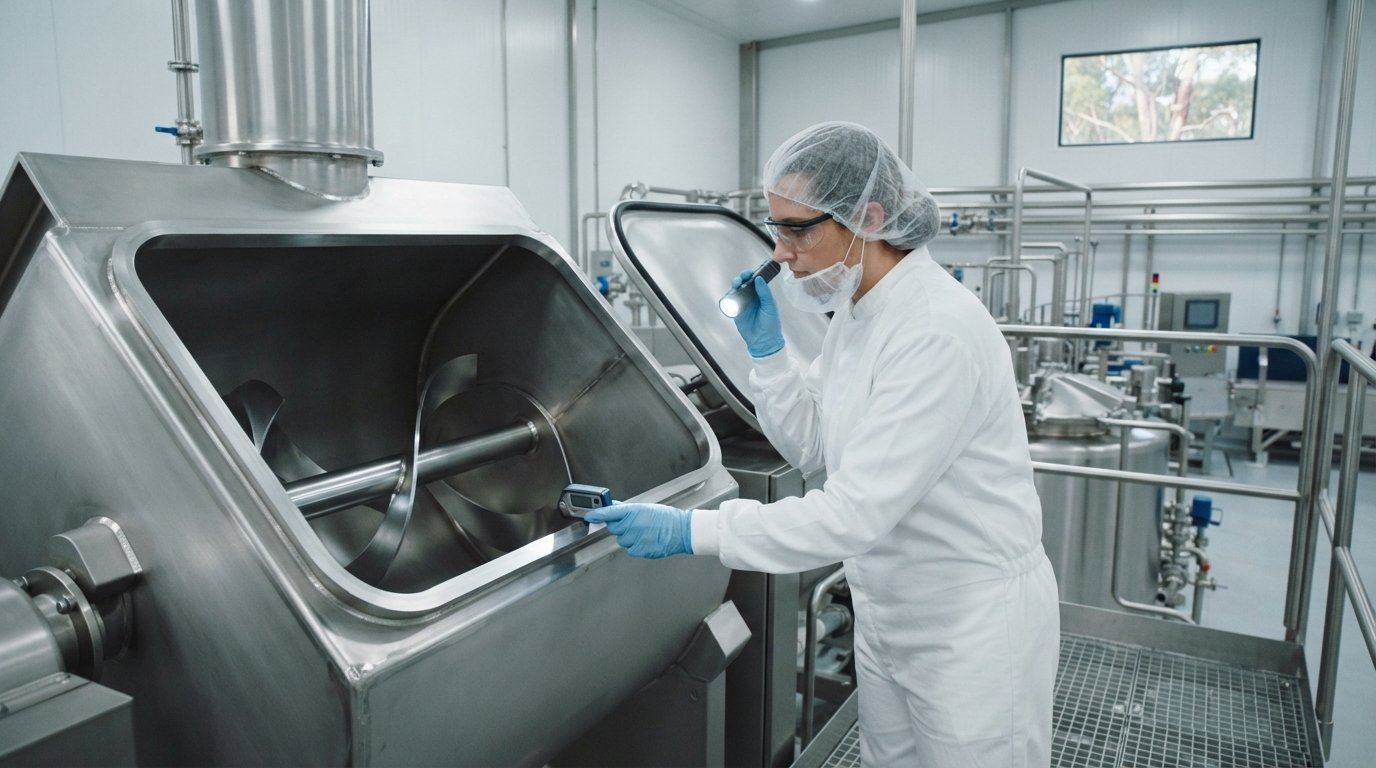
The process starts with a final walk-through to ensure all “punch list” items identified during pre-commissioning are closed. Once verified, a dry run is conducted. Operating the machine without product allows you to monitor for excessive vibration or heat build-up in bearings and drive assemblies. This is followed by the wet run or load test, where process materials are introduced under controlled conditions. Finally, performance validation measures the actual output against your required KPIs to confirm the asset meets production goals.

Executing the Safety Walk-Through

The safety walk-through is a methodical verification of the machine’s physical state. You must confirm all guards are secured and every safety interlock is functional, aligning with the 2026 standards discussed in previous sections. Lubrication levels in high-speed components, such as centrifuges or separators, require precise checking; dry bearings are a primary cause of catastrophic failure during initial startup. It’s also vital to confirm that the industrial machinery relocation process didn’t cause subtle alignment issues or frame twisting that could lead to premature wear.

Dynamic Load Testing and Troubleshooting

Once the machine is running under load, troubleshooting becomes a matter of monitoring technical signatures. We use thermographic imaging to look for abnormal thermal signatures in second-hand ribbon blenders, which often indicate motor strain or friction in the shaft seals. For those integrating used hammer mills, assessing particle size consistency is the definitive test of internal screen integrity and rotor balance. Documenting these vibration profiles creates a baseline for future predictive maintenance, turning the commissioning checklist for used machinery into a long-term reliability tool.

If you’re ready to add verified, high-performance assets to your facility, view our current inventory of tested industrial equipment to find machinery that meets these rigorous standards.

Handover and Long-Term Operational Documentation

The completion of physical testing leads to the most critical administrative phase: the formal handover. This step ensures that the technical insights gained while executing the commissioning checklist for used machinery aren’t lost when the engineering team leaves the factory floor. For used assets, documentation must be more exhaustive than for new equipment because it serves as the new “baseline” for the machine’s life in your facility. Proper handover bridges the gap between a successful startup and long-term reliability.

The Final Commissioning Report (FCR)

The FCR is the consolidated record of the machine’s readiness. It should include all static and dynamic test results, calibration certificates for legacy sensors, and red-lined engineering drawings that reflect any modifications made during installation. This report is a living document. We recommend creating a “Legacy Logbook” to track performance trends, such as thermal signatures or vibration profiles, over time. This data is invaluable for verifying the long-term ROI of buying used vs new industrial equipment, as it proves that a well-commissioned second-hand asset can match the reliability of a new alternative at a fraction of the capital cost.

Training and Knowledge Transfer

Training personnel on the specific quirks of legacy hardware is a safety requirement. Unlike modern equipment with standardized touchscreens, older used gear often features manual control interfaces or unique startup sequences that operators must master. For high-risk machinery like shredders, hammer mills, or large centrifuges, safety protocols must be specific to that unit’s history. Establishing clear “Stop Work” triggers based on the vibrations or temperatures observed during commissioning ensures that operators can identify trouble before it leads to failure.

Establishing a maintenance schedule based on actual condition rather than arbitrary age is the final step in the process. This approach respects the machine’s service history while accounting for its new operational environment. F.A. Maker supports this transition by providing high-quality used gear and the technical relocation expertise needed to get it on-site correctly. By integrating the results of your commissioning checklist for used machinery into your facility’s maintenance management system, you ensure the asset’s operational longevity for years to come.

Establishing Operational Stability for Legacy Assets

Successfully integrating second-hand equipment into a modern production line requires more than a standard startup. It demands a forensic approach that validates structural integrity and aligns legacy hardware with current Australian safety standards. Implementing a systematic commissioning checklist for used machinery allows your team to identify hidden wear and undocumented modifications before they impact your facility’s output. This disciplined process turns potential risks into documented proof of performance, ensuring your investment is both safe and compliant.

F.A. Maker is Australia’s leading supplier of used process equipment, offering a century of expertise in machinery relocation and technical setup. We maintain an extensive inventory of high-quality stainless steel tanks, centrifuges, and mills designed for long-term utility. Our team provides the expert support necessary to move from procurement to full-scale production with quiet confidence, helping you navigate the complexities of legacy hardware integration.

Browse our inventory of high-quality used industrial machinery at F.A. Maker and secure a reliable foundation for your next facility transition. We’re ready to help you achieve a risk-free startup and lasting operational success.

Frequently Asked Questions

What is the difference between commissioning and pre-commissioning for used machinery?

Pre-commissioning involves static activities such as structural inspections, internal cleaning, and electrical tagging while the machine is de-energized. Commissioning is the subsequent phase where energy is introduced to verify dynamic performance and safety interlocks under load. For those using a commissioning checklist for used machinery, pre-commissioning acts as the final verification that the asset is safe to power on, while commissioning confirms it can meet production KPIs.

Do I need the original OEM manual to commission a second-hand machine?

While an original OEM manual is highly beneficial, it isn’t strictly mandatory for commissioning second-hand assets. In cases where documentation is missing, engineers must reverse-engineer operational parameters based on physical measurements and material specifications. This forensic approach involves calculating safe operating envelopes for pressure, temperature, and speed. F.A. Maker often assists clients in navigating these missing-data scenarios by leveraging decades of experience with legacy brands like Alfa Laval.

How long does the commissioning process typically take for used industrial equipment?

The duration of the commissioning process varies based on the complexity of the equipment and the quality of the installation. A standalone ribbon blender might be commissioned in two to three days, whereas a complex centrifuge system integrated into a multi-stage production line could take several weeks. Factors such as the results of initial static tests and the availability of utilities at the new site significantly influence the final timeline.

Are used machines required to meet 2026 Australian safety standards?

Yes, all used machinery must meet current Australian safety standards, specifically AS/NZS 4024.1, regardless of its original manufacture date. This requirement often necessitates upgrading legacy e-stops, light curtains, and physical guarding to ensure the machine is safe for modern workplace environments. Failing to align second-hand hardware with these 2026 regulations can lead to significant legal liability and potential WorkSafe intervention during audits or incidents.

What happens if a used machine fails its commissioning performance test?

If a used machine fails to meet its performance KPIs during commissioning, the engineering team must conduct a root-cause analysis to identify the bottleneck. This often involves checking for mechanical issues like worn bearings or electrical issues such as faulty sensors. Once identified, the asset may require refurbishment, component replacement, or in some cases, a derating of its operational capacity to ensure it runs safely within its actual physical limits.

Who is legally responsible for the safety of a commissioned used machine?

The legal responsibility for the safety of a commissioned used machine rests with the owner or operator of the facility where it’s installed. Under Australian Work Health and Safety laws, the duty holder must ensure that the equipment is fit for purpose and safe for use. This is why following a rigorous commissioning checklist for used machinery is vital; it provides the documented evidence of due diligence required to protect the business from liability.

Can I use digital commissioning tools for older, non-digital equipment?

You can certainly use digital commissioning tools, such as cloud-based PSSR platforms and data loggers, on older non-digital equipment. These tools are used to record manual measurements, vibration profiles, and thermographic signatures during testing. Digitizing the results from a legacy asset allows you to establish a modern maintenance baseline and ensures that the Final Commissioning Report is easily accessible for future audits or insurance reviews.

What are the most common points of failure when commissioning used stainless steel tanks?

The most common failure points when commissioning used stainless steel tanks include hairline fractures in welds and degradation of mechanical seals. Stress corrosion cracking is also a frequent issue in legacy vessels that have handled corrosive materials. Additionally, jacketed tanks often show signs of thermal integrity failure due to internal scaling or previous over-pressurization. A thorough hydrostatic test during the static phase is essential to identify these leaks before production begins.
The Comprehensive Checklist: Key Considerations for Plant Relocation in 2026

A single hour of unplanned downtime in FMCG processing can cost upwards of US$36,000, while complex assembly lines often face losses exceeding US$2 million per hour. For industrial managers, these figures underscore why the technical considerations for plant relocation require more than just a logistical plan. Moving sensitive assets like centrifuges, mixers, and stainless steel tanks involves significant risks to mechanical integrity and operational continuity. One overlooked detail in the rigging or transport phase can lead to months of remediation and lost revenue.

We understand that a successful transition relies on engineering precision rather than simple transport. You need a move that maintains safety standards and ensures your equipment operates at 100% capacity the moment it’s reinstalled. This article provides a technical, step-by-step framework designed to navigate the complexities of industrial moves in 2026. We’ll examine the impact of the August 2026 Heavy Vehicle National Law (HVNL) reforms, the new HVSAPS permit system, and the critical AS/NZS electrical compliance standards required for a seamless site handover.

Key Takeaways

  • Develop a comprehensive asset register and conduct mechanical integrity audits to identify equipment requiring specialized handling or replacement before the move begins.
  • Execute systematic decommissioning and deep-cleaning protocols for stainless steel vessels and processing machinery to prevent contamination or internal transit damage.
  • Integrate the latest 2026 NHVR standards and load-bearing assessments into your technical considerations for plant relocation to ensure legal compliance and physical safety.
  • Prepare the destination facility by verifying slab load ratings and pre-installing utility drops to minimize downtime during the critical re-installation phase.
  • Optimize your capital footprint by liquidating redundant assets or evaluating the cost-benefit of sourcing high-quality used machinery versus moving aging units.

Phase 1: Operational Audit and Project Scope Definition

Effective plant relocation begins with a rigorous audit of the current facility and a clear definition of the project scope. This phase isn’t merely a logistical exercise; it’s an engineering assessment that determines the success of the entire transition. One of the primary considerations for plant relocation is the identification of the ‘Critical Path’. This involves determining which production lines are essential for revenue and must be online first at the new site. Without this prioritization, a move can stall, leading to the high-cost downtime often associated with poorly planned transitions.

Establishing a realistic timeline is equally vital. This schedule must account for the granular steps of decommissioning, transport, and re-commissioning, rather than just the move dates. A methodical approach ensures that no technical detail, such as the curing time for new machinery foundations or the availability of specialized rigging equipment, is overlooked. It’s better to identify these requirements during the planning phase than to face delays during the actual move.

Equipment Inventory and Documentation

A successful move relies on a comprehensive asset register. You should catalog every stainless steel tank, mixer, and pump, accompanied by current condition reports and digital photographs. This documentation acts as a baseline for insurance and operational verification. It’s necessary to secure original manufacturer (OEM) specifications for tolerances and leveling requirements. These details are critical for heavy items like hammer mills or shredders that require precise alignment to function at 100% capacity post-move.

During this stage, a plant layout engineering study helps visualize how existing equipment will fit into the new facility’s footprint. This study identifies specialized rigging points and potential spatial constraints before the machinery arrives. Knowing the exact dimensions and weights of each unit allows for accurate planning of crane capacities and transport permits. Don’t rely on memory or outdated floor plans; verify every measurement on-site.

Risk Assessment and Contingency Planning

A mechanical integrity audit identifies equipment that may not survive the physical stresses of a move. For high-value assets, performing a Failure Mode and Effects Analysis (FMEA) is a standard industry practice. This analysis highlights potential failure points during transit, such as bearing damage in centrifuges or stress fractures in large vessels. If a machine is already showing signs of fatigue, the relocation process might be the right time to consider a replacement rather than risking a total failure during re-installation.

Developing a ‘Plan B’ for critical equipment is a pragmatic necessity. If a primary mixer fails during the transition, you must have a pre-vetted source for a replacement or a temporary bypass solution. Consulting with industrial machinery relocation specialists early in the process helps identify logistical bottlenecks that might not be apparent to internal teams. Their experience with heavy machinery transport ensures that risk mitigation strategies are grounded in practical reality and Australian industrial standards.

Phase 2: Technical Decommissioning and Equipment Protection

Technical decommissioning is the systematic shutdown and preparation of machinery to prevent internal damage during transit. It’s a critical phase where the mechanical integrity of the plant is either preserved or compromised. Unlike simple logistics, these technical considerations for plant relocation focus on how components react to being idle and moved. A machine that was running perfectly on Friday can arrive at a new site with seized bearings or misaligned shafts if these steps are ignored.

Deep-cleaning all processing equipment is the first step. For stainless steel fermentation tanks and food-grade vessels, removing residual product is mandatory. If left inside, organic materials can harden or cause localized corrosion on high-grade surfaces during the weeks a machine might be in transit or storage. This cleaning also allows for a better visual inspection of the equipment’s structural state before it’s crated.

Protecting Sensitive Processing Machinery

High-speed equipment requires specific intervention. For centrifuges, such as those from Alfa Laval or Westfalia, you must use specialized bracing to lock the rotors. Without this, the delicate bearings can suffer from “false brinelling” caused by constant road vibrations. Similarly, the shafts in ribbon blenders should be stabilized to prevent the internal paddles from shifting and damaging the trough walls.

Draining all fluids, lubricants, and residual product prevents leaks and chemical reactions during transport. Before packing, maintenance teams should verify the condition of seals and bearings. This establishes a baseline for post-move performance and ensures you aren’t transporting a machine that already needs an overhaul. If you’re unsure about the condition of your current assets, our team provides machinery relocation services that prioritize these technical safeguards.

Electrical and Pneumatic Isolation

Safety and re-integration speed depend on how you handle disconnections. All phases must follow the Safe Work Australia Code of Practice for plant, specifically regarding Lock-Out Tag-Out (LOTO) procedures. This ensures the safety of the decommissioning crew and prevents accidental energization during the dismantling process.

Mapping PLC and control system wiring is essential for rapid re-commissioning. Don’t rely on memory; use clear labeling and high-resolution photography for every terminal block and pneumatic manifold. Sensitive electronics and control panels must be protected from both vibration and moisture. Using desiccants and vapor-corrosion inhibitors inside electrical cabinets helps prevent atmospheric damage while the equipment is off-site. These technical considerations for plant relocation ensure that your systems arrive ready for immediate installation.

Phase 3: Logistics, Compliance, and Risk Management in Australia

Transitioning from decommissioning to the physical transport of assets requires a shift in focus toward regulatory compliance and physical risk management. In Australia, the National Heavy Vehicle Regulator (NHVR) oversees the movement of industrial machinery. Since the implementation of the Heavy Vehicle National Law (HVNL) reforms on 1 August 2026, the legal landscape has become significantly more stringent. Consignors now share a non-delegable duty under Chain of Responsibility (CoR) laws. These considerations for plant relocation mean you must audit your transport provider’s Safety Management System (SMS) to ensure they meet the mandatory five-pillar framework required by the new legislation.

Large stainless steel silos or industrial mixers often exceed standard dimensions and require specialized permits. If a load is wider than 2.5 metres or higher than 4.3 metres, it triggers Class 1 Oversize/Overmass (OSOM) requirements. The Heavy Vehicle Structural Assessment Permit System (HVSAPS), which launched in early 2026, has streamlined bridge and culvert access reviews, yet you must still verify route capacities for your specific equipment. Coordination with local councils for traffic management is also essential when moving wide loads through urban corridors to prevent costly delays or safety breaches.

Insurance remains a critical safeguard during this phase. You should review your existing policies to ensure that “goods in transit” are covered at full replacement value rather than just a depreciated book value. Standard carrier insurance is often insufficient for high-value processing equipment, making a dedicated transit policy a pragmatic necessity for protecting your capital investment.

Australian Standards and Safety Compliance

Rigging and lifting operations must adhere strictly to AS 2550 for the safe use of cranes and hoisting equipment. Every contractor on-site must possess a valid white card and complete site-specific safety inductions. Before the first lift occurs, it’s vital to confirm that all control of hazardous energy procedures were finalized during the Phase 2 teardown. This protects the rigging crew from residual energy risks. Always audit the safety records and accreditation history of your industrial machinery relocation services provider to ensure they align with current Australian standards.

Heavy Machinery Transport Considerations

Selecting the correct trailer type is a technical decision based on the equipment’s center of gravity. Low-loaders are typically preferred for tall stainless steel tanks to maintain stability and clear overhead obstacles. For high-precision machinery, such as centrifuges or delicate mixers, implementing real-time vibration monitoring during road transport can identify transit-induced stresses before they lead to mechanical failure. These technical steps are core components of moving industrial processing equipment safely across long distances.

The Comprehensive Checklist: Key Considerations for Plant Relocation in 2026

Phase 4: Facility Readiness and Re-installation Protocols

The success of the re-installation phase depends on how well the destination site matches the technical requirements of your machinery. One of the most critical considerations for plant relocation is validating the floor loading capacity of the new facility. Heavy mills, large stainless steel tanks, and centrifuges exert significant concentrated weights. You must ensure the slab can handle both the static load and the dynamic forces generated by high-speed rotating equipment. Failure to verify this can lead to slab cracking or chronic machine misalignment shortly after production resumes.

Pre-installing utility drops for power, compressed air, and water based on CAD layouts is a pragmatic way to minimize positioning time. Many engineering teams now use LiDAR 3D laser scanning to create digital twins of the new site, identifying potential clashes with overhead piping or structural columns before the machinery arrives. This precision ensures that when the equipment is offloaded, it moves directly to its final position without the need for costly on-site modifications or rework of the utility infrastructure.

Site Infrastructure and Utility Mapping

Confirm that the electrical infrastructure is ready for the high-draw requirements of heavy machinery like industrial shredders or large hammer mills. All power drops and switchboard verifications must comply with AS/NZS 3000:2018 standards to ensure circuit load balancing and safety. It’s also vital to maintain adequate clearance for maintenance access around blenders and mixers. If your industry involves liquid processing, verify that the site’s drainage and trade waste systems meet local environmental regulations to avoid compliance failures on day one. For expert assistance with site preparation and heavy equipment positioning, contact us for specialized machinery relocation services.

Commissioning and Quality Validation

Once the machinery is anchored and leveled, execute a staged restart protocol. Begin with auxiliary systems, such as pumps and conveyors, before energizing primary processing units. This methodical approach allows you to identify minor issues, such as motor rotation direction or sensor errors, before they escalate. Perform a full calibration of all sensors and control loops to establish a fresh operational baseline for the new facility.

Documenting every step of the commissioning process is necessary to satisfy ISO or HACCP quality requirements and provides a clear record for insurance purposes. Perform dry-run testing using water or inert materials before introducing expensive raw ingredients into the production line. This final check ensures that all interlocks, emergency stops, and seals are functioning correctly under load. By following these rigorous re-installation protocols, you ensure your plant returns to 100% capacity with minimal risk to operational integrity.

Phase 5: Strategic Asset Management: Optimizing Your Equipment Inventory

A plant move provides a rare opportunity to rationalize your operational footprint. Rather than viewing the transition as a simple transfer of existing hardware, treat it as a strategic audit of your capital assets. One of the most significant considerations for plant relocation is determining whether an older asset is worth the expense of rigging, transport, and re-commissioning. In many cases, the cost of moving a legacy machine exceeds its remaining operational value, especially when factoring in the specialized logistics required for heavy industrial units.

During this transition, you should evaluate the potential for upgrading to more efficient used models. For example, replacing an aging mixer with high-capacity ribbon blenders sourced near your new facility can reduce transport costs while simultaneously increasing your day-one production ceiling. Partnering with a specialist who understands both the technical requirements of the machinery and the dynamics of the used marketplace allows you to streamline this asset optimization process.

The Buy vs. Move Dilemma

To make an informed decision, you must calculate the “Total Cost of Relocation” for each individual asset. This includes the labor for decommissioning, the cost of heavy haulage permits, crane mobilization, and the potential revenue lost during the downtime required for re-installation. Compare these figures against the cost of sourcing refurbished equipment already located within your destination region. For a deeper look at the financial implications, read our comparison on buying used vs new industrial equipment.

For small businesses in the 2026-27 financial year, the permanent $20,000 ATO instant asset write-off provides a significant incentive to replace older components rather than moving them. If an asset is nearing the end of its service life, purchasing used stainless steel tanks for sale at the destination may be more tax-efficient than transporting your current inventory across state lines.

Liquidation of Redundant Assets

Relocation is the most logical time to identify and liquidate redundant assets. Surplus centrifuges, pumps, or valves that no longer fit the optimized plant layout engineering study should be turned into immediate capital. This approach prevents you from paying to transport and store equipment that will likely sit idle in the new facility. These considerations for plant relocation help fund the move itself while reducing the complexity of the logistics phase.

We act as a reliable partner in this process, offering technical expertise to ensure you receive a fair market valuation for your surplus machinery. Instead of dealing with multiple scrap dealers or unverified buyers, you can leverage our decades of experience in the heavy machinery sector. Contact F.A. Maker for a professional valuation of your surplus industrial machinery to ensure your move is as lean and cost-effective as possible.

Securing Your Industrial Future Through Precise Relocation

A successful plant move is defined by the technical integrity of your machinery once it returns to service. The primary considerations for plant relocation in 2026 center on rigorous decommissioning, strict compliance with the updated Heavy Vehicle National Law, and a strategic audit of your existing assets. By prioritizing mechanical safety over simple transport logistics, you avoid the catastrophic costs of unplanned downtime and ensure a seamless transition to your new facility.

F.A. Maker brings over 100 years of industrial experience to every project. As Australia’s leading supplier of used stainless steel tanks and specialists in processing machinery integrity, we understand the high stakes of your investment. We don’t just move equipment; we act as a technical partner to protect your operational capacity and help you liquidate redundant assets to optimize your capital footprint. Our team ensures that every hammer mill, centrifuge, and mixer is handled with the precision required for immediate re-commissioning.

Take the next step in your facility’s evolution with a partner who speaks your technical language. Contact F.A. Maker for Expert Machinery Relocation and Asset Valuation to discuss your specific requirements. We look forward to helping you achieve a safe and efficient site transition.

Frequently Asked Questions

What is the most common mistake made during plant relocation?

The most frequent error is failing to document the electrical mapping and mechanical state before dismantling begins. Many operators treat the process as a simple logistics task rather than a complex engineering project. Without precise labeling and rotor-locking for high-speed components, machinery often suffers internal damage during transit. This leads to extended commissioning delays and unplanned downtime that far exceeds the initial cost of thorough technical preparation.

How long does a typical industrial machinery relocation take?

A typical industrial relocation project requires a timeline of three to six months for comprehensive planning and execution. While the physical transport might only take several days, the decommissioning and re-installation phases are labor-intensive. You must factor in the “Critical Path” for production lines to ensure essential assets are operational first. This schedule should also account for Australian permit lead times and site readiness verifications at the destination.

Do I need to hire a specialist for machinery relocation, or can my maintenance team do it?

While your maintenance team understands the equipment’s operational nuances, hiring a specialist is necessary for rigging and regulatory compliance. Professional relocation services possess the heavy-duty lifting equipment and technical knowledge required to manage complex moves safely. Specialists also ensure adherence to the August 2026 Heavy Vehicle National Law (HVNL) reforms, protecting your business from the legal liabilities associated with Chain of Responsibility (CoR) breaches.

What insurance do I need for moving heavy industrial equipment in Australia?

You require a comprehensive “goods in transit” policy that covers the full replacement value of your assets. Relying on a transport carrier’s standard insurance is often insufficient for high-value processing machinery like centrifuges or stainless steel tanks. A dedicated policy should cover loading, transit, and unloading risks. Ensuring your coverage reflects the current market value of your equipment is one of the essential considerations for plant relocation in Australia.

How do I ensure my stainless steel tanks aren’t damaged during transport?

Protecting stainless steel tanks requires deep cleaning to prevent corrosion and the use of specialized low-loader trailers to maintain stability. You should secure all internal moving parts and use non-marring slings during rigging to avoid scratching high-grade surfaces. F.A. Maker leverages decades of experience with these vessels to ensure they’re braced correctly, preventing structural deformation or seal failure caused by road vibrations during the long-distance haul across Australia.

Is it better to sell old machinery or move it to the new facility?

It’s often more cost-effective to sell aging or redundant machinery than to pay for its relocation and re-installation. You should conduct a “Total Cost of Relocation” audit for each asset to determine if the expense of moving it exceeds its remaining service value. F.A. Maker can provide a professional valuation for your surplus equipment, allowing you to liquidate redundant assets and reinvest that capital into newer models at your destination.

What Australian safety standards apply to industrial plant moves?

Several Australian safety standards govern industrial moves, including the August 2026 Heavy Vehicle National Law (HVNL) and the Safe Work Australia Code of Practice for plant. Rigging operations must comply with AS 2550 for crane use, while all electrical disconnections and reconnections must meet AS/NZS 3000:2018 Wiring Rules. These standards ensure that technical considerations for plant relocation are managed with professional discipline to protect both personnel and equipment integrity during the transition.

2026 Compliance Guide for Used Food Grade Equipment

Compliance for used food grade equipment is an engineering reality achieved through verifiable material integrity rather than just a certificate of origin. While the financial appeal of second-hand assets is clear, the technical burden of proof rests entirely on the operator. You likely recognise that integrating a used ribbon blender or a stainless steel tank into a modern production line requires more than a simple visual inspection. The risk of biological contamination from a previous application is a legitimate concern that can stall a project or lead to costly remedial work during a local food safety audit.

This guide provides a comprehensive engineering checklist to ensure your second-hand processing assets meet Australian Standards and regulatory requirements for 2026. By following a structured verification process, you can achieve significant CAPEX savings without compromising the safety of your facility. We will outline how to validate material specifications, assess sanitary design, and prepare the necessary documentation for your next inspection. This methodical approach ensures that every used asset you commission is as reliable and compliant as a new installation, giving you the confidence to scale your operations safely.

Key Takeaways

  • Understand how the Food Standards Code and AS 4674 apply to second-hand machinery within the current Australian regulatory environment.
  • Learn to differentiate between 304 and 316L stainless steel and why surface roughness is a critical factor for food contact plates.
  • Identify common sanitary design failures like ‘dead legs’ and ensure your tanks and pumps meet mandatory self-draining requirements.
  • Follow a structured engineering checklist to verify compliance for used food grade equipment, including prior use history and internal radii inspections.
  • Discover the professional evaluation protocols used to assess the integrity and durability of industrial processing assets before purchase.

The Regulatory Landscape: FSANZ and Australian Standards for Used Assets

The Australian food industry operates under a strict framework where ownership history doesn’t exempt an asset from scrutiny. Compliance for used food grade equipment is primarily governed by the Food Standards Code, specifically Chapter 3, which mandates that all food contact surfaces are maintained in a state that prevents contamination. While FSANZ provides the high-level code, AS 4674:2004 offers the technical benchmarks for the design and construction of food premises, including the machinery housed within them. This standard dictates how equipment must be installed to allow for effective cleaning, focusing on clearances and the elimination of inaccessible voids.

In 2026, the ‘Fit for Purpose’ doctrine has become more rigorous. It’s no longer enough for a second-hand stainless steel tank to look clean; you must prove it can be sanitised to modern benchmarks. Regulatory expectations now demand detailed material provenance. If you can’t verify the origin of the steel or the history of chemicals processed in the vessel, auditors may deem the asset a high-risk liability. This shifts the burden of proof onto your engineering team to provide verifiable data and technical documentation.

FSANZ Requirements for Contact Surfaces

FSANZ defines compliant surfaces as smooth, impervious, and non-absorbent. For used equipment, this means inspecting for pitting, scratches, or micro-crevices where bacteria can thrive. Gaskets and seals are often the first points of failure. These non-metallic components must be replaced or verified against modern food safety standards and regulatory principles to ensure they haven’t absorbed previous contaminants. Older equipment might have been used in chemical processing. Ensuring no residual leaching occurs is a non-negotiable step in your verification process before the asset enters a food production environment.

HACCP and Risk Assessment for Used Machinery

Integrating a used blender or centrifuge into an existing HACCP plan requires a specific risk assessment. You must identify Critical Control Points (CCPs) that are unique to the asset’s age and previous wear. For example, worn bearings in a mixer might introduce metal fragments, or degraded welds could harbor pathogens. Rigorous testing and physical inspections are essential to mitigate these risks. Third-party inspections serve as a definitive technical audit to validate that used assets meet the stringent hygiene benchmarks required for 2026 certification.

Material Integrity: Evaluating Stainless Steel Grades and Finishes

Compliance for used food grade equipment depends heavily on the metallurgical state of the asset. Stainless steel isn’t a uniform material; it’s a suite of alloys designed for specific chemical environments. Grade 304 is the standard for most dry or low-acid food applications. However, if your process involves high salt concentrations or acidic ingredients, Grade 316L is necessary. The molybdenum in 316L prevents the localized corrosion that often compromises 304 assets in harsh conditions. Identifying the correct grade is the first step in ensuring long-term durability and safety.

Surface Roughness (Ra) Standards

Surface roughness, or the Ra value, is a critical metric for sanitary design. A finish of 0.8μm Ra is the established industry benchmark. This level of smoothness prevents microorganisms from finding purchase in microscopic valleys on the metal surface. On second-hand assets, surface integrity can be compromised by abrasive cleaning or previous mechanical damage. Field testing with a portable profilometer is essential to verify these values. If a used tank or mixer doesn’t meet the 0.8μm requirement, it may require mechanical polishing or electropolishing to return to a compliant state. For more detailed vetting procedures, you can refer to our Guide to Sourcing Used Stainless Steel Tanks.

Used equipment often shows signs of environmental stress that can impact safety. Tea staining is a common surface discolouration that, while often aesthetic, can lead to deeper pit corrosion if left unaddressed. In high-purity water or steam systems, you must also check for ‘rouge.’ This is a reddish-brown iron oxide deposit that can contaminate the product stream. These issues aren’t always deal-breakers, but they require professional remediation to ensure the asset remains fit for purpose and compliant with Australian standards.

Weld Quality and Passivation

Welds are susceptible to crevice corrosion, especially in older assets that haven’t been maintained correctly. These microscopic gaps harbor bacteria and are notoriously difficult to sanitise. After any relocation or significant mechanical cleaning, re-passivating the equipment is mandatory. This chemical treatment restores the protective chromium oxide layer, ensuring the steel remains inert and resistant to chemical attack. If you’re evaluating a complex asset like a centrifuge or a ribbon blender, the technical experts at F.A. Maker can assist in identifying these subtle material risks before they become operational failures.

Sanitary Design Principles for Second-Hand Equipment

Physical geometry is just as critical as material composition when evaluating compliance for used food grade equipment. A common failure in older assets is the presence of ‘dead legs.’ These are stagnant zones in piping or vessel attachments where the length of the cavity is greater than twice its diameter. In these areas, cleaning chemicals cannot reach the surface with sufficient turbulence, allowing bacteria to colonize. When assessing used assets, you must identify and eliminate these pockets to ensure the machinery meets modern hygiene standards.

Self-draining capability is another non-negotiable design requirement. Any used tank, pump, or piping system must be engineered so that fluids flow toward a discharge point by gravity. Pooling liquids are a primary source of microbial growth. If you are integrating second-hand components, ensure that the pitch of the vessel floor and the orientation of the outlet valves prevent any ‘holdup’ of product or cleaning solutions. For technical specifics on selecting compliant fluid-handling components, see our guide on Sourcing Used Industrial Pumps and Valves.

Legacy equipment often contains outdated sealing materials that may no longer be considered food-safe under 2026 regulations. It’s standard practice to replace all gaskets and O-rings in a second-hand asset with modern, traceable elastomers such as EPDM, Viton, or PTFE. These materials must be resistant to the specific temperatures and chemicals used in your sanitisation cycles to prevent degradation and product contamination.

Clean-In-Place (CIP) Compatibility

Verifying CIP compatibility is essential for second-hand fermentation or storage tanks. You must evaluate the spray ball coverage to ensure 100% chemical contact with all internal surfaces. Older internal geometries, such as baffle attachments or agitator shafts, can create ‘shadow zones’ that the CIP system cannot reach. Inspect the condition of legacy CIP return lines for signs of internal scaling or erosion, as these can compromise the efficiency of your cleaning cycle and lead to audit failures.

Accessibility for Manual Cleaning

If an asset isn’t fully CIP-capable, it must be easily accessible for manual cleaning. Manway designs in older vessels are frequent failure points; check that the gasket seats are smooth and free from crevices. Modern compliance often requires ‘no-tool’ disassembly for parts that need frequent cleaning. This ensures that operators can strip down pumps or mixers quickly without risking damage to the components. Finally, inspect the product zone for exposed threads. In a compliant food-grade environment, threads should be located outside the product contact area or be of a hygienic, self-draining design.

2026 Compliance Guide for Used Food Grade Equipment

The MOFU Checklist: Engineering Due Diligence for Used Assets

Moving from theoretical design to physical verification is where the most significant risks are mitigated. Compliance for used food grade equipment requires a rigorous audit of the asset’s previous life and its current mechanical state. One of the primary concerns is allergen cross-contamination. You must verify the ‘Prior Use’ history of any machinery. If a ribbon blender handled tree nuts or dairy in its former facility, your cleaning validation must be exhaustive. Obtaining a statutory declaration from the seller regarding the equipment’s previous applications is a standard pragmatic step in a professional acquisition.

Physical inspection of internal surfaces should include the ‘coin test’ for corner curves. For a surface to be considered cleanable, internal radii should typically be at least 3mm to 6mm. If a small coin cannot sit flush against the curve of a join, the radius is likely too tight. These sharp angles are notorious for harboring product residue and resisting standard sanitisation protocols. Don’t ignore the electrical components. Legacy motors and control panels often fail to meet current AS/NZS 3000 wiring standards. Transitioning these systems to modern, IP69K-rated enclosures is often necessary for both safety and compliance.

Documentation and Traceability Checklist

Original manuals are frequently lost during asset transfers, but you can reconstruct a ‘Technical File’ to satisfy auditors. This file should include new material test reports, pressure test certificates for jacketed vessels, and a record of all replaced gaskets. The machinery relocation process is a critical phase where compliance can be compromised. Improper lifting or transport can stress weld seams or misalign seals, so technical oversight during transit is essential to maintain the structural integrity of the asset.

Mechanical and Performance Verification

Pressure testing is mandatory for any used heat exchanger or jacketed tank. Dimple jackets should be checked for internal scaling or leaks that could lead to cross-contamination between the coolant and the food product. You should also inspect agitator seals for signs of lubricant migration into the product zone. The ‘Zero-Residue’ standard for used equipment intake requires that an asset is physically, chemically, and microbiologically free of any traces from its previous operational life. If you require a professional engineering assessment to verify these technical details, the team at F.A. Maker provides the industry experience needed to ensure your assets are audit-ready.

Strategic Sourcing: Why F.A. Maker Prioritises Compliance

Selecting a vendor for second-hand assets is a strategic decision that directly impacts your facility’s audit readiness and operational safety. F.A. Maker has operated as a family-owned business since the 1920s, building a century-long legacy in the evaluation and supply of industrial processing machinery. Ensuring compliance for used food grade equipment requires a level of engineering foresight that only comes from decades of hands-on experience. Our acquisition process isn’t merely a transaction; it’s a technical vetting procedure designed to filter out assets that can’t meet modern Australian standards.

Before any asset enters our inventory, it undergoes a rigorous inspection protocol. We assess material specifications, weld integrity, and sanitary design features to ensure the equipment is fit for purpose. This level of due diligence allows you to capture the financial benefits of the second-hand market without the risks associated with unverified machinery. For a deeper look at how these factors influence your capital expenditure, you can explore our analysis on Buying Used vs New Industrial Equipment.

The F.A. Maker Technical Advantage

Our expertise is grounded in a sophisticated understanding of metallurgy and industrial processes. We specialise in high-grade 304 and 316 stainless steel vessels, industrial mixers, and ribbon blenders. When we decommission a plant, we prioritise transparency regarding asset history and prior use. This ensures that your engineering team has the information needed to perform accurate risk assessments and cleaning validations. With national coverage for sourcing and relocation, we maintain technical oversight from the moment an asset is decommissioned until it arrives at your facility, preserving the structural integrity of the equipment throughout the transition.

Partnering for Long-Term Compliance

We act as a technical partner rather than a simple equipment dealer. Our support extends to helping your team reconstruct technical files and verify material provenance when original documentation is unavailable. This is particularly critical for complex machinery like our inventory of used centrifuges and separators, which must meet global sanitary standards to be viable in 2026. By providing verifiable data and engineering support, we help you navigate local food safety audits with confidence. Contact F.A. Maker for a technical consultation on your next compliant asset to ensure your investment meets every regulatory requirement.

Securing Your Production Future with Verified Assets

Achieving compliance for used food grade equipment in 2026 requires a disciplined approach to engineering verification. By prioritising Grade 316L stainless steel, validating surface roughness, and eliminating sanitary design flaws like dead legs, you can integrate second-hand assets that meet the most stringent Australian standards. These technical steps ensure that your facility remains audit-ready while capturing significant capital savings. Success lies in the documentation of material provenance and the physical validation of every product contact zone.

As a family-owned business operating since the 1920s, F.A. Maker provides the deep industry expertise needed to navigate these regulatory complexities. We specialise in high-specification stainless steel vessels and offer comprehensive relocation and decommissioning services to maintain asset integrity during transitions. Our methodical inspection protocols give you the technical assurance that your processing line is both safe and efficient. We invite you to view our inventory of compliant used industrial equipment to find the right assets for your next project. Investing in quality used machinery is a pragmatic path to sustainable growth when backed by professional engineering due diligence.

Frequently Asked Questions

Is used equipment allowed in Australian food production facilities?

Yes, second-hand machinery is permitted in Australian facilities as long as it complies with the Food Standards Code and relevant Australian Standards. The primary requirement is that the equipment must be designed and constructed to prevent food contamination. You must ensure all contact surfaces are smooth, impervious, and easy to sanitise. Compliance for used food grade equipment depends on the asset’s current physical condition rather than its age or previous ownership.

What are the most common compliance failures in second-hand stainless steel tanks?

Common failures often involve ‘dead legs’ in piping or stagnant zones where bacteria can accumulate. Pitting corrosion on internal surfaces and degraded welds that harbor pathogens are also frequent issues. Additionally, many older tanks use legacy gaskets made from non-food-grade elastomers that don’t meet modern traceability requirements. Identifying these issues early through a professional engineering inspection is essential to avoid audit failures and ensure the vessel is fit for production.

How do I verify if a used tank was previously used for chemicals or allergens?

Verification starts with obtaining a statutory declaration from the seller regarding the asset’s history. You should also conduct physical inspections for chemical staining or lingering odours. In cases of unknown history, performing a ‘Zero-Residue’ cleaning validation and specific allergen testing is mandatory. This process ensures that no residual contaminants from previous applications, such as tree nuts or industrial chemicals, can compromise your current food production line or consumer safety.

Do I need to re-certify a used pressure vessel after relocation?

Yes, relocation is considered a significant change that typically triggers a requirement for re-inspection and registration under state-based Work Health and Safety regulations. You must verify that the vessel’s structural integrity hasn’t been compromised during transit. This involves pressure testing and a review of the design registration to ensure the asset remains compliant with AS 1210. Professional relocation services help maintain the necessary documentation to satisfy both safety regulators and local food safety auditors.

What is the difference between 304 and 316 stainless steel for food compliance?

Grade 304 is suitable for most standard food applications with low acidity. However, Grade 316 contains molybdenum, which provides superior resistance to chloride-induced pitting and acidic environments. For dairy, brine, or high-acid processing, 316 stainless steel is often the preferred choice to ensure long-term durability. Selecting the correct grade is a core component of compliance for used food grade equipment, as it prevents material degradation that could lead to dangerous product contamination.

Can I use hosed-down industrial motors in a food-grade zone?

Standard industrial motors are generally unsuitable for direct food-grade zones unless they are specifically rated for high-pressure washdowns. In 2026, compliance often requires IP69K-rated enclosures that can withstand rigorous sanitisation cycles without failing. If a motor isn’t stainless steel or appropriately shielded, it must be located outside the product contact area. You should also check that the motor’s cooling fans don’t circulate potential contaminants or dust toward your open processing line.

How do I document compliance for an asset with no original manufacturer paperwork?

When original manuals are missing, you can reconstruct a Technical File through independent verification. This includes commissioning material test reports to confirm steel grades and performing surface roughness measurements with calibrated tools. You should also document all replacement parts, such as food-grade seals and gaskets, with their respective batch certificates. This comprehensive dossier provides the verifiable evidence that auditors require to prove the asset meets current Australian food safety standards and regulatory principles.

What surface roughness (Ra) is required for dairy vs. general food processing?

A surface finish of 0.8μm Ra is the widely accepted benchmark for general food processing to ensure effective sanitisation. Dairy applications often require even smoother finishes, sometimes reaching 0.5μm Ra or better, to prevent the build-up of milk stones and resilient biofilms. Measuring these values with a calibrated profilometer is the only way to verify that a used vessel’s contact plates are compliant. If the surface is too rough, professional mechanical polishing may be required.

Decanter Centrifuge Working Principle: Technical Guide

The difference between a high-yield separation process and a costly equipment failure often comes down to a few millimetres of scroll adjustment and a precise understanding of differential speed. It’s common to feel frustrated when evaluating used machinery or trying to reconcile the technical gap between G-force and RPM. You aren’t alone if you’ve struggled to understand the decanter centrifuge working principle well enough to determine which configuration suits your specific slurry or how to verify the internal condition of a machine before it arrives on your site.

This technical guide aims to demystify these complex systems by breaking down the physics of accelerated sedimentation and the mechanical synchronization required for continuous solids discharge. By mastering these internal mechanics, you’ll gain the competence to optimize your separation cycles and make more informed equipment selections. We’ll examine the core components found in industry-standard units from manufacturers like Alfa Laval and Flottweg, providing a clear roadmap for identifying wear patterns and adjusting machine variables for peak performance in Australian industrial environments.

Key Takeaways

  • Gain a comprehensive understanding of the decanter centrifuge working principle to manage the continuous separation of industrial slurries into clarified liquids and concentrated solids.
  • Identify the critical mechanical relationship between the rotating bowl and the internal scroll conveyor to better evaluate the condition of used equipment.
  • Learn how to adjust operational variables like G-force and differential speed to optimize cake dryness and overall throughput for your specific application.
  • Master practical inspection techniques for gearboxes and wear surfaces on leading brands like Alfa Laval and Flottweg to ensure equipment longevity and reliability.

What is a Decanter Centrifuge? The Fundamentals of Solid-Liquid Separation

Understanding the decanter centrifuge working principle starts with its mechanical classification. It’s a horizontal, solid-bowl machine designed for continuous separation. Unlike static tanks, it uses high-speed rotation to divide a feed slurry into two distinct streams: a clarified liquid and a concentrated solid, often called cake. This process is essential for industrial operations that require high-volume throughput and consistent output quality.

It’s useful to distinguish this machine from other common separators found in Australian processing plants. Disc stack separators are typically used for polishing liquids with very low solid concentrations. Basket centrifuges often operate on a batch basis, requiring the machine to stop for solids removal. The decanter excels where high solids loading and continuous flow are the priority, making it a workhorse for heavy industrial applications.

At its heart, the machine relies on accelerated sedimentation. By spinning the slurry at high speeds, the unit applies physics-based centrifuge working principles to force heavier particles to the outer walls of the bowl. This mechanical acceleration ensures that separation occurs in seconds rather than the hours or days required by gravity alone.

The Role of Centrifugal Force in Industrial Processing

Industrial decanters generate forces thousands of times stronger than gravity, measured as G-force or Relative Centrifugal Force (RCF). In a standard settling pond, particles sink slowly due to Earth’s gravity. Inside a decanter, the rotational speed creates an environment where separation happens almost instantly. Efficiency is driven by material density differences. Heavier solids migrate to the bowl wall quickly, while the lighter liquid remains closer to the centre. This makes the decanter superior for processing high-volume industrial throughput where footprint and time are critical constraints.

Continuous vs. Batch Operation

The most significant operational advantage of a decanter is its ability to feed, separate, and discharge simultaneously. There isn’t a need to pause the cycle to scrape out the solids. This makes it mandatory for industries with high-flow requirements, such as Australian wastewater treatment plants, large-scale dairy processing, and chemical manufacturing. Brands like Alfa Laval and Flottweg have perfected this design to handle thousands of litres per hour without interruption. Continuous separation is the process of uninterrupted feed injection and simultaneous discharge of clarified liquid and dewatered solids within a single mechanical cycle.

Core Components: The Mechanical Anatomy of the Decanter

To master the decanter centrifuge working principle, you must look beyond the exterior casing and understand the synchronized movement of the internal rotating assembly. This assembly consists of several heavy duty components designed to withstand intense centrifugal forces while maintaining precise tolerances. Each part plays a specific role in ensuring that separation is both continuous and efficient.

The primary drive system typically includes a high capacity electric motor connected to the bowl via a series of V belts. These belts transmit the torque required to bring the massive stainless steel bowl up to operational speeds. In many Australian processing facilities, variable frequency drives are used to manage this startup phase and control rotational energy. This setup allows operators to fine tune the speed based on the specific density of the slurry being processed.

Slurry enters the machine through a stationary feed pipe located at the centre of the rotating assembly. It’s then accelerated into the bowl’s interior through a distribution chamber. Once separation occurs, the clarified liquid exits through adjustable weir plates at the large end of the bowl; meanwhile, the solids are pushed toward the conical end for discharge through dedicated ports. Understanding this flow path is vital for diagnosing blockages or throughput issues.

The Bowl and Scroll Relationship

The bowl serves as the primary pressure vessel. It contains the slurry and generates the G-force necessary for sedimentation. Inside this bowl sits the scroll conveyor, also known as the screw conveyor. While both components rotate in the same direction, they do so at slightly different speeds. This speed variation is what allows the scroll to continuously scrape settled solids along the bowl wall toward the discharge ports. Without this specific mechanical interaction, the solids would simply build up against the wall, eventually causing the machine to seize.

The Importance of the Gearbox

The gearbox acts as the mechanical brain of the unit. It’s responsible for creating the differential speed between the bowl and the scroll. A healthy gearbox ensures that the scroll rotates at the exact offset required to move solids at a rate that matches the feed concentration. If the gearbox shows signs of excessive vibration or heat, the entire separation process is at risk. High quality gearboxes in units from Alfa Laval or Flottweg are engineered for durability, but they require regular oil analysis to maintain performance. When evaluating equipment, referencing an Industrial Centrifuge and Separator Suppliers guide can help you identify which gearbox configurations are most reliable for your specific industry. If you’re looking to upgrade your facility, you can browse our current inventory of industrial decanters to find technically vetted machinery.

The 5-Step Working Principle: From Slurry to Cake

To visualize the decanter centrifuge working principle, it’s helpful to follow the material path through the machine. This cycle occurs continuously, with each stage happening simultaneously as the bowl and scroll rotate. Mastering this sequence allows operators to troubleshoot issues like high moisture content or poor liquid clarity with technical precision.

  • Step 1: Slurry Injection. The process begins when the feed slurry is introduced through a stationary feed pipe. It enters the acceleration zone in the centre of the scroll, where it’s brought up to the rotational speed of the machine.
  • Step 2: Acceleration and Sedimentation. As the slurry enters the bowl, intense centrifugal forces push the mixture against the bowl wall. The heavier solid particles settle out almost instantly, forming a concentrated layer.
  • Step 3: Separation. Inside the bowl, two distinct zones form. The “pond” is the inner ring of clarified liquid, while the “cake” is the outer layer of compacted solids.
  • Step 4: Solids Conveying. The scroll conveyor, rotating at a slightly different speed than the bowl, uses its flighting to scrape the cake. It pushes these solids toward the conical end of the machine.
  • Step 5: Discharge. Clarified liquid flows over weir plates at the large end of the bowl. Simultaneously, the dewatered solids are ejected through discharge ports at the narrow end.

The “Beach” and Cake Dryness

The conical section of the bowl is known as the “beach”. This is the critical zone where solids are lifted out of the liquid pond before discharge. The length and angle of this beach determine how much time the solids spend under centrifugal force without being submerged. For fibrous materials common in Australian agricultural processing, a longer beach often results in a significantly drier cake. Oily or “slimy” slurries may require a shallower beach angle to prevent the solids from slipping back into the pond, which would compromise separation efficiency.

Liquid Clarification and Weir Adjustment

Liquid clarity is managed by adjusting the weir plates, also called leveling discs, located at the large end of the bowl. These plates set the pond depth, which is the radial distance between the liquid surface and the bowl wall. A deeper pond increases the retention time for the liquid, allowing finer particles more time to settle out and improving clarity. However, a deeper pond also reduces the length of the dry beach, which can lead to wetter solids. Finding the balance between these two outcomes is a primary task for any technician managing a decanter centrifuge working principle in a live production environment.

Decanter Centrifuge Working Principle: Technical Guide

Operational Variables: Tuning the Decanter for Efficiency

The decanter centrifuge working principle relies on a delicate balance between mechanical settings and the physical properties of the feed material. Tuning these variables is essential to achieve the desired clarity and cake dryness while maintaining equipment longevity. Operators must understand that adjusting one parameter often necessitates a change in another to maintain process stability.

G-force, or Relative Centrifugal Force (RCF), is the primary driver of sedimentation speed. It’s calculated based on the bowl diameter and the rotational speed (RPM). While higher G-forces accelerate the separation of fine particles, they also increase power consumption and mechanical stress on the rotating assembly. In many Australian mining and mineral applications, G-forces are kept at the minimum level required for clear centrate to reduce the abrasive wear on internal surfaces.

The feed rate is another critical factor. Increasing the volume of slurry introduced into the bowl reduces the retention time, which can lead to poorer liquid clarity. If the feed rate exceeds the machine’s hydraulic capacity, the pond depth becomes unstable. Temperature also influences the working principle; heating the slurry reduces its viscosity, which generally improves the settling rate of solids and can lead to a drier cake discharge.

Differential Speed and Torque Control

Differential speed is the difference in rotational velocity between the bowl and the scroll conveyor. This variable determines the “residence time” of the solids inside the machine. A lower differential speed allows solids to stay on the beach longer, which typically results in a drier cake. However, if the differential speed is set too low for the incoming solids concentration, the machine risks “plugging.” Modern units utilize Variable Frequency Drives (VFDs) to monitor scroll torque in real time. These systems automatically increase the differential speed if they detect a torque spike, ensuring the machine clears the solids before a mechanical overload occurs.

Managing G-Force for Delicate Solids

Higher G-force is not always the optimal choice for every slurry. In food processing or biological applications, excessive force can shear delicate particles, making them more difficult to capture. Furthermore, running at maximum RPM significantly accelerates the wear on bearings and seals, increasing the total cost of ownership. When selecting machinery, it’s vital to consider how these operational demands affect the equipment’s lifespan. Our Buying Used vs New Industrial Equipment guide offers a strategic comparison of how wear patterns and maintenance history impact the value of high speed centrifuges. If you are looking to integrate a technically vetted machine into your facility, view our current range of industrial decanters to find a unit suited to your specific throughput needs.

Applying the Principle: Sourcing and Inspecting Used Decanters

Understanding the decanter centrifuge working principle is the most effective tool for evaluating used machinery. When you know how the internal synchronization works, you can pinpoint where a machine is likely to fail or underperform. High quality brands like Alfa Laval and Flottweg are engineered for decades of service, but their value on the second hand market depends entirely on the condition of their rotating components. A well maintained used unit can offer the same separation efficiency as a new machine at a fraction of the capital cost.

The gearbox requires a specific inspection protocol because it manages the critical differential speed. Listen for grinding noises or excessive whining during a test run, as these sounds often indicate gear wear or bearing failure. Oil health is equally telling; metallic shavings or burnt odours in the lubricant suggest the gearbox has been under significant thermal or mechanical stress. Similarly, the stainless steel bowl must be checked for erosion or pitting. Even minor material loss can cause a significant imbalance at high RPM, leading to vibrations that damage the entire rotating assembly and compromise G-force generation.

Scroll Wear and Hard-Surfacing

The scroll conveyor is subject to constant abrasion as it scrapes solids against the bowl wall. This friction eventually rounds the edges of the scroll flights, which reduces conveying efficiency and can lead to solids buildup. When inspecting a unit, check for the presence of tungsten carbide tiles or specialized hard-facing on the scroll edges. These protective measures are essential for abrasive slurries; if they’re missing or severely chipped, the machine may require an expensive rebuild to restore its original working principle. A worn scroll won’t just reduce throughput; it’ll also increase the torque load on the gearbox.

The F.A. Maker Approach to Centrifuge Quality

Sourcing equipment from a veteran Australian supplier ensures that these technical nuances have been professionally vetted. Since the 1920s, F.A. Maker has specialized in the relocation and transition of industrial facilities, providing a level of expertise that goes beyond simple sales. We recognize that a decanter is often part of a larger process, which is why we also supply used stainless steel tanks for slurry storage and pre-processing. By choosing technically sound, pre-owned machinery, you can optimize your capital expenditure without sacrificing operational reliability. To see our technically vetted equipment, browse our current inventory of industrial centrifuges today.

Optimising Your Industrial Separation Process

Mastering the decanter centrifuge working principle provides the technical foundation needed to improve processing throughput and equipment reliability. By understanding how the synchronized speeds of the bowl and scroll influence cake dryness and liquid clarity, you can make precise adjustments that protect your machinery from premature wear. This mechanical insight is particularly valuable when evaluating the condition of used units from manufacturers like Alfa Laval and Westfalia.

F.A. Maker has been a reliable partner for Australian industry since the 1920s, offering family-owned expertise and comprehensive machinery relocation services across the country. You don’t have to navigate these technical complexities alone when selecting your next separator. Our team ensures every machine in our inventory meets rigorous technical standards for durability and utility. We invite you to View Our Current Inventory of Used Centrifuges and Separators to find a solution that fits your operational needs. Equipping your facility with vetted, high-performance machinery is a pragmatic step toward long-term efficiency.

Frequently Asked Questions

What is the main difference between a decanter centrifuge and a separator?

A decanter centrifuge is designed to handle slurries with high solids concentrations, typically between 5% and 60% by volume. In contrast, a disc stack separator is used for liquid polishing where solids content is usually below 1%. While both machines use centrifugal force, the decanter’s solid-bowl design and internal scroll allow it to continuously discharge heavy sludge that would quickly clog a standard separator.

Can a decanter centrifuge handle three-phase separation (liquid-liquid-solid)?

Yes, a specialized configuration known as a tricanter can perform three-phase separation. This machine divides the feed into a heavy solid phase, a heavy liquid phase, such as water, and a light liquid phase, such as oil. The decanter centrifuge working principle remains similar, but the bowl features two separate liquid discharge systems to prevent the liquids from remixing before they exit the machine.

How much maintenance does the gearbox of a decanter centrifuge require?

Gearbox maintenance is critical and focuses primarily on lubrication and vibration analysis. Operators should perform oil changes every 2,000 to 4,000 operational hours, depending on the manufacturer’s specifications. Regular monitoring for heat buildup and unusual noise can prevent catastrophic failure. Because the gearbox manages the differential speed, even minor mechanical wear can compromise the entire separation process and lead to uneven solids discharge or machine plugging.

What industries benefit most from the decanter centrifuge working principle?

Industries requiring high-volume, continuous processing benefit most from this technology. This includes municipal wastewater treatment for sludge dewatering, mining operations for tailings management, and the Australian dairy industry for protein separation. The robust nature of the decanter centrifuge working principle also makes it essential in the chemical and rendering sectors, where stainless steel construction provides the necessary corrosion resistance for aggressive or high-temperature processing environments.

Is it possible to adjust the dryness of the discharged cake during operation?

You can adjust cake dryness during operation by modifying the differential speed through a Variable Frequency Drive (VFD). Increasing the differential speed moves solids through the bowl faster, which usually results in a wetter cake. Conversely, slowing the scroll relative to the bowl increases the residence time on the dry beach. Fine-tuning the pond depth via weir plate adjustment also impacts dryness by changing the length of the drainage zone.

How long does a typical decanter centrifuge last in a heavy-duty environment?

A well-maintained decanter can last 20 to 30 years in heavy-duty industrial environments. High-quality units from brands like Alfa Laval or Flottweg are built with robust stainless steel components that resist corrosion and mechanical fatigue. At F.A. Maker, we frequently see machines from the 1980s and 1990s that remain operational after professional refurbishments. Long-term durability depends entirely on consistent bearing lubrication and the timely replacement of wear-resistant tiles on the scroll.

What are the signs of a worn internal scroll in a used decanter?

Significant vibration during operation and a noticeable decrease in solids discharge efficiency are the primary indicators of a worn scroll. When inspecting used equipment, look for rounding on the edges of the scroll flights or missing tungsten carbide tiles. If the hard-facing is compromised, the abrasive slurry will quickly erode the base metal. This wear increases the torque required for operation and can eventually cause the machine to lose its balance.

How does the feed rate affect the clarity of the discharged liquid?

Increasing the feed rate reduces the retention time of the liquid inside the bowl, which typically leads to poorer clarity. When the slurry moves too quickly, finer particles don’t have enough time to settle against the bowl wall before the liquid reaches the discharge weir. To maintain high clarity at higher volumes, operators often need to increase the bowl’s G-force or use chemical flocculants to accelerate the sedimentation process.

Heavy-Duty Bulk Shredders: 2026 Technical Buyer’s Guide

In heavy-duty processing, high horsepower is often a secondary metric to the actual torque and blade geometry required to fracture dense materials. Many Australian facility managers face the difficult task of expanding capacity while confronting A$500,000 price tags and 12-month lead times for new international machinery. It’s understandable to feel hesitant about the secondary market, especially when the risk of a machine failing under heavy-duty loads could halt your entire production line.

Finding a reliable bulk material shredder for sale within the domestic market shouldn’t feel like a gamble on your operational uptime. This 2026 technical guide helps you navigate the selection process by focusing on mechanical integrity and material-specific configurations. You’ll learn how to identify high-spec used machinery that delivers consistent particle sizes and reduced waste volumes at a fraction of the acquisition cost. We’ll examine critical wear components, motor configurations, and the logistical advantages of sourcing quality equipment already on Australian soil to ensure your investment provides immediate and lasting value.

Key Takeaways

  • Learn why mechanical torque and blade geometry take precedence over raw horsepower when processing high-density industrial waste.
  • Identify the specific cutting forces required to handle challenging feedstocks, such as elastic plastics and rubber, without compromising equipment longevity.
  • Evaluate the strategic benefits of securing a used bulk material shredder for sale to bypass the extensive lead times and high capital expenditure of new international imports.
  • Understand how to integrate shredding units with ancillary equipment like screw conveyors and hammer mills for a more efficient, automated processing line.
  • Leverage decades of Australian industrial experience to assess machinery condition and ensure successful relocation and installation at your facility.

Understanding the Function of Bulk Material Shredders in Industrial Processing

Bulk material shredders are specialized, high-torque machines engineered to reduce the physical volume of large, often heterogeneous feedstocks. Unlike standard cutting equipment, these units rely on slow-speed, high-shear forces to fracture tough materials. It’s a process that transforms raw industrial waste or bulky feedstock into a uniform process material that’s manageable for downstream operations. While they share some similarities with other reduction equipment, a shredder is fundamentally designed for coarse volume reduction, whereas fine grinding focuses on achieving a specific micron-level powder.

The role of these machines has become central to the Australian circular economy, particularly within the waste-to-energy sector. By converting bulky refuse into Refuse Derived Fuel (RDF) or Process Engineered Fuel (PEF), shredders enable the recovery of energy from materials that would otherwise end up in landfill. Selecting a robust bulk material shredder for sale ensures your facility can handle inconsistent feedstocks while maintaining a steady output for thermal or chemical recovery processes. It doesn’t just reduce waste; it creates a viable resource.

Primary vs. Secondary Shredding Applications

Primary shredders act as the first point of contact for large, unsorted volumes that may contain heavy contamination. These machines are built with rugged industrial shredder mechanics and shaft configurations to withstand shocks from non-shreddable items. Secondary shredders are used when precise particle size control is required for downstream preparation. The performance and wear-life of secondary reduction equipment, such as used hammer mills for sale, depend heavily on the consistency of the pre-shredded material provided by the primary unit.

Integration into Existing Production Lines

Effective integration requires strategic positioning of the shredder within the material flow. Often, these units sit at the head of the line, feeding directly into screw conveyors or mixing vessels. To protect the investment, magnetic separators are frequently installed on the infeed or discharge to strip out tramp metal before it can damage the shredder blades. This is vital when processing post-consumer waste or demolition debris where metal contaminants are common.

Managing the flow from a bulk material shredder for sale into subsequent processing stages is critical for maintaining uptime. In liquid-solid separation or chemical treatment lines, shredded material may be directed into used stainless steel tanks for sale for leaching, mixing, or storage. Ensuring the shredder’s throughput matches the capacity of these vessels prevents bottlenecks. It’s about balancing the entire system to ensure the production line operates at peak efficiency.

Key Technical Specifications for Bulk Shredding Equipment

When evaluating a bulk material shredder for sale, mechanical torque often proves more critical than raw horsepower. While horsepower indicates the rate of work, torque represents the actual rotational force applied to the material. In heavy-duty applications, high torque allows the machine to power through dense obstructions without stalling. This distinction is vital for operational reliability, as an under-torqued machine will frequently trigger overload protections, leading to costly downtime and increased wear on the drive train.

Drive systems typically fall into electric or hydraulic categories. Electric drives offer high energy efficiency and simpler maintenance for consistent, predictable feedstocks. Hydraulic systems, however, are superior for handling sudden shock loads and frequent reversals, which are common when processing contaminated or irregular bulk volumes. Regardless of the drive type, the installation must adhere to OSHA machine guarding guidelines to ensure mechanical hazards are properly isolated from operators.

Rotor speed, measured in RPM, is a significant factor when processing heat-sensitive materials like certain plastics or rubber. High-speed shredding generates friction that can cause materials to melt or fuse to the blades. Low-speed, high-torque configurations mitigate this risk, maintaining material integrity for downstream processing. This stability is supported by a heavy-duty frame; a rigid, heavy-weight construction is essential for dampening the intense vibrations inherent in size-reduction tasks.

Single-Shaft vs. Multi-Shaft Configurations

Single-shaft shredders are the standard for achieving precise, uniform sizing, as they typically feature replaceable screens that dictate the final output. Twin-shaft and quad-shaft designs focus on high-volume shearing and volume reduction. When inspecting used equipment, check the shaft alignment and bearing condition, as these are high-stress points. You can review our current inventory of robust processing machinery to see how different configurations suit various industrial scales.

Blade Metallurgy and Geometry

The choice between hardened steel and tungsten carbide tipped blades depends on the abrasiveness of your feedstock. Tungsten carbide offers superior longevity for glass-filled plastics or mineral-contaminated waste but can be brittle under heavy impact. Blade geometry, specifically the hook profile, determines how effectively the machine grabs bulky items. When assessing a used bulk material shredder for sale, look for rounded edges or chipping on the blade tips, as these indicate a need for immediate refurbishment or replacement to maintain throughput efficiency.

Material Suitability: Matching Shredder Design to Process Requirements

Material density is the primary variable determining the required cutting force of an industrial shredder. High-density materials like dense rubbers or thick-walled polymers require significantly more shearing force than lightweight timber or paper. When you’re assessing a bulk material shredder for sale, it’s vital to match the blade geometry to the specific elastic properties of your feedstock. Elasticity, particularly in rubber and soft plastics, can lead to material wrapping around the shaft if the tolerances between the rotor and stator blades are too wide. This mechanical mismatch doesn’t just reduce efficiency; it risks motor burnout and drive-train failure.

For applications in the food or chemical sectors, components must often be constructed from 304 or 316-grade stainless steel to prevent corrosion or product contamination. Additionally, heat-sensitive polymers require integrated cooling systems or water-cooled rotors to prevent the material from reaching its glass transition temperature during the reduction process. This alignment with a sustainable materials management framework ensures that materials are recovered in a state that preserves their value for high-grade recycling or secondary manufacturing.

Plastics and Polymers

Handling film, rigid plastics, and purgings requires distinct rotor configurations. Film tends to melt easily under friction, so optimized, lower rotor speeds are essential to maintain a steady throughput. Once reduced to a uniform flake or regrind, these materials are frequently prepared as feedstock for used industrial mixers and blenders. At this stage, they can be combined with additives or virgin resins for extrusion or injection moulding.

Biomass and Wood Waste

Processing timber offcuts and agricultural waste like pallets requires a robust feed system to manage irregular shapes and sizes. Moisture content plays a significant role in this application. High moisture levels in wood increase the drag on the motor and can lead to clogging in the discharge screens. Properly sized biomass is essential for achieving efficient combustion in industrial boilers or ensuring consistent decomposition in large-scale Australian composting operations.

Metals and E-Waste

E-waste and light metals like aluminium or copper cabling demand high-torque, low-speed designs to ensure safe shearing. High-speed operation is dangerous here, as encountering dense metal fractions can cause blade shattering. Precise size reduction is the first step in recovering valuable fractions, such as separating copper from plastic insulation. Sourcing a bulk material shredder for sale with the correct torque profile ensures these materials are processed safely while maximizing the purity of the recovered metal streams.

Heavy-Duty Bulk Shredders: 2026 Technical Buyer's Guide

Strategic Advantages of Sourcing Used Industrial Shredders

Procuring new heavy machinery for Australian facilities often involves navigating complex international supply chains. New equipment imports frequently carry lead times of 12 months or longer, which can stall critical expansion projects or replacement cycles. Sourcing a bulk material shredder for sale within the domestic used market provides an immediate solution. This availability allows operators to respond to new contracts or processing requirements without the operational paralysis caused by extended shipping and manufacturing delays.

Beyond speed, the financial logic of the secondary market is centered on the depreciation curve of high-end machinery. Heavy-duty shredders from premier manufacturers are engineered for decades of service. By the time these units enter the used market, the initial capital depreciation has already occurred. This allows a business to capture sophisticated European or North American engineering at a significantly lower entry point. When you consider the buying used vs new industrial equipment trade-off, the primary benefit is often the ability to afford a higher-specification machine than a new equipment budget would otherwise permit.

Inspection Criteria for Used Shredders

A pragmatic assessment of a used unit starts with the rotor and bearings. You should check for rotor imbalance, which often manifests as excessive vibration during a dry run. Inspect the hydraulic power packs for oil leaks and ensure pressure consistency across the system’s operating range. Electrical components require equal scrutiny. It’s vital to evaluate the condition of the electrical control panels and ensure the PLC integration remains compatible with your existing facility automation. Modernizing a control system is possible, but the core mechanical integrity must be verified first.

Brand Reliability: Lindner, Vecoplan, and Industry Standards

Certain brands maintain their value in the secondary market due to their robust build quality and the widespread availability of spare parts. Manufacturers like Lindner and Vecoplan are considered industry standards because their designs prioritize modularity and maintenance access. Older, established models often have a better-documented performance history than unproven new entries to the market. F.A. Maker has decades of experience handling these globally recognized brands, ensuring that the equipment we source meets the rigorous demands of the Australian industrial sector. If you are ready to expand your capacity, you can view our current shredder inventory to find a machine that fits your specific throughput needs.

Logistics and Integration: The F.A. Maker Advantage

F.A. Maker has operated in the Australian industrial sector since the 1920s. This century of experience provides a pragmatic perspective on how a bulk material shredder for sale fits into a larger processing facility. A shredder is rarely a standalone unit. It requires seamless integration with ancillary equipment such as screw conveyors, dust collectors, or hammer mills to function as part of an automated line. Managing the transition from raw feedstock to processed material requires a deep understanding of material flow and mechanical synchronisation across different equipment types.

One of the most significant risks in purchasing used heavy plant equipment is the process of decommissioning and recommissioning. A poorly handled removal can damage sensitive shaft alignments or hydraulic seals, leading to failures that don’t appear until months after installation. By acting as a single-source supplier for both the machinery and the relocation, we eliminate the communication gaps that occur when multiple contractors are involved. This unified approach ensures that the technical history of the machine is preserved from the moment it’s dismantled until it’s powered up at your new location.

Professional Machinery Relocation Services

Moving heavy-duty shredders across Australian state lines presents unique logistical and engineering challenges. It’s not simply a matter of transport; it’s about maintaining safety and compliance throughout the journey. Our team handles the complexities of industrial machinery relocation services, focusing on protecting the mechanical integrity of the equipment. Minimising downtime during facility transitions is our priority. We coordinate every stage of the move to ensure your production schedule remains as stable as possible during the transition.

Customisation and Refurbishment

Every industrial application has unique constraints. We often modify used shredders to meet specific material intake requirements or facility footprints. This might involve customising the infeed hopper or upgrading the control systems for modern factory integration. Ensuring the PLC (Programmable Logic Controller) can communicate with your existing SCADA system is essential for a 2026-standard facility. Before any bulk material shredder for sale leaves our facility, it undergoes a rigorous final checklist. This includes verifying hydraulic pressure, testing safety interlocks, and ensuring all lubrication points are serviced to factory specifications.

Securing Long-Term Operational Reliability

Selecting the right size-reduction equipment requires a focus on mechanical torque and material-specific blade geometry rather than just nameplate horsepower. By sourcing a used bulk material shredder for sale, your facility can bypass extensive international lead times and secure high-spec machinery that fits your immediate production requirements. We’ve discussed how proper integration with ancillary equipment ensures a consistent flow and maximises your long-term return on investment.

F.A. Maker remains a stable anchor in the Australian industrial sector, having been family-owned and operated since the 1920s. We provide comprehensive technical inspections on all process equipment and offer expert machinery relocation services nationwide to ensure your installation is seamless. This holistic approach reduces the risks associated with secondary market acquisitions while maintaining high operational uptime. Our team is ready to help you identify the right configuration for your material density and throughput needs. We look forward to supporting your next facility upgrade.

View Our Current Inventory of Used Industrial Shredders

Frequently Asked Questions

What is the difference between a single-shaft and twin-shaft shredder?

Single-shaft shredders use a high-speed rotor and a screen to produce a specific, uniform particle size. They’re ideal for plastics and wood where sizing is critical for downstream processing. Twin-shaft shredders operate at lower speeds with higher torque, using interlocking blades to shear material. These units are better for volume reduction of bulky items like tyres or large metal-contaminated waste. Choosing between them depends on whether your priority is precise output or raw throughput.

Can a used bulk shredder handle contaminated materials like metal in wood?

A robust primary bulk material shredder for sale is designed to handle moderate contamination, such as nails in timber or staples in cardboard. However, heavy tramp metal can cause significant blade damage. We recommend integrating magnetic separators on your infeed conveyors to protect the machinery. This precaution extends the life of the cutting edges and prevents unscheduled downtime caused by rotor blockages or shattered blade tips during heavy-duty operation.

How do I determine the right screen size for my shredder?

Your downstream process dictates the required screen size. If you’re feeding a hammer mill, a larger screen of 40mm to 60mm may suffice for coarse reduction. For direct combustion or composting, you might require a 20mm screen for finer consistency. Keep in mind that smaller screen apertures increase the residence time of material in the cutting chamber. This reduces overall throughput and can generate additional heat in the processed feedstock.

What are the power requirements for a heavy-duty industrial shredder?

Heavy-duty industrial shredders typically require a significant three-phase power supply, with motor sizes ranging from 45kW for smaller units to over 250kW for high-capacity models. The total power draw depends on the material density and the required throughput. You must ensure your facility’s electrical infrastructure can handle the high starting currents associated with large electric motors or the cooling requirements of hydraulic power packs used in high-torque configurations.

How long does it take to relocate a large shredder within Australia?

Relocating a large shredder within Australia generally takes between one and three weeks. This timeframe includes the professional decommissioning of the unit, specialized heavy-haulage transport, and the final recommissioning at your new site. F.A. Maker manages this process to ensure all mechanical alignments and electrical connections are preserved. Factors like state-line permits for oversized loads can influence the total duration of the machinery relocation across different regions.

Is it possible to trial a used shredder with my specific material?

We understand the importance of material compatibility. While a full on-site trial isn’t always possible for uninstalled stock, we can often facilitate material testing or provide detailed video evidence of the machine’s performance on similar feedstocks. When you find a bulk material shredder for sale in our inventory, our technical team can discuss your specific material density to confirm the machine’s suitability for your operational goals and throughput requirements.

What maintenance is required for high-torque industrial shredders?

Regular maintenance focuses on blade management and lubrication. You should inspect blade sharpness daily, as blunt edges increase power consumption and strain the drive train. Bearings require consistent lubrication to prevent heat build-up, and hydraulic systems need regular oil analysis and filter changes. For high-torque units, checking the rotor balance and tightening all mounting bolts is essential to manage the intense vibrations produced during heavy-duty size reduction tasks.

Do used shredders come with a warranty or guarantee of operation?

Used industrial equipment is generally sold on an as-is basis; however, F.A. Maker conducts thorough technical inspections to verify operational integrity. We provide a transparent assessment of the machine’s condition, including wear levels on rotors and the status of electrical controls. Our century of experience ensures that any machinery we supply meets the functional requirements of the Australian industrial market, giving you confidence in the equipment’s reliability and performance.

Used Chemical Processing Equipment: 2026 Sourcing Guide

What if the most effective way to bypass a 14 month lead time for a new stainless steel reactor isn’t a faster manufacturer, but a more rigorous technical assessment of a second hand asset? In the Australian chemical sector, the pressure to maintain operational integrity while managing capital expenditure is constant. You’ve likely felt the impact of a global market projected to reach A$102 billion by the end of 2026, where demand often outstrips supply. Finding the best used equipment for chemical processing isn’t about chasing the lowest price. It’s about verifying the mechanical history and material compatibility of the asset to avoid the prohibitive costs of hidden corrosion or fatigue.

This guide provides a professional framework for sourcing, inspecting, and relocating high specification machinery within the 2026 Australian regulatory environment. We’ll outline the exact steps needed to secure reliable stainless steel tanks, centrifuges, and heat exchangers that meet current safety standards. By following this methodical approach, you can acquire durable assets that offer immediate utility and long term stability for your facility. We’ll cover everything from material certifications to the complex logistics of moving heavy industrial assets across the country.

Key Takeaways

  • Understand why the 2026 market shift makes used assets a strategic alternative to the extended lead times of new stainless steel vessels.
  • Learn to identify the best used equipment for chemical processing by prioritising material science and verifiable mechanical integrity over initial purchase price.
  • Discover the critical inspection points required to detect hidden defects, such as pitting and fatigue, in second-hand pressure vessels and reactors.
  • Establish a professional sourcing framework that includes third-party verification to mitigate risks associated with high-stakes chemical production.
  • Gain insights into the complex logistics of industrial machinery relocation and how specialized expertise ensures a seamless installation process.

The Strategic Case for Used Chemical Processing Machinery

In 2026, the global chemical processing equipment market is valued at approximately A$102 billion. This scale reflects a significant demand that often exceeds the manufacturing capacity for new builds. Leading Australian manufacturers are increasingly pivoting toward high-quality second-hand assets to maintain their competitive edge. Identifying the best used equipment for chemical processing allows these firms to bypass the volatility of international supply chains. This shift is driven by three primary factors: speed to market, capital preservation, and the growing importance of the circular economy.

Overcoming Lead Time Constraints

For many facilities, the primary barrier to expansion is the wait time. New stainless steel vessels often carry lead times of 48 weeks or more. In contrast, used assets are available for immediate inspection and deployment. This allows plants to respond to sudden market shifts or contract opportunities in months rather than years. A facility that can commission a used reactor in eight weeks instead of waiting a year for a new build gains a significant operational advantage. This agility is essential across various chemical processing equipment categories where production windows are tight and project timelines are aggressive.

Strategic CAPEX Allocation

Procuring second-hand machinery significantly reduces initial capital expenditure. These savings are frequently redirected into process automation, digital monitoring systems, or research and development. When calculating the Total Cost of Ownership (TCO), used assets often show a faster path to ROI. High-grade stainless steel machinery, such as used industrial pumps for sale, maintains high resale value due to the inherent durability of the materials. This allows for better investment recovery if a process is eventually decommissioned or upgraded.

  • Reduced Depreciation: Used assets have already undergone their steepest value drop, preserving more capital on the balance sheet.
  • Lower Financial Risk: Reduced entry costs make it feasible to launch pilot programs or niche product lines that might not justify the cost of new machinery.
  • Access to Tier-One Brands: Manufacturers can often acquire premium brands like Alfa Laval or Flottweg on the used market that might otherwise be outside their initial budget.

Beyond the balance sheet, the reuse of heavy industrial assets supports sustainability targets. Reducing the demand for new steel fabrication lowers the overall carbon footprint of a plant expansion. This pragmatic approach to the circular economy demonstrates that operational growth and environmental responsibility can align through the careful selection of durable, used machinery. It’s a method that prioritises technical utility over the aesthetics of new paint.

Essential Categories of Used Equipment for Chemical Plants

Selecting the best used equipment for chemical processing requires a technical understanding of how different assets handle corrosive or high-pressure environments. Sourcing from a supplier with specialized chemical sector knowledge is vital because they understand the nuances of material compatibility and mechanical fatigue. While static equipment like tanks often provides the best long term value, rotating machinery requires a more rigorous assessment of high-wear components. It’s essential to distinguish between assets that can be easily refurbished and those that have reached the end of their fatigue life. For those working in pharmaceutical development, you can learn more about the cellular research applications of specific compounds through EuroLab Peptides.

Stainless steel vessels are the foundation of chemical storage and reaction processes. When evaluating used stainless steel tanks for sale, you must prioritize the material grade, typically 304 or 316L, to ensure chemical resistance. Jacketed configurations are necessary for processes requiring precise temperature control via steam or glycol. Single-wall tanks are more suitable for basic storage. Always confirm that the pressure ratings on the certification plates are legible and valid. Maintaining the mechanical integrity of these vessels is a core requirement, similar to the standards found in OSHA Process Safety Management protocols, which emphasize regular inspections to prevent containment failures.

Industrial Centrifuges and Liquid Separators

Rotating assets like centrifuges demand a higher level of mechanical scrutiny due to the extreme G-forces involved. Working with reputable industrial centrifuge and separator suppliers ensures you have access to tier-one brands like Alfa Laval, Westfalia, and Flottweg. Decanters are the standard for high-solid slurries, whereas disc stack separators are preferred for liquid-liquid separation. You should inspect the bowl and scroll for signs of erosion or pitting. These defects can cause significant balance issues during high-speed operation. If you’re looking for specific separation efficiency, consulting our technical inventory can help match a machine to your specific flow rates.

High-Shear Mixers and Ribbon Blenders

For powder blending and slurry homogenization, used industrial mixers and blenders offer a cost-effective way to scale production. Ribbon blenders are workhorses for dry powders, but you must check the drive system and discharge valves for operational smoothness. In specialty chemical production, high-shear emulsifiers are indispensable for achieving consistent particle size reduction. Pay close attention to the seals and bearings; these are the primary failure points in used mixing equipment. Selecting a mixer with a robust drive assembly ensures it can handle the viscosity of your specific chemical formulations without premature motor failure.

Used Chemical Processing Equipment: 2026 Sourcing Guide

Critical Technical Specifications to Verify

Material science is the fundamental baseline for sourcing any industrial asset. When you’re identifying the best used equipment for chemical processing, you aren’t just buying a vessel; you’re investing in its metallurgical history. Chemical environments are unforgiving, and a failure to verify material specifications can lead to catastrophic containment loss. Beyond the visible condition, you must account for hidden damage like stress corrosion cracking (SCC) or micro-pitting. These defects often hide beneath the surface or within weld zones, making a methodical technical audit essential for operational safety.

Material Compatibility: SS 304 vs. 316

The distinction between 304 and 316 stainless steel is critical in chemical applications. While 304 is suitable for many general industrial uses, 316 stainless steel contains molybdenum, which provides superior resistance to chlorides and acidic environments. It’s a mistake to rely solely on a manufacturer’s nameplate, as plates can be replaced or mislabeled. We recommend using a handheld XRF (X-ray Fluorescence) analyzer to confirm the exact alloy composition before finalizing a purchase. Additionally, evaluate the surface finish based on your process requirements. A 2B mill finish might suffice for basic storage, but mirror-polished or electropolished surfaces are often necessary to prevent product adhesion and facilitate thorough cleaning in specialty chemical or pharmaceutical lines. For laboratories developing new formulations, you can explore Sale of Research Peptides and Compounds to find high-purity materials that complement your high-spec processing equipment.

Mechanical integrity extends far beyond the thickness of the steel shell. You should conduct a detailed inspection of mechanical seals, looking for leak paths or uneven wear patterns that indicate shaft misalignment. In used mills and mixers, the condition of the gearbox and motor is paramount. Listen for abnormal bearing noise and check for oil contamination, which can signal internal gear wear. For any asset intended to operate under pressure, adherence to Australian Standards like AS1210 is mandatory. It’s standard practice to perform hydrostatic testing to verify that a used pressure vessel can still safely handle its rated load.

Maintaining these high standards isn’t just about local compliance. Referencing international benchmarks like the OSHA Process Safety Management Standards provides a comprehensive framework for ensuring the mechanical integrity of equipment used with hazardous materials. This global perspective helps engineers establish a rigorous inspection schedule that covers every critical component, from the primary vessel to the smallest discharge valve. Don’t overlook the maintenance logs; a well-documented history of seal replacements and bearing lubrications is often as valuable as the machinery itself.

How to Inspect and Source Second-Hand Equipment Safely

Sourcing industrial assets requires a level of diligence that goes beyond a casual physical inspection. To secure the best used equipment for chemical processing, you must implement a systematic evaluation process that accounts for both mechanical condition and regulatory compliance. Documentation serves as the foundation of this process; without original design specifications, material certifications, or maintenance logs, an asset’s true value remains speculative. In high-stakes chemical environments, the cost of a containment failure far outweighs the investment in a thorough technical audit. Safety is not optional.

The 5-Point Inspection Protocol

A methodical approach ensures that no critical component is overlooked during the pre-purchase phase. We recommend a protocol that begins with a detailed visual inspection of all weld seams to identify hairline fractures or signs of stress. For rotating machinery, vibration and noise analysis are indispensable for detecting early-stage bearing wear or shaft misalignment. Internal surfaces of vessels should be examined using borescope technology to check for pitting in areas that are otherwise inaccessible. Finally, always cross-reference nameplate data with manufacturer records to verify the equipment’s original build specifications. This protocol is the most reliable way to identify the best used equipment for chemical processing while avoiding the risks of hidden mechanical fatigue.

Logistics and Industrial Machinery Relocation

The transition of an asset from the seller’s site to your facility is a high-risk phase that demands specialized expertise. Engaging professional industrial machinery relocation services is necessary for handling oversized chemical tanks and complex processing skids. Safe transport involves more than just heavy haulage; it requires precise rigging, custom crating for sensitive components, and a comprehensive decommissioning plan.

Before any asset leaves its original site, it must undergo thorough chemical purging to ensure it’s safe for transport and subsequent handling. Internal components, such as agitators or baffles, should be secured to prevent mechanical damage caused by road vibrations. Rigorous audits save lives. Managing these logistics within the Australian landscape requires a deep understanding of local transport regulations and the physical demands of long-distance industrial moves. If you’re planning a facility upgrade, our team at F.A. Maker can manage the entire relocation process, ensuring your investment arrives ready for immediate installation and commissioning.

Sourcing Industrial Processing Assets with F.A. Maker

F.A. Maker has operated as a family-owned business since the 1920s. We provide a stable anchor for firms identifying the best used equipment for chemical processing in the Australian market. Our approach is built on technical competence rather than sales pressure. We understand that the immediate availability of high-spec stainless steel assets is often the deciding factor in project success. By maintaining one of the largest inventories in the region, we help manufacturers bypass the lead times associated with international fabrication. Our legacy is built on reliability.

Our selection of used industrial pumps for sale includes premium brands like Alfa Laval and Flottweg. These units are inspected for mechanical integrity and material compatibility before being listed. We don’t just act as a dealer; we function as a technical partner. Our team provides the specific data needed to integrate these assets into your existing fluid handling systems. It’s a pragmatic service designed for professionals who value precision.

Australia’s Largest Inventory of Chemical Processing Equipment

Our stock spans the entire processing spectrum. This includes used hammer mills for sale for size reduction and specialized pin mills for fine grinding. For environmental compliance and air quality, we maintain a range of used industrial dust collectors designed for heavy-duty chemical applications. If a specific unit isn’t in our current stock, our network allows us to perform custom sourcing to meet your exact process requirements. We find the hardware that fits your specs.

Expert Guidance and Decommissioning Support

We support manufacturers through every stage of the equipment lifecycle. Our technical team is a preferred partner for both plant expansions and facility closures. We understand the complexities of decommissioning and the importance of professional machinery relocation. We ensure that every asset is handled with the precision required for high-stakes industrial environments. Whether you’re integrating a single mixer or relocating an entire production line, we provide the grounded expertise necessary for a successful outcome. Browse our current inventory of chemical processing equipment to find the right asset for your facility.

Securing Operational Integrity through Technical Sourcing

Identifying the best used equipment for chemical processing is a strategic move that balances capital efficiency with immediate production needs. By prioritising material science and mechanical verification, you ensure that second-hand assets provide the same reliability as new builds without the prohibitive lead times. We’ve outlined how rigorous inspection protocols and a focus on high-grade stainless steel can mitigate the risks of corrosion and fatigue. Technical accuracy is your best defense against operational downtime.

F.A. Maker has served as a trusted Australian supplier since the 1920s. We maintain an extensive, high-quality stainless steel inventory that’s ready for immediate dispatch. Our specialist machinery relocation services provide the technical support needed to move heavy industrial assets safely across Australia. We act as a stable partner to ensure your plant expansion is handled with engineering expertise. View our full range of chemical processing equipment at F.A. Maker. This methodical approach to sourcing builds a stable foundation for your facility’s future.

Frequently Asked Questions

What is the most important factor when buying used chemical equipment?

The most important factor is the verifiable mechanical integrity and material compatibility of the asset. You must ensure the metallurgy is suited to your specific chemical formulations to prevent catastrophic containment failure. While price is a consideration, the best used equipment for chemical processing is defined by its ability to meet your operational safety standards. This includes a thorough review of the equipment’s previous service history and any signs of stress corrosion cracking or pitting.

How do I verify the material grade of a used stainless steel tank?

You should use a handheld XRF analyzer to confirm the exact alloy composition of the vessel. Don’t rely solely on the manufacturer’s nameplate because plates can be damaged or mislabeled over time. This non-destructive testing method identifies the percentage of molybdenum, which distinguishes 316 from 304 stainless steel. Verifying the material grade ensures that the tank can withstand the corrosive demands of your specific chemical process without premature failure or product contamination.

Is it possible to get a warranty on used industrial machinery?

Standard warranties are uncommon in the second-hand market because assets are typically sold in as-is or refurbished condition. However, F.A. Maker prioritizes transparency through technical inspections and operational run-tests where possible. We don’t just act as a dealer; we encourage buyers to conduct their own independent audits to verify the condition of seals, bearings, and motors. This methodical approach to sourcing helps you secure reliable machinery while avoiding the high costs of new equipment.

What are the common pitfalls in industrial machinery relocation?

The primary pitfalls include inadequate decommissioning protocols and the failure to secure internal components like agitators before transport. Moving oversized chemical tanks requires specialized rigging and heavy haulage expertise to prevent structural damage. If you don’t purge residual chemicals properly, you risk environmental contamination and safety hazards during the move. Professional relocation services mitigate these risks by managing the complex logistics and ensuring that the machinery arrives at your site in its original mechanical condition.

Why is 316 stainless steel preferred over 304 for chemical processing?

316 stainless steel is preferred because it contains roughly 2% molybdenum, which significantly increases resistance to localized pitting and corrosion. This is essential for processes involving chlorides, acids, or harsh cleaning agents that would cause 304 stainless steel to fail prematurely. While 304 is a durable material for general industrial applications, it lacks the chemical resistance needed for aggressive processing environments. Investing in 316 assets ensures a longer fatigue life for your pressure vessels and reactors.

Can I inspect the equipment in person before purchasing from F.A. Maker?

We highly recommend that you or your technical team inspect any asset in person at our Australian facility. A physical inspection allows you to verify the integrity of weld seams, check for internal pitting using borescopes, and evaluate the condition of rotating components. This direct assessment is the most effective way to identify the best used equipment for chemical processing for your facility. It provides the quiet confidence needed when making a significant capital investment.

How much can I save by buying used vs new industrial equipment?

The financial advantage of buying used vs new industrial equipment is significant, but the real value is in the immediate availability. You avoid the 48-week lead times often associated with new stainless steel builds. This allows you to commission your plant months earlier, providing a faster return on investment. The saved capital can then be redirected into process automation or other critical R&D projects that enhance your facility’s long-term competitive position.

What documentation should I request when buying a used pressure vessel?

You should always request the original Manufacturing Data Report (MDR) and any available hydrostatic test certificates. These documents confirm that the vessel was built to a recognized standard, such as AS1210 in Australia, and is safe for its rated pressure. Additionally, ask for maintenance logs that detail previous seal replacements or internal repairs. Having a complete documentation package is as important as the hardware itself because it ensures your facility remains compliant with local safety regulations.

Choosing the Right Industrial Shredder: A Technical Buyer’s Guide (2026)

Many operators believe that increasing horsepower is the only way to process tougher materials, but raw power often leads to mechanical failure if the torque and RPM aren’t perfectly aligned with material density. Investing in heavy machinery represents a significant capital expenditure for any Australian facility. The risk of unexpected downtime due to incorrect cutter selection or mismatched motor specifications is a constant concern for plant managers. This guide simplifies the process of choosing the right industrial shredder by focusing on the technical synergy between shaft configuration and material friability rather than just engine size.

You’ll gain a clear understanding of when to prioritize single-shaft versus twin-shaft designs based on your specific throughput requirements. We provide a reliable technical framework for evaluating used machinery to ensure performance meets your operational standards. This overview covers the essential metrics for assessing durability and utility in pre-owned equipment. By the end of this guide, you’ll have the insights needed to source high-quality industrial equipment that balances cost-effectiveness with long-term reliability in the Australian market.

Key Takeaways

  • Learn how to match material friability with specific cutter designs to minimize maintenance costs and prevent mechanical failure.
  • Distinguish between the precision sizing capabilities of single-shaft shredders and the high-torque performance of twin-shaft models for bulky waste.
  • Apply a professional inspection checklist when choosing the right industrial shredder from the used market to verify the integrity of gearboxes and cutting chambers.
  • Understand the requirements for seamless line integration and ensure strict compliance with Australian AS/NZS safety standards for all machinery installations.
  • Discover how sourcing quality pre-owned equipment can significantly reduce lead times and capital expenditure compared to commissioning new builds.

Defining Material Requirements and Shredder Dynamics

Choosing the right industrial shredder begins with a technical assessment of the material’s physical properties rather than a simple comparison of horsepower. Many Australian operators make the mistake of assuming a larger motor compensates for a poorly matched cutter design. In reality, the relationship between material hardness and cutter durability determines the machine’s long-term viability. If the material’s density exceeds the shear strength of the blades, the result is premature blunting or catastrophic shaft failure.

Volume reduction and precise particle sizing serve different operational goals. A machine designed for simple bulk reduction might process high volumes of cardboard for baling, while a unit intended for downstream manufacturing requires consistent particle dimensions to feed into a pellet mill or extruder. You must also evaluate your throughput requirements against the available machine footprint. Processing ten tonnes per hour requires significant floor space for both the shredder and the necessary in-feed conveyors. Moisture content is another critical factor; high-moisture materials can compromise bearing seals and shorten motor life if the machine isn’t specifically engineered for wet environments.

Material Friability and Shear Strength

The way a material reacts under pressure determines the necessary shredding mechanism. Brittle or friable materials, such as certain glass composites or aged plastics, fracture easily when impacted. Elastic materials like rubber or film require high shear force to achieve a clean cut. Without sufficient shear force, these materials tend to wrap around the shaft, leading to heat buildup and motor strain. Metal contamination is a common issue in recycling streams. If your feed material contains tramp metal, the shredder must be equipped with shock-resistant drive systems or automated reverse cycles to prevent damage to the cutting chamber.

Determining Desired Output Specifications

Defining the final shred size is essential for calculating operational efficiency. Smaller output sizes require finer screens, which naturally restrict throughput and increase the time material spends in the chamber. This extended processing time generates friction and heat, which can be detrimental to heat-sensitive polymers. Operators must balance the need for particle consistency with the desired operational speed. In many cases, achieving a precise 10mm output requires a different shaft speed and screen configuration than a general 50mm rough shred used for transport efficiency.

Comparing Shredder Configurations: Shafts and Torque

The mechanical heart of any shredding system is its shaft configuration. Choosing the right industrial shredder depends on understanding how rotational speed (RPM) interacts with torque. High-speed machines are efficient for light materials, but they often lack the crushing power required for dense industrial waste. Conversely, low-speed, high-torque machines are designed to tear through bulky items without stalling. This trade-off is fundamental; you cannot maximize both speed and crushing force without exponentially increasing your energy consumption and operational costs.

Single-shaft units typically feature a high-speed rotor equipped with replaceable, indexable cutters. They’re excellent for achieving specific particle sizes because they usually utilize a sizing screen. This makes them the preferred choice for processing heavy plastics, timber, or textiles where consistency is paramount. For bulky waste like tyres or large metal drums, twin-shaft shredders are the standard. They use two counter-rotating shafts with interlocking knives to provide massive tearing force. If your facility handles complex streams like e-waste, a four-shaft model offers advanced particle control. The top shafts act as feeders while the bottom shafts perform the primary cut, ensuring material doesn’t bypass the cutting zone. When evaluating these configurations, it helps to review a range of high-quality pre-owned shredders to see how different drive systems hold up under real-world conditions.

Single-Shaft vs. Twin-Shaft Mechanics

Single-shaft machines usually require a hydraulic pusher to feed material against the rotor. This prevents bridging, a common issue where material floats above the blades. Twin-shaft machines are naturally self-feeding due to the counter-rotation of the shafts. Maintenance cycles differ significantly between the two. Single-shaft rotors often allow for indexable cutters that you can rotate to a fresh edge. Twin-shaft knives usually require complete removal and refurbishment, which involves more intensive labour but provides a more aggressive primary cut for mixed waste streams.

Drive Systems: Electric vs. Hydraulic

Electric drives are favoured for their energy efficiency and consistent performance with uniform material streams. They’re simpler to maintain and integrate well with standard Australian industrial electrical grids. Hydraulic drives excel in environments with high shock loads. If your material stream is unpredictable, a hydraulic system provides the necessary flexibility to handle sudden resistance without tripping electrical breakers. This makes them ideal for processing scrap metal or heavy industrial salvage where density varies significantly from one load to the next.

Technical Evaluation for Sourcing Used Industrial Shredders

Evaluating the physical condition of a machine is the most critical step when choosing the right industrial shredder from the secondary market. A visual inspection of the exterior rarely tells the full story of the unit’s operational history. You must look for signs of excessive wear in the cutting chamber, specifically checking for weld repairs on the rotor or side walls. These often indicate previous catastrophic failures or a history of processing abrasive materials that exceeded the machine’s design specifications.

Reviewing the service history is equally vital, especially for hydraulic systems. High operating hours on a hydraulic pump without documented fluid changes suggest imminent failure of the drive system. If you’re integrating the unit into a larger processing line, verify its compatibility with existing infrastructure, such as conveyors or used stainless steel tanks for sale. Ensuring the discharge height and motor controls align with your current setup prevents costly post-purchase modifications. Choosing the right industrial shredder requires a disciplined approach to these technical details to ensure the machine delivers its expected service life.

Cutter and Blade Integrity

Blade condition directly affects throughput and energy consumption. Check for proper clearance tolerances between the rotating and stationary knives. If the gap is too wide, material will tear rather than cut, increasing heat and power draw. Determine if the rotor is ‘hard-faced’, which is a process where a wear-resistant alloy is welded onto the surface. Hard-faced rotors offer significant longevity benefits in abrasive applications. You should also calculate the cost of replacement knives versus the feasibility of sharpening existing ones; some specialized alloys can’t be easily ground back to a factory edge.

Structural Frame and Bearing Support

The structural integrity of the frame determines how well the machine handles vibration. Look for heavy-duty steel frames with no signs of stress cracking near the motor mounts. Inspect bearing housings for lubrication leaks or visible contamination. In the dusty or wet environments common to many Australian processing plants, robust seals are essential. Contamination in the bearings leads to rapid overheating and eventual seizure. A reliable machine must have intact seals and a documented history of consistent lubrication to handle the rigours of heavy-duty processing.

Choosing the Right Industrial Shredder: A Technical Buyer’s Guide (2026)

Operational Integration and Safety Standards

Choosing the right industrial shredder involves more than just the machine itself; it requires a comprehensive plan for how that machine interacts with your existing production line. In Australia, all heavy machinery must comply with AS/NZS 4024.1 safety standards. This includes robust physical guarding that prevents operator contact with moving parts and interlocking systems that automatically cut power when access panels are opened. You’ll need to assess your in-feed and out-feed heights to ensure they match your current conveyors or collection bins. Failing to account for these dimensions leads to inefficient material handling and increased manual labour.

Automated Feeding and Discharge

Manual feeding often leads to “slugging” the motor, where too much material is introduced at once, causing unnecessary strain. Using conveyors ensures a metered, consistent flow, which maximizes throughput and extends the life of the drive system. Most modern industrial units feature load-sensing auto-reverse protocols. If the rotor detects a spike in resistance, it momentarily reverses to reposition the material before attempting the cut again. For recycling applications, integrating magnetic separation post-shred is a standard way to remove ferrous contaminants before the material reaches its next destination.

Noise and Dust Mitigation

Shredding operations generate significant acoustic energy and particulate matter that can impact the work environment. High-speed granulators often require dedicated acoustic enclosures to stay within workplace noise exposure limits. Dust management is equally critical, especially when processing dry plastics or timber. Strategically placed extraction points in the shredding chamber prevent the accumulation of volatile dust. Implementing used industrial dust collectors is a cost-effective method for maintaining air quality and reducing fire risks in your facility.

Implementing emergency stop protocols is a non-negotiable requirement for industrial shredding environments. These stops must be easily accessible from multiple points around the machine and the feeding conveyors. For volatile materials, integrated fire suppression systems within the hopper or discharge chute provide a critical layer of protection against dust explosions. If you’re planning a new installation or upgrading an existing line, viewing our current inventory of shredders and support equipment can help you identify compatible components that meet Australian safety regulations. Ultimately, choosing the right industrial shredder means prioritizing these safety and integration features to ensure your facility remains both productive and compliant.

The Strategic Advantage of the Used Market and Professional Relocation

Purchasing new industrial equipment often involves lead times exceeding six months, which can stall operational growth or project commencement. Choosing the right industrial shredder from the used market allows for immediate deployment into your facility. This approach isn’t just about speed; it’s a sustainable business practice that repurposes high-quality steel and heavy engineering assets. By avoiding the carbon footprint associated with a new build, your facility achieves environmental goals while securing a machine with proven durability in the field.

Maximizing your return on investment often involves looking beyond a single machine. For many recycling and manufacturing processes, a shredder provides the primary reduction, but secondary processing is required for specific particle sizes. You can achieve this by pairing your selection with used hammer mills for sale. This combination creates a complete processing circuit that handles everything from bulky waste to fine powders without the premium cost of a custom-integrated new system.

Sourcing Reliability from F.A. Maker

F.A. Maker has operated as a family-owned business since the 1920s, providing a deep understanding of the Australian manufacturing landscape. Our team applies decades of technical experience to curate a stock of heavy-duty machinery that meets rigorous operational standards. This expertise extends beyond shredding; we provide a centralized source for all processing needs, from stainless steel tanks to used industrial pumps. This allows for a more cohesive procurement strategy where all components of a line are sourced from a single, reliable veteran in the industry.

Logistics and Facility Transition

Transporting a multi-tonne shredding unit across Australia requires specialized logistics. It’s not merely a matter of freight; it involves expert rigging and precise placement within your existing process line. Utilizing professional industrial machinery relocation services ensures that the unit is installed safely and positioned for optimal workflow. The final step is the commissioning process, where the machine is calibrated to your specific material stream. This methodical approach to choosing the right industrial shredder ensures that the transition from purchase to production is disciplined, efficient, and technically sound.

Optimising Your Industrial Processing Infrastructure

The process of choosing the right industrial shredder requires a disciplined focus on torque, shaft configuration, and material friability. Balancing these technical factors ensures your facility maintains high throughput while avoiding the mechanical failures associated with mismatched machinery. F.A. Maker has served as Australia’s leading used process equipment supplier since the 1920s, providing the stability and technical expertise needed for high-stakes investments. Our inventory isn’t limited to shredding solutions; we also stock an extensive range of stainless steel tanks and mixers to help you build a complete, integrated production line.

When you work with us, you aren’t just buying a machine; you gain access to expert machinery relocation specialists who handle the complexities of transport and site placement across Australia. It’s a pragmatic way to scale your operations efficiently and sustainably. View our current inventory of heavy-duty industrial shredders and process equipment to find the right fit for your facility. We’re ready to assist you in securing reliable, high-performance assets for your next project.

Frequently Asked Questions

What is the difference between an industrial shredder and a granulator?

An industrial shredder is a high-torque, low-speed machine designed for primary bulk reduction of large or dense materials. In contrast, a granulator operates at high speeds with thinner knives to produce small, uniform particles. Granulators are typically used as a secondary processing step because they lack the torque to handle bulky waste. Choosing the right machine depends on whether your goal is general volume reduction or precise particle sizing for manufacturing.

How do I choose between a single-shaft and a dual-shaft shredder?

Deciding between these configurations depends on your material type and desired output. Single-shaft shredders use a hydraulic pusher to press material against a high-speed rotor, making them ideal for precise sizing of plastics and timber. Dual-shaft shredders are low-speed, high-torque machines that use interlocking knives to tear through bulky waste like tyres or drums. Dual-shaft units are generally self-feeding, whereas single-shaft machines offer better control over final particle dimensions through internal screens.

Can a used industrial shredder handle metal contamination?

Most heavy-duty machines handle minor metal contamination, but it’s not a standard feature for all models. If your material stream contains tramp metal, you should look for shredders equipped with shock-resistant drive systems and automated reverse cycles. These features prevent catastrophic failure by reversing the shafts when a blockage is detected. For consistent protection, many Australian facilities integrate magnetic separators on their conveyors to remove ferrous contaminants before they reach the shredding chamber.

What are the power requirements for a 100 HP industrial shredder?

A 100 HP motor, which is roughly 75 kW, requires a robust 415V three-phase electrical connection standard in Australian industrial zones. You must account for the high inrush current during startup, which can be several times the running current. It’s essential to consult with an industrial electrician to ensure your facility’s switchboard and cabling can support the load. Inadequate power supply leads to frequent breaker trips and can eventually damage the motor windings.

How often do shredder blades need to be sharpened or replaced?

The frequency of blade maintenance depends entirely on the abrasiveness of your material stream. Processing clean polymers might allow for hundreds of operational hours between sharpenings, while abrasive materials like glass-reinforced plastics or contaminated scrap require more frequent attention. Single-shaft machines often utilize indexable cutters that you can rotate to a fresh edge, which extends the time between full replacements. Consistent monitoring of the gap between rotating and stationary knives is essential for efficiency.

Are used shredders compliant with Australian safety standards?

Compliance isn’t guaranteed with any pre-owned machine and must be verified during the procurement process. When choosing the right industrial shredder from the used market, you must ensure the unit meets current AS/NZS 4024.1 safety standards. This includes verifying the integrity of physical guarding, the functionality of emergency stops, and the presence of safety interlocks on access doors. F.A. Maker assists clients by providing technically sound machinery that serves as a reliable foundation for safety compliance.

What maintenance is required for a hydraulic drive shredder?

Hydraulic drive maintenance is centered on fluid management and system cooling. You need to perform regular oil analysis to detect internal wear and replace hydraulic filters according to the manufacturer’s schedule. It’s also critical to inspect hoses for signs of abrasion or leaks and ensure the heat exchanger is clear of debris. Because hydraulic systems are sensitive to heat, maintaining the cooling circuit is the best way to prevent premature pump or motor failure.

How does material moisture content affect shredder performance?

Moisture content significantly impacts throughput and machine longevity. Wet materials are heavier and can become sticky, leading to material buildup in the discharge chute or on the sizing screens. This increased density puts additional strain on the motor and drive system. If your application involves high moisture, you must verify that the shredder has high-quality bearing seals to prevent water ingress. Excessive moisture can also lead to corrosion if the machine isn’t constructed from stainless steel.

Guide to Sourcing Used Brewery Fermentation Tanks (2026)

A used fermentation tank that appears pristine on the exterior can still harbour microscopic defects in its internal welds that compromise the integrity of every batch. You likely recognize that capital efficiency is the foundation of a profitable brewery, yet searching for brewery fermentation tanks for sale used often brings valid concerns regarding hidden microbial contamination or pressure vessel compliance. This guide provides a technical framework to master the evaluation and procurement of used stainless steel vessels. It ensures you can secure high-grade 304 or 316 stainless steel tanks at a fraction of the cost of new equipment while maintaining strict operational safety.

We will examine the essential inspection protocols for these vessels, focusing specifically on weld quality and cooling jacket integrity. We also address the mandatory implementation of the 2025 ASME code updates for AS1210 compliance starting January 1, 2026. Finally, we cover the logistical complexities of moving heavy vessels within the Australian market to ensure your expansion remains on schedule and within your capital budget. By following a methodical procurement process, you can mitigate the risks of the secondary market and build a reliable production line.

Key Takeaways

  • Identify how sourcing second-hand vessels can significantly reduce capital expenditure and eliminate the standard six-month lead times associated with new builds.
  • Master the technical differences between 304 and 316 stainless steel and determine which vessel geometry best supports your yeast harvesting and cleaning protocols.
  • Implement a five-point technical inspection framework to identify microbial pitting in the sanitary zone when assessing brewery fermentation tanks for sale used.
  • Ensure operational safety by understanding Australian Standard AS1210 requirements and the specific thresholds that trigger mandatory pressure vessel design registration.
  • Learn to evaluate the true ROI of a vessel by considering material durability, compliance status, and the logistical requirements of professional machinery relocation.

The Economics of Sourcing Used Brewery Fermentation Tanks

Capital expenditure represents the most significant barrier to entry and expansion for Australian brewers. When evaluating brewery fermentation tanks for sale used, the primary objective is to lower the price-per-hectolitre of production capacity. High-grade stainless steel is a durable asset; its functional life often spans decades, meaning a second-hand vessel provides nearly identical utility to a new one at a substantially reduced initial cost. This pragmatic approach to procurement allows breweries to maintain technical standards without the financial strain of premium new-build pricing. By identifying high-quality brewery fermentation tanks for sale used, a business can effectively double its fermentation capacity for the same investment required for a single new vessel.

CAPEX Optimization and Cash Flow Management

Prudent cash flow management requires balancing vessel capacity with the rest of the brewing process. By reducing the upfront investment in fermentation capacity, you can allocate remaining A$ funds to high-efficiency infrastructure such as centrifuges or advanced separators. This approach doesn’t just save money; it optimizes the entire facility’s throughput and technical capability. Used tanks allow for faster scaling of production volumes because you aren’t waiting for a manufacturer to fabricate a single vessel from scratch. This flexibility is vital when market demand shifts and you need to increase output within a single fiscal quarter.

Overcoming Global Supply Chain Constraints

In 2026, global supply chains for specialized alloys continue to face volatility. Lead times for new, custom-fabricated stainless steel tanks frequently exceed six months, creating a significant project risk for expanding operations. Sourcing from local inventory provides a strategic advantage. Ready-to-ship vessels from established Australian suppliers eliminate the uncertainty of international freight and manufacturing delays. This immediacy allows a brewery to commission new capacity and begin generating revenue months ahead of competitors waiting for overseas shipments. Reducing project risk through local procurement ensures that expansion timelines are met with precision.

Industrial assets like these retain value exceptionally well. While a new tank experiences a sharp drop in market value the moment it’s installed, a used vessel has already moved past that initial depreciation curve. This makes it a more stable asset on your balance sheet. Additionally, repurposing existing stainless steel infrastructure reduces the environmental footprint of your expansion. It avoids the energy-intensive process of smelting and fabricating new steel, aligning your operational growth with sustainable industrial practices. For those seeking technical guidance on evaluating these assets, understanding the market for used stainless steel tanks for sale is the first step toward a more capital-efficient brewery.

Technical Specifications: Material Grade and Vessel Geometry

The operational lifespan and product quality of a brewery depend heavily on the technical specifications of its primary vessels. While many brewery fermentation tanks for sale used in Australia are available, selecting the correct material grade and geometry requires a deep understanding of metallurgy and process engineering. These specifications dictate how the vessel will withstand the corrosive nature of beer’s acidic environment and how effectively it can be cleaned. Investing in a vessel with the wrong technical profile can lead to premature failure or chronic contamination issues that are difficult to rectify once the tank is commissioned.

Stainless Steel Grades: 304 vs. 316 and 316L

Grade 304 stainless steel is the industry standard for most brewing applications. It provides reliable corrosion resistance for the typical pH levels found in the brewing process. However, grade 316 contains molybdenum, which offers enhanced protection against chloride pitting. This is a critical factor if your facility utilizes aggressive cleaning chemicals or has high-salinity water. Compliance with Australian food safety standards requires that all contact surfaces remain non-reactive and smooth. When inspecting used inventory, verify the material stamps on the tank nameplate. For breweries focused on high-acid styles or sour beers, grade 316L is often the superior choice due to its lower carbon content, which prevents corrosion at the weld zones.

Vessel geometry also plays a decisive role in yeast management. Conical-bottom tanks are the commercial preference because they allow yeast to settle in the cone for efficient harvesting or removal. This design significantly reduces the surface area where yeast and beer interact, preventing off-flavours associated with yeast autolysis. Conversely, flat-bottom tanks are generally restricted to non-pressurized storage or specific traditional fermentation styles, as they are more challenging to clean using automated CIP systems.

Jacket Design and Cooling Performance

Precise thermal regulation is essential for consistent fermentation results. Most brewery fermentation tanks for sale used feature either dimple jackets or channel jackets for glycol cooling. Dimple jackets are highly effective at creating turbulence in the cooling medium, which maximizes heat transfer. When evaluating a used tank, it is vital to inspect the jacket integrity for signs of internal scaling or blockages. Such obstructions can severely impede thermal conductivity and lead to inconsistent batch temperatures. Additionally, the thickness and quality of the polyurethane insulation will determine the vessel’s energy efficiency during the hot Australian summer months. If you need a vessel with specific cooling capabilities, reviewing a catalog of used stainless steel tanks can provide a range of options that match your facility’s refrigeration capacity.

Evaluating Condition: A Technical Inspection Framework

Purchasing brewery fermentation tanks for sale used requires a methodical inspection protocol to ensure the vessel’s technical integrity. You shouldn’t rely solely on a visual exterior check; the internal sanitary zone is where microbial risks reside. A professional 5-point inspection covers material verification, weld quality, jacket performance, mechanical component functionality, and structural support. Identifying defects early prevents the high cost of batch contamination or vessel failure after installation. When evaluating brewery fermentation tanks for sale used, your focus must remain on the precision of the internal finishes.

Weld quality is the most critical factor in the sanitary zone. Poorly executed welds can exhibit sugaring, which is a form of oxidation that creates a porous surface where bacteria can thrive. You also need to look for microbial pitting. These tiny depressions in the stainless steel are often invisible to the naked eye but can be detected through specialized equipment. Verifying the Clean-in-place (CIP) assembly is equally vital. Ensure the spray ball provides 360-degree coverage and that all internal ports are free from obstructions or residue buildup from previous operations.

Internal Surface Integrity and Passivation

Using borescope technology allows you to inspect hard-to-reach internal seams and shadow areas behind cooling jackets. It’s common to find chemical damage in used tanks if previous owners used inappropriate cleaning agents, such as chlorine-based sanitisers on 304-grade steel. Before commissioning any used vessel, re-passivation is mandatory. This process restores the protective chromium oxide layer, ensuring the steel remains non-reactive and resistant to corrosion during the fermentation cycle. It’s a critical step in maintaining the long-term utility of the asset.

Mechanical and Pressure Integrity Testing

Mechanical components like manway seals, sample ports, and Pressure Relief Valves (PRVs) require individual testing. It’s essential to verify that these components meet ASME pressure vessel standards to ensure operational safety under load. Hydrostatic testing is the most reliable method for verifying the pressure integrity of the vessel and its jackets. Finally, don’t overlook the support structure. Inspect the legs and support gussets for stress fractures or signs of metal fatigue, as these vessels must safely support thousands of litres of liquid weight throughout their operational life.

Guide to Sourcing Used Brewery Fermentation Tanks (2026)

Compliance and Logistics: Navigating Australian Standards

Operating pressure vessels in Australia involves strict regulatory oversight that differs significantly from international jurisdictions. When acquiring brewery fermentation tanks for sale used, you must ensure the equipment meets the technical requirements of AS1210. This Australian Standard governs the design, materials, and testing of pressure vessels to ensure they can safely handle the internal loads of carbonation and CIP cycles. Relying on generic overseas certifications like CE is often insufficient for local compliance. Failing to verify AS1210 status can lead to significant legal liabilities and potential shutdowns by state regulators such as WorkSafe.

Meeting AS1210 and WorkSafe Requirements

The first step in evaluating a used vessel is determining its hazard level. This assessment depends on the tank’s pressure-volume product, calculated in Megapascals multiplied by Litres (MPa.L). If a vessel exceeds specific thresholds, it requires mandatory design registration with your state’s WorkSafe body. Sourcing historical documentation for used equipment is often challenging, yet it is essential for verifying the tank’s original design parameters. If the original papers are unavailable, you must engage a qualified engineer for a retrospective design verification. This process ensures the tank remains compliant with current safety laws, including the 2025 ASME code updates that became mandatory on January 1, 2026. These regulations are designed to prevent catastrophic failures in the workplace and protect your staff from injury.

Professional Machinery Relocation and Installation

The physical movement of heavy stainless steel silos presents a distinct set of engineering challenges. These vessels are top-heavy and susceptible to structural deformation if lifted incorrectly. Utilizing industrial machinery relocation services is critical for managing the risks associated with transport and positioning. Specialized contractors understand the necessity of calculating height clearances for vertical tanks and coordinating crane requirements for tight brewery footprints.

Once the tank arrives on-site, the installation must account for seismic anchoring and precise levelling. A vessel containing 30-BBL or more of liquid exerts immense pressure on its support gussets; any imbalance can lead to metal fatigue or foundation failure over time. Proper anchoring ensures the vessel remains stable during high-pressure events or accidental impacts. Following a disciplined installation protocol protects your investment and ensures the long-term operational safety of your facility. If you are planning an expansion, you can consult our experts to view compliant brewery fermentation tanks for sale used that are ready for immediate Australian deployment.

Sourcing Quality: Why F.A. Maker is the Strategic Choice

Selecting the right partner for industrial procurement is as critical as the technical specifications of the machinery itself. F.A. Maker provides a transparent and technically rigorous environment for brewers seeking brewery fermentation tanks for sale used. Every vessel that enters our inventory undergoes a structured vetting process to ensure it meets the durability and functionality standards required for Australian manufacturing. This methodical approach removes the uncertainty often associated with the secondary market, providing you with an asset that is ready for immediate integration into your production line.

Our technical team evaluates each tank for material integrity and weld quality, ensuring that the sanitary zones are free from defects. We understand that a fermentation vessel doesn’t operate in isolation. It requires precise integration with high-quality used industrial pumps and valves to maintain consistent flow and pressure. By sourcing a complete equipment package, you ensure that all components are technically compatible, which reduces the complexity of the commissioning phase and minimizes long-term maintenance requirements.

A Legacy of Industrial Excellence Since the 1920s

As a family-owned business established in the 1920s, we’ve built a reputation for reliability and technical competence. This longevity provides us with a deep understanding of the Australian brewing sector and the specific challenges faced by local producers. When you engage with our team, you gain direct access to technical experts who understand the nuances of vessel metallurgy and geometry. We don’t just sell equipment; we act as a stable anchor for your industrial investment. This experience is particularly valuable when navigating the market for used stainless steel tanks for sale, where historical knowledge of vessel manufacturers can inform better purchasing decisions.

Comprehensive Support from Purchase to Commissioning

We provide a logical pathway from the initial equipment selection to final installation. Our services go beyond sales to include professional relocation and transport logistics, ensuring that your vessels are handled with the necessary care during transit. Our extensive inventory also includes essential auxiliary equipment such as separators, industrial mixers, and heat exchangers. This allows you to scale your entire facility through a single, reliable source. We invite you to visit our site in person to conduct a physical inspection of our current inventory and discuss your specific process requirements with our engineering team.

If your process requires specific modifications, such as the addition of new ports or the reconfiguration of cooling jackets, our workshop has the capability to perform these customizations. This ensures that the brewery fermentation tanks for sale used you select are perfectly aligned with your facility’s layout and operational needs. By combining high-grade machinery with professional support services, we help you achieve maximum capital efficiency without compromising on the technical integrity of your brewing operation.

Securing Your Brewery’s Operational Future

Sourcing high-quality brewery fermentation tanks for sale used requires a disciplined focus on both metallurgical integrity and regulatory compliance. By prioritizing grade 304 or 316 stainless steel and verifying adherence to AS1210 pressure vessel standards, you can expand your capacity while avoiding the lengthy lead times associated with new fabrication. Quality equipment drives efficiency. A methodical technical evaluation ensures that your investment remains a durable asset on your balance sheet for decades.

F.A. Maker has been a reliable partner to the Australian industrial sector since the 1920s. As a family-owned business and Australia’s leading supplier of used industrial assets, we provide the technical expertise and specialized machinery relocation services necessary for a seamless installation. Our vetting process guarantees that every vessel meets the rigorous demands of modern brewing environments. You can view our current inventory of used stainless steel tanks to find the right equipment for your facility. With the right technical foundation, your brewery is well-positioned for sustainable growth and long-term production success.

Frequently Asked Questions

Do used fermentation tanks come with a pressure test certificate?

Not all used tanks include original certification, particularly if they are legacy assets from older facilities. Reputable suppliers often conduct independent hydrostatic testing to verify pressure integrity before the equipment is listed. If a certificate isn’t available, you should engage a qualified engineer to perform a fresh assessment. This ensures the vessel remains safe for pressurized fermentation and carbonation. Always check the nameplate for original design ratings and manufacturing dates to assist with this verification.

What is the difference between 304 and 316 stainless steel for brewing?

Grade 304 is the standard material for most brewing applications due to its reliable balance of cost and corrosion resistance. Grade 316 contains molybdenum, which provides superior protection against chloride pitting and aggressive cleaning agents. If your facility uses high-salinity water or you produce high-acid sour beers, 316 is the safer technical choice. Both grades are approved for food contact under Australian standards, but 316 offers enhanced durability in harsh chemical environments.

Can I modify a used tank by adding a new glycol jacket or manway?

Stainless steel vessels are highly adaptable and can be modified by qualified industrial welders to suit your process. You can add new manways, sample ports, or even additional glycol jackets to meet your specific requirements. However, any modification to the pressure boundary of the tank requires careful engineering oversight and a new pressure test. Ensuring that all new welds meet sanitary standards is essential to prevent microbial harbourage points within the vessel’s internal surface.

How much can I save by buying a used fermentation tank vs. a new one?

Buying brewery fermentation tanks for sale used typically allows you to secure high-grade assets at a significant reduction compared to the cost of new fabrication. These savings are particularly beneficial for scaling breweries that need to manage capital expenditure while expanding production capacity. Beyond the lower purchase price, you also eliminate the standard six-month lead time associated with new builds. This immediacy allows you to generate revenue from new batches much sooner.

What are the main risks when buying a used stainless steel tank?

The primary risks include internal microbial pitting, jacket blockages, and non-compliance with local safety regulations. When searching for brewery fermentation tanks for sale used, you must also look for oxidation in welds that indicates poor gas shielding during original fabrication. These defects create pockets where bacteria can thrive, leading to chronic contamination issues. Technical vetting and hydrostatic testing are the most effective ways to mitigate these operational risks before the equipment arrives at your site.

Does F.A. Maker provide transport for oversized brewery tanks across Australia?

F.A. Maker provides comprehensive machinery relocation services for heavy industrial equipment across Australia. We handle the logistical complexities of transporting oversized vertical tanks, including coordinating specialized trailers and managing height clearances. Our team understands the technical requirements for offloading and positioning these vessels safely within your facility. This integrated approach ensures that your equipment is moved by professionals who understand the structural integrity of stainless steel pressure vessels.

Are used tanks compatible with modern CIP (Clean-in-place) systems?

Most used tanks are compatible with modern CIP systems, though older vessels may require minor upgrades to their spray ball assemblies. You should inspect the internal ports to ensure they are positioned for effective 360-degree coverage during the cleaning cycle. Upgrading to a modern, high-efficiency spray ball is a low-cost modification that can significantly improve your sanitation results. Professional vetting helps identify if the existing CIP infrastructure meets your brewery’s current hygiene protocols.

How do I verify if a used tank meets AS1210 standards?

Verification begins with inspecting the manufacturer’s nameplate for an AS1210 stamp or a design registration number. If the vessel was originally manufactured overseas, it must be assessed against Australian Standards to ensure it meets local safety thresholds. This often involves a hazard level assessment based on the tank’s pressure and volume. Consulting with a qualified pressure vessel engineer can provide a retrospective verification if the original historical documentation is no longer available for the asset.

Industrial Mixer and Blender Suppliers: A Guide to Sourcing Process Equipment

With the global industrial mixers market projected to reach USD 4.48 billion by 2031, the pressure to scale production has never been higher. For many operations, the primary obstacle isn’t a lack of demand, but the eighteen-month lead times and staggering capital requirements associated with new OEM equipment. It’s a frustrating position to be in when you need to expand capacity now, not two years from today. Finding reliable industrial mixer and blender suppliers who can provide immediate solutions without compromising on mechanical integrity is the most practical way to maintain your competitive edge.

We understand that the decision to invest in used process machinery involves a careful balance of risk and reward. You need to reduce CAPEX, but you can’t afford a unit that fails three months into production. This guide provides the technical framework required to evaluate suppliers and verify the condition of stainless steel equipment effectively. We’ll examine how to source high-spec machinery that meets your specific process requirements while avoiding the common pitfalls of unverified second-hand units. By the end of this article, you’ll have a clear strategy for securing durable equipment that fits both your timeline and your budget.

Key Takeaways

  • Distinguish between heavy-duty process machinery and commercial food equipment to ensure your facility meets strict pharmaceutical and chemical compliance standards.
  • Compare the mechanical advantages of different units, such as ribbon blenders for dry powders versus conical mixers for fragile or heat-sensitive materials.
  • Learn to vet industrial mixer and blender suppliers by focusing on their engineering expertise and ability to verify the mechanical integrity of used units.
  • Master a step-by-step procurement strategy that prioritizes material characteristics like bulk density and specific stainless steel grades for maximum durability.
  • Discover how to bypass long OEM lead times and reduce CAPEX by sourcing high-spec refurbished machinery from established industry veterans.

The Role of Industrial Mixer and Blender Suppliers in Process Engineering

Industrial mixing is a fundamental unit operation where precision directly dictates product quality and facility safety. Unlike simple agitation, industrial-scale blending requires equipment engineered to handle high torque, varying viscosities, and aggressive chemical environments. Selecting the right industrial mixer and blender suppliers is about finding a partner who understands these technical nuances. The choice of machinery impacts everything from batch consistency to overall throughput, making the supplier’s process knowledge as valuable as the hardware itself. For industries like pharmaceuticals and dairy, where compliance is non-negotiable, the supplier must be able to verify that the equipment meets stringent hygienic standards.

Industrial vs. Commercial Mixing: Knowing the Difference

It’s a common mistake to conflate commercial food service equipment with industrial process machinery. Industrial units are built for continuous 24/7 duty cycles and utilize heavy-gauge materials. While 304 stainless steel is common, 316 stainless steel is the industrial standard for pharmaceutical and chemical applications due to its superior corrosion resistance. The mechanical integrity of these units is significantly higher than anything found in a commercial kitchen.

Drive systems and sealing technologies also separate these categories. Industrial mixers use high-efficiency motors and robust gearboxes designed to maintain constant speeds under heavy loads. Sealing is equally critical. While a commercial blender might use simple gaskets, industrial units often require sophisticated mechanical seals or air-purged seals to prevent cross-contamination and ensure vacuum or pressure integrity. These features aren’t just about performance; they’re about preventing catastrophic failure in a high-stakes manufacturing environment.

The Strategic Importance of Local Supply Chains

Sourcing from Australian industrial mixer and blender suppliers offers a distinct advantage regarding lead times. With global supply chains often facing unpredictable delays, local inventory allows manufacturers to bypass the twelve-to-eighteen-month wait times common with new OEM orders. This immediate availability is often the difference between hitting a production deadline and losing a contract.

Local sourcing also facilitates physical inspections. In the used equipment market, being able to verify the mechanical condition, weld quality, and internal finish of a ribbon blender or high-shear mixer in person is a vital step in risk mitigation. This proximity simplifies the commissioning process. It ensures that technical support is available within the same time zone, which is essential for maintaining operational uptime and resolving installation challenges quickly. When you work with a veteran supplier like F.A. Maker, you’re accessing a century of local expertise that understands the specific demands of the Australian manufacturing sector.

Key Equipment Categories: From Ribbon Blenders to High Shear Mixers

The industrial mixing market is diverse, with specific machinery designed to address the unique physical properties of the materials being processed. Agitators currently represent approximately 35.85% of market revenue, reflecting their widespread use across liquid and slurry applications. However, selecting the correct category of equipment is about more than just market trends. It’s about matching mechanical action to material behavior. Experienced industrial mixer and blender suppliers help bridge this gap by identifying which technology aligns with your bulk density, viscosity, and particle size requirements.

Solid-to-Solid Blending Solutions

Horizontal ribbon blenders are the standard for dry powder and granular mixing. These units utilize a double-ribbon agitator to create a convective mixing pattern, ensuring uniform distribution in food and chemical production. When sourcing second hand horizontal ribbon blenders, you should evaluate the trough design and the type of discharge valve. These factors directly influence cleanability and batch cycle times, which are critical for maintaining high throughput.

Paddle mixers offer a more robust alternative for abrasive or heavy materials. Unlike ribbons, paddles are designed to lift and drop material, which reduces friction and heat generation. For precision blending of fragile or heat-sensitive materials, conical mixers are the preferred choice. Their vertical design allows for gentle mixing and complete gravity discharge, which is essential in pharmaceutical applications where cross-contamination must be avoided at all costs.

Liquid and High-Viscosity Processing

Achieving stable emulsions and dispersions requires significantly higher energy input. This is where industrial high shear mixers used in chemical and cosmetic manufacturing become necessary. With high-shear mixers forecasted to have a CAGR of 8.05% through 2031, their role in modern manufacturing is expanding. These units operate at high tip speeds to break down particle sizes and create uniform mixtures. While homogenisers provide intense shear for micron-level reduction, emulsifiers are often sufficient for creating stable oil-in-water mixtures.

Many of these units are integrated with used stainless steel tanks for sale to create a complete processing station. For specialized applications requiring de-aeration or moisture control, vacuum mixers are employed to remove air bubbles that could compromise the final product’s texture or shelf life. If you’re unsure which shear rate is appropriate for your specific application, consulting with a technical supplier like F.A. Maker can provide the process insights needed to avoid costly equipment mismatches.

Evaluating Industrial Mixer Suppliers: Technical Expertise vs. Inventory

Selecting from the available industrial mixer and blender suppliers requires a shift in focus from price lists to engineering competency. While a large inventory is helpful, it’s the supplier’s ability to interpret a technical data sheet that determines the success of an installation. A veteran supplier acts as a consultant, evaluating whether a specific unit’s motor torque and seal configuration can handle your medium’s specific gravity and viscosity. This level of scrutiny is especially important when dealing with second-hand machinery, where the condition of internal components like bearings and agitator shafts must be verified against the original manufacturer’s specifications.

The ‘Used vs. New’ Strategic Decision

The primary driver for choosing used machinery is the speed of deployment. With new equipment lead times often exceeding a year, the ability to acquire a high-spec unit immediately is a significant operational advantage. When buying used vs new industrial equipment, the ROI is often realized through lower capital expenditure and faster time-to-market for new product lines. High-quality stainless steel machinery is inherently durable; a well-maintained ribbon blender from the 1990s can offer the same mechanical performance as a modern unit if the drive system is sound.

Sustainability is another factor that’s gaining traction in process engineering. Repurposing existing stainless steel units reduces the environmental impact associated with smelting and fabricating new heavy machinery. To identify a ‘like-new’ condition in second-hand units, we look for minimal wear on the agitator edges, intact mirror finishes on internal surfaces, and a complete set of maintenance records. Documentation is the bridge between a risky purchase and a secure industrial investment.

Support Services: Beyond the Sale

Procuring a five-tonne mixer is only the first step. The logistics of moving and installing heavy process equipment are complex and require specialized rigging and transport expertise. Suppliers who offer in-house relocation services provide a layer of accountability that third-party freight companies cannot match. They understand the sensitivity of mechanical seals and the importance of maintaining shaft alignment during transit, which prevents premature failure during commissioning.

Integration support is equally vital. A mixer doesn’t operate in isolation; it requires compatible used industrial pumps, valves, and control systems to function as part of a production line. A supplier with deep technical knowledge can advise on the correct piping diameters and flow rates needed to feed the mixer efficiently. This holistic approach ensures that the equipment you purchase fits into your existing infrastructure without requiring expensive modifications or custom adapters.

Industrial Mixer and Blender Suppliers: A Guide to Sourcing Process Equipment

Procurement Strategy: Inspecting and Sourcing Used Mixing Technology

A structured procurement strategy is necessary to mitigate the risks associated with acquiring second-hand process equipment. While industrial mixer and blender suppliers provide the inventory, the responsibility for technical validation often rests with the buyer’s engineering team. The process begins with a detailed definition of your material characteristics, specifically bulk density, viscosity, and particle size. These variables dictate the required motor torque and agitator design. A mismatch here leads to motor burnout or incomplete blending, regardless of the machine’s condition.

The second phase involves verifying the material of construction. For most industrial applications, 316 stainless steel is required to prevent pitting and corrosion, especially when handling acidic or saline batches. Once the material is confirmed, the mechanical inspection must focus on the gearbox, bearings, and seals. Any sign of oil leakage from the gearbox or excessive vibration in the bearings indicates a need for immediate refurbishment. Finally, ensure the electrical components and motor specifications align with your facility’s voltage and safety standards before planning the transport and site integration.

The Technical Inspection Checklist

When inspecting a used unit, pay close attention to the joints where the ribbon or paddle meets the central shaft. These areas are prone to stress fractures caused by repeated torque cycles. If the mixer is vacuum or pressure-rated, a static seal integrity test is mandatory to ensure the vessel can maintain its operating environment. Clean-In-Place (CIP) compatibility refers to equipment designed with internal spray balls and smooth, crevice-free surfaces that allow for thorough automated cleaning without dismantling the unit. Verifying these technical details ensures the equipment remains compliant with your operational hygiene standards.

Sourcing for Specific Industries

Different sectors require specialized vessel configurations. In the dairy and food industries, sanitary finishes and easy-to-strip seals are the priority. For mining and minerals, the focus shifts to abrasion resistance and pre-mix preparation, where sourcing used hammer mills for sale is often a prerequisite for achieving the correct particle size before blending. Chemical manufacturers typically require jacketed vessels to manage exothermic reactions or maintain specific temperatures during the mixing cycle. If you are ready to expand your production capacity with verified machinery, you can view our current inventory of industrial mixers to find a unit that matches your specific industry requirements.

Strategic Sourcing with F.A. Maker: Used Equipment Specialists

F.A. Maker has operated within the Australian manufacturing landscape since the 1920s. This longevity provides a level of technical perspective that newer industrial mixer and blender suppliers often lack. We maintain an extensive inventory of ribbon blenders, conical mixers, and high-shear units, all sourced according to strict mechanical standards. Our approach isn’t just about moving inventory; it’s about ensuring that each piece of machinery is fit for its intended purpose in heavy-duty manufacturing environments. By focusing on high-spec stainless steel units, we help facilities acquire durable equipment without the financial strain of new OEM prices.

Why F.A. Maker is the Trusted Partner for Australian Industry

As a family-owned veteran of the industry, we provide no-nonsense technical advice based on decades of practical experience. We understand that production downtime is a significant cost, which is why we prioritize immediate availability over the eighteen-month lead times often associated with international OEM orders. Every unit in our yard undergoes a rigorous assessment to verify its material grade and mechanical condition. This ensures that the repurposed stainless steel equipment you receive is ready for immediate integration into your production line. We don’t rely on high-pressure sales tactics; instead, we act as a stable partner for businesses that value technical accuracy and long-term reliability.

Comprehensive Process Solutions

Modern processing lines require more than just a standalone mixer. We provide integrated solutions by matching mixing technology with complementary equipment like tanks, pumps, and conveyors. For example, we frequently assist clients in matching high-shear mixers with the right industrial centrifuge and separator suppliers to create a cohesive downstream processing sequence. This holistic view allows us to customize used equipment to fit the specific operational footprint of your facility, ensuring that new additions don’t create bottlenecks in your existing workflow.

Managing the transition of heavy machinery is a critical phase of procurement that many suppliers overlook. Our expert industrial machinery relocation services ensure that your blenders and tanks are transported and installed with the precision required to maintain shaft alignment and seal integrity. We handle the logistical complexities, allowing your engineering team to focus on process optimization. We act as a stable anchor in a complex global market, providing the technical support your facility needs to scale efficiently. If you are ready to discuss your specific processing needs, contact F.A. Maker today to discuss your mixing requirements.

Securing Your Production Future with Verified Machinery

Finding the right equipment involves more than browsing a catalog; it requires a deep understanding of material characteristics and mechanical specifications. We have explored how selecting the right industrial mixer and blender suppliers can bypass long OEM lead times and reduce capital expenditure while maintaining high-spec production standards. Whether you need a ribbon blender for dry powders or a high-shear unit for complex emulsions, verifying the integrity of 316 stainless steel and drive components is essential for long-term operational success. It’s a process that requires technical diligence, but the reward is a more resilient and cost-effective production line.

F.A. Maker has been a stable partner for the Australian manufacturing sector since the 1920s, providing the technical expertise required to source and install heavy process equipment. Our comprehensive relocation services ensure that your investment is handled with professional care from our yard to your factory floor. We invite you to view our current inventory of industrial mixers and blenders to find a solution that fits your timeline and budget. Investing in reliable, second-hand machinery is a pragmatic step toward scaling your operations with confidence.

Frequently Asked Questions

What are the advantages of buying used industrial mixers over new ones?

Buying used equipment allows for immediate deployment, bypassing the twelve to eighteen month lead times typical for new OEM orders. It significantly reduces initial capital expenditure without sacrificing the durability of high-quality stainless steel units. When sourcing from established industrial mixer and blender suppliers, you also benefit from equipment that has been proven in real-world production environments. This strategy enables faster scaling and a quicker return on investment for new manufacturing lines.

Which type of blender is best for dry powder mixing in food production?

Ribbon blenders are the industry standard for dry powder mixing in food production due to their double-ribbon agitator design. This configuration creates a convective mixing pattern that ensures uniform distribution of ingredients, even when bulk densities vary. These units are typically constructed from 304 or 316 stainless steel to meet sanitary standards. Their horizontal trough design allows for easy loading and discharge, which is critical for maintaining efficient batch cycle times. For producers looking to extend their sustainability efforts to the final product, goodiesdistribution.com.au offers a range of eco-friendly packaging solutions.

Verification requires a thorough mechanical inspection of the agitator welds, shaft alignment, and internal surface finish. You should check the joints where the ribbons meet the central shaft for any signs of stress fractures or fatigue. It is also vital to inspect the gearbox for oil leaks and the mechanical seals for wear. A static pressure test may be necessary if the unit is rated for vacuum operations to ensure airtight integrity during processing.

Do industrial mixer suppliers in Australia offer relocation services?

Yes, veteran industrial mixer and blender suppliers like F.A. Maker provide specialized relocation services to support facility transitions. Moving heavy process machinery requires expert rigging and transport knowledge to prevent damage to sensitive components like mechanical seals and gearboxes. By utilizing a supplier’s in-house relocation team, you ensure that the equipment is handled by technicians who understand its mechanical requirements. This integrated approach simplifies the procurement process and reduces the risk of installation delays.

What is the difference between a ribbon blender and a paddle mixer?

The primary difference lies in the mixing action and the materials they are designed to handle. Ribbon blenders use a continuous spiral agitator to move material in a convective pattern, making them ideal for dry powders. Paddle mixers utilize distinct paddles to lift and drop material, which is better suited for heavy, abrasive, or wet materials that might clog a ribbon. Paddles generate less friction, which helps prevent heat-sensitive materials from degrading.

Can I find food-grade 316 stainless steel mixers in the used market?

High-grade 316 stainless steel mixers are readily available in the used market, often sourced from pharmaceutical or high-end food facilities. These units are highly sought after because 316 stainless steel offers superior corrosion resistance compared to 304 grades, especially in saline or acidic environments. When purchasing from a reputable supplier, you can find units with mirror-polished internal finishes that meet strict sanitary requirements. This allows facilities to maintain compliance while significantly reducing their equipment costs.

How does a high shear mixer differ from a standard industrial blender?

A high shear mixer uses high-speed rotors to create intense mechanical and hydraulic shear, which is necessary for creating stable emulsions and dispersions. In contrast, a standard blender focuses on macro-mixing and uniform distribution at lower energy levels. High shear units are essential for breaking down particle sizes in chemical or cosmetic manufacturing. While a standard blender might take hours to incorporate a thickener, a high shear unit can achieve a uniform mixture in minutes.

What should I look for in an industrial equipment supplier’s reputation?

You should prioritize a supplier’s technical engineering background and their history within the industry. A supplier founded in the 1920s, like F.A. Maker, offers a level of perspective and reliability that newer traders cannot match. Look for a partner who provides detailed documentation, maintenance history, and technical consulting rather than just a price list. Their ability to explain how a specific unit fits your process requirements is a clear indicator of professional integrity and competence.

Used Industrial Dust Collector: Technical Buyer’s Guide

In 2023, there were 263 fires and 53 explosions worldwide related to combustible dust incidents. These figures highlight that an air filtration system is a critical safety component, not just a utility. When you’re searching for a used industrial dust collector for sale, the objective is usually to acquire heavy duty equipment at a fraction of the cost of new machinery. You likely recognize that immediate availability is a significant advantage in maintaining production schedules, yet the technical risks can be daunting.

It’s common to feel uncertain about the remaining lifespan of used filter media or whether a specific unit meets rigorous Australian safety standards. This guide provides a pragmatic framework for evaluating used inventory to ensure your investment is both reliable and compliant. You’ll learn how to calculate required CFM for your existing ductwork, inspect structural integrity, and navigate the latest NFPA 660 standards. By following this methodical approach, you can secure a high quality system that protects your facility and your bottom line without the typical OEM lead times.

Key Takeaways

  • Learn how to preserve capital and achieve immediate ROI by sourcing a used industrial dust collector for sale without the long lead times of new OEM equipment.
  • Master the technical calculations for Cubic Feet per Minute (CFM) and Static Pressure to ensure your collector is correctly sized for your specific ducting and pickup points.
  • Utilise a professional inspection checklist to verify structural integrity, checking for housing leaks, weld failures, and mechanical wear in blowers and bearings.
  • Identify the essential safety components required for combustible dust compliance, including explosion venting and adherence to Australian Standards for industrial ventilation.
  • Understand the advantages of working with a seasoned dealer to manage the complexities of machinery relocation and technical verification for your facility.

Evaluating Industrial Dust Collectors for Sale

Industrial dust collection is a fundamental requirement for process safety and workplace hygiene. It’s not merely a secondary utility. In sectors like food processing, chemical manufacturing, and heavy engineering, these systems mitigate explosion risks and ensure compliance with air quality standards. When searching for a used industrial dust collector for sale, the primary objective is often to secure immediate operational capacity. Understanding what is a dust collector in the context of your specific facility is the first step in a successful procurement. In 2026, long lead times for new OEM equipment can stall production for months. Sourcing used machinery through a reputable dealer allows for rapid deployment and preserves capital, providing a faster return on investment. This pragmatic approach is essential for businesses needing to scale quickly without the financial burden of new equipment depreciation.

Common Types of Used Dust Collection Systems

Selecting the right architecture depends on your specific waste stream. Each system offers distinct advantages for different industrial loads:

  • Baghouses: These are the workhorses of the industry. They handle high volume, heavy dust loads effectively, making them a staple in large scale processing plants.
  • Cartridge Collectors: For facilities dealing with fine powders where space is limited, cartridge collectors offer a compact footprint with high filtration surface area.
  • Cyclone Separators: These act as efficient primary separators. They remove abrasive or large particle waste before the air reaches secondary filters, extending the life of more expensive media.

Matching Equipment to Your Material Profile

Your material characteristics dictate the technical specifications of the unit. Abrasive materials require reinforced inlets, while sticky or fibrous dusts might necessitate specific filter coatings or pulse jet cleaning systems. You must identify the particle size to determine if standard media is sufficient or if HEPA filtration is required to meet environmental discharge limits. Finally, assess the waste volume generated per shift. This calculation ensures the collection hoppers are sized correctly to prevent overflow and maintenance bottlenecks. If you are browsing a used industrial dust collector for sale, verify that the previous application matches your material profile to avoid cross-contamination or premature filter failure. A unit that handled inert plastic dust may require significant modification before it can safely process combustible organic powders.

Technical Specifications and Performance Metrics

Evaluating a used industrial dust collector for sale requires a move beyond basic horsepower ratings. While motor size is a factor, it doesn’t describe the system’s ability to move air against resistance. You must examine the fan curve and static pressure (SP) capabilities to ensure the unit integrates with your existing ductwork. Static pressure is the measure of resistance the fan must overcome. If your ducting is long or has numerous bends, a standard fan may fail to maintain the necessary transport velocity. This leads to dust settling in the pipes, which creates a significant fire hazard.

Airflow and Sizing Requirements

To determine your total Cubic Feet per Minute (CFM) needs, calculate the sum of all pickup points. The formula typically requires multiplying the duct cross-sectional area by the required capture velocity for your material. For example, heavier metallic dust requires higher velocities than light wood shavings. If you’re unsure about the specific requirements for your process, you can review OSHA combustible dust guidelines to understand the safety implications of improper airflow and capture speeds.

Duct diameter and length directly impact static pressure losses. Smaller pipes increase resistance, forcing the motor to work harder. You must also ensure the fan motor is rated for the specific gravity of the dust you’re collecting. Dense materials place a higher load on the impeller. If the motor isn’t sized for these loads, it will overheat or fail prematurely. Reviewing the original manufacturer’s data plate is a critical step in this technical verification to ensure the unit’s performance matches your facility’s requirements.

Filter Media and Cleaning Mechanisms

The air-to-cloth ratio is a metric that defines how many cubic feet of air pass through one square foot of filter media per minute. A lower ratio generally extends filter life and reduces pressure drop. When inspecting a used unit, determine if it uses a pulse-jet or shaker cleaning system. Pulse-jet systems use compressed air and are typically more reliable for continuous operations. Shaker systems are mechanical and may have more wear points in a used configuration, such as fatigued linkages or motor issues.

Check the condition of existing bags or cartridges for “blinding,” where dust becomes permanently embedded in the media. Additionally, inspect the rotary valves at the base of the hopper. These valves act as an airlock, maintaining a continuous seal while discharging waste. A faulty valve will cause air to bypass the collection points, significantly reducing efficiency. For those seeking technical advice on specific units, consulting with a trusted equipment dealer can help clarify these performance metrics before purchase.

Essential Inspection Checklist for Used Units

A thorough technical evaluation is necessary to ensure a used industrial dust collector for sale is fit for purpose. A basic visual check isn’t enough to guarantee operational longevity. You must verify the structural boundaries of the machine to prevent performance bypass. The tube sheet is the critical barrier between the clean and dirty air plenums. If this heavy gauge plate is warped or shows signs of corrosion around the filter holes, dust will bypass the filtration media. This contamination quickly damages the blower impeller and compromises workplace air quality.

  • Structural Integrity: Inspect all external welds for stress fractures. Housing leaks lead to significant static pressure drops and reduced capture velocity at the pickup points.
  • Mechanical Assessment: Rotate the blower by hand to feel for resistance or bearing play. Check drive belts for proper tension and signs of heat glazing.
  • Compressed Air System: For pulse-jet units, test the cleaning cycle. Listen for the sharp, concise discharge of the solenoid valves. Lazy or muffled pulses often indicate leaking diaphragms or moisture in the header tank.
  • Filter Mounting Frames: Ensure the cages or mounting frames are straight and free from corrosion. Bent frames prevent a proper seal against the tube sheet, leading to leaks.

Internal and External Housing Condition

When evaluating a used industrial dust collector for sale, high impact zones near the primary inlet require close scrutiny. These areas are prone to abrasive wear and ‘pinholing’ over time. It’s vital to inspect the interior of the hopper where material friction is highest. Access doors and inspection ports must have resilient gaskets to maintain an airtight fitment. A leaking discharge flange at the base of the hopper is a common failure point. It allows air to be sucked back into the unit, which prevents dust from falling into the bin and causes material bridging.

Electrical and Control Systems

The control panel should house a functional differential pressure gauge to monitor filter resistance. Verify the motor nameplate data to confirm the unit matches your facility’s power supply and phase. Inspect the wiring for brittle insulation or evidence of bypassed safety interlocks. You should also test the automated cleaning timers. These components must cycle the solenoid valves in the correct sequence to ensure the filter media is cleaned evenly across the entire tube sheet. Technical accuracy during this phase prevents costly field repairs after the unit is commissioned.

Used Industrial Dust Collector: Technical Buyer's Guide

Safety Compliance and Combustible Dust Standards

Safety compliance is the most technical aspect of procurement. When you evaluate a used industrial dust collector for sale, you must ensure it aligns with Australian Standards (AS/NZS) for industrial ventilation and hazardous area zoning. It’s essential to verify that the unit includes appropriate explosion venting according to the consolidated NFPA 660 guidelines, which became effective in late 2024. Proper grounding and bonding are also required to prevent static discharge, which is a frequent ignition source in collection systems. Spark detection and fire suppression systems add an extra layer of protection in high risk environments where hot embers might enter the ductwork.

Managing Combustible Dust Risks

The explosibility of your material is measured by its Kst value. This number dictates the required surface area of explosion vents. If the vent is too small for the dust’s pressure rise rate, the collector housing can fail catastrophically during a deflagration. You also need to consider isolation valves. These mechanical or chemical barriers prevent flame propagation back into the factory through the inlet ducting. Hazardous zone classification around the unit must follow local regulations to ensure electrical components don’t become ignition sources. A Dust Hazard Analysis (DHA) revalidation is mandatory every five years, so ensure any used unit you purchase can be integrated into your current safety documentation.

Environmental and Occupational Health Standards

Beyond explosion safety, environmental discharge and noise levels are strictly regulated. The air discharged from the collector must meet EPA emission limits to avoid fines and environmental damage. High efficiency media or secondary HEPA filters are often required if air is returned to the workspace. You should also evaluate how buying used vs new industrial equipment impacts your compliance timelines. Used units are available immediately, allowing you to rectify safety gaps faster than waiting for a custom OEM build. This immediate availability is a primary driver for facilities facing urgent regulatory audits.

Noise levels from large blowers can exceed workplace safety limits, requiring silencers or acoustic enclosures. Ensuring a used unit is compliant requires a deep understanding of these technical nuances. If you need assistance verifying the safety features of a specific system, you should contact our engineering specialists to review your material profile and facility requirements before finalizing your purchase.

Sourcing and Relocation with F.A. Maker

Acquiring a used industrial dust collector for sale involves more than just a transaction. It requires a partner who understands the engineering behind the equipment. F.A. Maker has provided high quality process machinery to the Australian market since the 1920s. This four generation family business brings over 85 years of technical expertise to every sale. We maintain the largest inventory of used process equipment in the Southern Hemisphere, including a rotating selection of stainless steel and carbon steel dust collectors. This local availability allows facilities to bypass the months of lead time typically associated with new OEM orders, enabling a return to full operational capacity in just days.

Unlike generic online marketplaces that leave you to manage high risk logistics, we provide end to end support. Transporting large filtration assets requires specialized knowledge of weight distribution, clearance, and structural support. Our team ensures that every unit is moved safely, preserving its structural integrity for immediate re-commissioning at your site. We understand that these units are critical safety assets, and our relocation process reflects that responsibility.

The F.A. Maker Advantage for Process Equipment

Our expertise isn’t limited to air filtration. We provide technical support for entire production lines, including sourcing used stainless steel tanks and complementary process equipment. This broad industrial knowledge ensures that the dust collector you select is compatible with your existing machinery. We’ve built a reputation for integrity through technically accurate equipment descriptions and transparent condition reports. With nationwide Australian shipping capabilities, we can deliver heavy industrial assets to any facility, regardless of its location.

Streamlining Your Installation

Minimizing facility downtime is a priority during any equipment upgrade. Our industrial machinery relocation services are designed to manage the complexities of decommissioning and re-commissioning. We coordinate the disassembly, transport, and reassembly of complex systems to ensure they meet original performance metrics upon arrival. This methodical approach reduces the risk of field errors during installation. If you’re ready to secure a reliable system for your plant, contact our technical team for a custom quote on our current inventory of used industrial dust collectors.

Optimising Your Facility with High Performance Filtration

Securing a used industrial dust collector for sale is a pragmatic strategy to enhance workplace safety while preserving capital for other operational needs. Success in this procurement exercise depends on a methodical evaluation of performance metrics, such as CFM and static pressure, alongside a rigorous physical inspection of the tube sheet and housing. Adhering to the latest Australian Standards for combustible dust ensures that your facility remains compliant and protected against the risks of deflagration. By focusing on technical accuracy rather than just the initial purchase price, you can acquire a robust system that integrates seamlessly into your production line.

F.A. Maker has been a reliable partner in the industrial sector since the 1920s, serving as Australia’s leading used equipment supplier. Our specialist machinery relocation team understands the complexities of moving heavy filtration assets, ensuring that your equipment is decommissioned and re-commissioned with professional discipline. We invite you to View Our Current Inventory of Used Industrial Dust Collectors to find a unit that matches your specific material profile. With our extensive local stock and decades of engineering experience, you can secure the machinery you need to maintain a safe and productive environment today.

Frequently Asked Questions

How do I determine the correct CFM for my used dust collector?

To calculate the correct CFM, sum the requirements for every pickup point in your system. Multiply the duct cross-sectional area by the recommended capture velocity for your specific material. Heavier particulates require higher velocities to prevent settling in the ductwork. You must ensure the total volume doesn’t exceed the fan’s rated capacity at your calculated static pressure. Consulting the original fan curve is essential for technical verification.

What is the typical lifespan of a used industrial baghouse?

A robust industrial baghouse can operate for 20 to 30 years if maintained correctly. Because we focus on heavy duty process equipment, the structural steel housings are designed for significant longevity. The actual lifespan depends on the abrasive nature of the dust and the environmental conditions of the facility. Regular structural inspections of the tube sheet and housing are necessary to identify corrosion before it compromises the system’s integrity.

Do used dust collectors come with explosion venting already installed?

Some units come with explosion vents, but they must be verified against your material’s specific Kst value. NFPA 660 and Australian Standards require that vent sizing matches the explosion characteristics of your dust. If the existing venting is inadequate, the unit will require technical modification. When evaluating a used industrial dust collector for sale, always compare the original safety package with the requirements of your facility’s Dust Hazard Analysis.

Can I use a used dust collector for food-grade applications?

Stainless steel dust collectors are suitable for food grade applications if they haven’t previously processed toxic materials. These units offer the corrosion resistance and sanitary surfaces required for food processing environments. You must verify that all seals and gaskets are made from food safe materials. A comprehensive decontamination and cleaning protocol is mandatory to ensure there is no risk of cross contamination from the unit’s previous industrial service.

What are the most common failure points in second-hand filtration units?

Common failure points include corrosion in the hopper and worn blower bearings. You should also inspect for leaking diaphragms in the pulse jet valves and warping in the tube sheet plate. These issues lead to air bypass and a drop in static pressure. Inspecting the rotary valve at the discharge point is also critical. A worn seal here allows air to enter the hopper, which disrupts the filtration process.

Do you provide installation services for the dust collectors you sell?

We offer specialized machinery relocation services for the heavy assets we sell. Our team manages the technical decommissioning, transport, and re-commissioning of large filtration units across Australia. This professional approach ensures that the collector’s structural integrity is maintained during transit. While we don’t provide general ductwork installation, we coordinate with your facility’s engineering team to ensure the unit is correctly integrated and secured in its new location.

How often should the filter media be replaced in a used unit?

Filter replacement frequency depends on your specific dust load and operational hours. Most industrial facilities replace media every 12 to 36 months. You should monitor the differential pressure gauge; a high reading that won’t drop after cleaning indicates the filters are blinded. Installing new bags or cartridges when you buy a used industrial dust collector for sale is a pragmatic way to establish a reliable performance baseline for your plant.

Is it possible to upgrade an older dust collector with modern pulse-jet controls?

Most older collectors can be upgraded with modern pulse jet timers and differential pressure controllers. These electronic systems optimize the cleaning cycle by only firing the valves when the filters reach a specific resistance level. This reduces compressed air consumption and extends the life of your filter media. Our technical experts can evaluate a used unit’s manifold and valve configuration to determine if it’s compatible with current control technology.

Used High Shear Mixers: A Technical Buyer’s Guide for 2026

The most significant bottleneck for your 2026 production schedule isn’t a lack of capital, it’s the reality of lead times. While the global high shear mixer market continues to expand toward a projected 7.21 billion dollars by 2032, many manufacturers find themselves waiting over a year for new stainless steel machinery. You likely recognize that these delays do more than just postpone growth; they compromise your ability to respond to immediate market shifts. Sourcing used high shear mixers offers a pragmatic solution to this procurement challenge, provided you can verify the mechanical integrity of the equipment.

This technical guide will help you master the nuances of evaluating second-hand mixing technology to optimize your production line without the wait. You’ll learn how to inspect internal rotor-stator components, validate material compliance with 21 CFR standards, and ensure the structural stability of high-intensity processing units. We’ll detail a methodical approach to procurement that prioritizes technical accuracy and operational reliability. This allows you to secure high-performance machinery that meets your specific emulsification and dispersion requirements today.

Key Takeaways

  • Learn how to differentiate between batch and inline configurations to align your equipment selection with specific volume and throughput requirements.
  • Understand the critical inspection protocols for the rotor-stator assembly and mechanical seals when evaluating used high shear mixers for your facility.
  • Identify the material specifications and surface finish requirements (Ra values) necessary to maintain CGMP and food safety standards in high-intensity processing.
  • Discover how professional machinery relocation and validation services can mitigate the risks associated with integrating second-hand units into existing production lines.
  • Gain a technical framework for assessing the durability and mechanical integrity of stainless steel components to ensure long-term operational stability.

Understanding Industrial High Shear Mixers in Modern Processing

High shear mixing is a specialized process designed to achieve particle size reduction and stable emulsions through the application of intense mechanical and hydraulic energy. While standard agitators are effective for bulk fluid movement and simple blending, they lack the localized force required to break down solids or disperse immiscible liquids. A high shear emulsifier focuses energy into a small volume, typically within a rotor-stator assembly, to create uniform mixtures that remain stable over time.

The core of this technology lies in the interaction between the high-speed rotor and the stationary stator. Understanding High-Shear Mixer Principles is essential for technical buyers who need to ensure their equipment can handle specific viscosity and dispersion requirements. As the rotor spins, it creates a powerful vacuum that draws materials into the workhead. The blades then accelerate the fluid toward the stator at high velocities, subjecting the product to localized shear forces as it is forced through the stator’s perforations.

The Mechanics of Emulsification and Homogenisation

Centrifugal force is the primary driver within the mixing chamber. The rotation of the blades flings materials outward, where they encounter the stationary walls of the stator. This creates a high-velocity milling action. The effectiveness of this process is largely determined by the tip speed, which is the speed of the rotor at its outermost edge. High tip speeds are necessary to achieve the consistent droplet sizes required for high-quality emulsions. By precisely controlling the gap between the rotor and stator, manufacturers can achieve predictable results in homogenization and particle size reduction across various batches.

Economic Advantages of Used Equipment Sourcing

In 2026, the decision to acquire used high shear mixers is often driven by the need for rapid facility scaling. New industrial builds currently face lead times ranging from 24 to 40 weeks, which can significantly delay production milestones. Sourcing second-hand machinery allows manufacturers to bypass these logistical bottlenecks and integrate equipment into their lines almost immediately. This speed to market is a critical advantage in competitive processing sectors.

Beyond the timeline, the capital expenditure (CAPEX) savings are substantial. High-quality used high shear mixers are typically constructed from heavy-duty 316 or 304 stainless steel, materials known for their extreme durability and resistance to corrosion. These industrial frames are engineered for decades of service. By selecting used equipment, a business can secure premium stainless steel machinery without the premium price tag of a new build, allowing for more flexible allocation of capital across other areas of the production facility, such as R&D departments that utilize Apex Pro for high-purity compounds in specialized in-vitro laboratory research.

Selecting the correct configuration for used high shear mixers depends on your production volume and the complexity of your formulations. Batch high shear mixers accounted for 48.0% of the market in 2025, reflecting their widespread use in controlled batch formulation. While batch mixers are the standard for facilities requiring high versatility, inline mixers are preferred for continuous high-throughput environments. Each setup carries distinct requirements for floor space and piping infrastructure that must be evaluated before procurement.

Batch Mixers: Flexibility for Multi-Product Lines

Batch units are particularly effective for small-to-medium production runs where recipes change frequently. Top-entry mixers are common for open vessels, while bottom-entry units are often integrated into specialized processing tanks to handle high-viscosity materials more effectively. In pharmaceutical environments, the ability to thoroughly clean and validate the equipment is essential. Adhering to FDA equipment regulations ensures that your used unit meets the necessary standards for sanitary processing. These mixers excel at managing varying viscosity levels within a single vessel, providing a reliable solution for complex formulations.

Inline Mixers: Precision and Continuous Flow

Inline mixers operate outside the main vessel, typically integrated into a recirculation loop or a continuous process line. These units are often self-pumping, which simplifies the overall system design by reducing the need for auxiliary pumps. One of the primary advantages of an inline setup is the elimination of “dead zones” often found in large-scale tanks, ensuring every ounce of product passes through the high-shear workhead. This configuration is highly compatible with existing used stainless steel tanks, as it allows for the retrofitting of high-shear capabilities without replacing the entire vessel.

Vacuum-sealed inline systems also provide superior aeration control. This is critical for products sensitive to oxygen or those requiring a smooth, air-free finish. While inline mixers require more complex piping and a larger footprint for the external loop, their ability to handle high-volume throughput makes them the most efficient choice for scaling operations. If you’re uncertain which configuration best suits your facility, reviewing our current stock of industrial mixing equipment can provide practical examples of available configurations. We focus on providing machinery that integrates seamlessly with your existing infrastructure, ensuring minimal downtime during installation.

Technical Inspection Checklist for Used High Shear Equipment

Validating the mechanical integrity of used high shear mixers requires a methodical framework that prioritizes the workhead assembly and drive train. Unlike standard blending equipment, high-shear systems operate at extreme velocities where the gap between the rotor and stator is measured in fractions of a millimeter. Even minor misalignments can lead to catastrophic failure or inconsistent product emulsions. A thorough technical audit ensures the equipment can withstand the hydraulic and mechanical stresses of high-intensity processing.

Before finalizing a purchase, your engineering team should execute the following inspection protocols:

  • Verify Material Certifications: Confirm the wetted parts are constructed from 316L stainless steel, especially for applications involving corrosives or high-salinity formulations. Material Test Reports (MTRs) provide the necessary validation.
  • Assess Mechanical Seal Integrity: Inspect for signs of leakage around the shaft. For sanitary or hazardous chemical applications, double mechanical seals with a pressurized flush system are often required to prevent contamination.
  • Test Vibration Levels: Operate the mixer under load to monitor for abnormal vibration or noise. Excessive vibration usually indicates worn motor bearings or a bent rotor shaft.
  • Evaluate CIP/SIP Compatibility: Ensure the unit’s design supports Clean-in-Place and Sterilize-in-Place protocols. Look for spray ball ports and self-draining internal geometries that prevent bacterial growth.

Rotor-Stator and Workhead Analysis

The workhead is the most critical component of any high shear system. Inspect the rotor and stator surfaces for pitting or cavitation, which often indicates the machine was previously used for applications beyond its design viscosity. The rotor shaft must be checked for run-out; even a slight wobble at high RPM will destroy the stator. Additionally, confirm if the manufacturer offers interchangeable workheads. The ability to switch between slotted, square-hole, or fine-mesh stators allows you to adapt the used high shear mixers to different shear requirements as your product line evolves.

Drive Systems and Controls

Modern processing standards in 2026 require precise speed control. Verify that the motor is compatible with a Variable Frequency Drive (VFD), as this allows for ramp-up control and energy efficiency. Inspect the gearbox for oil quality and seal leakage; dark or metallic oil suggests internal gear wear. Finally, the control panel must be audited for electrical integrity. Ensure all emergency stop systems and safety interlocks are fully functional and compliant with current industrial safety standards. Taking these steps minimizes the risk of unexpected downtime during facility integration.

Used High Shear Mixers: A Technical Buyer’s Guide for 2026

Industry Applications: Food, Pharma, and Chemical Standards

The operational requirements for used high shear mixers vary significantly depending on the intended application. While a unit designed for chemical resins might look identical to one used for dairy processing, the internal finish and material certifications are often vastly different. Technical buyers must ensure that second-hand equipment aligns with specific industry standards to avoid cross-contamination or mechanical failure. For food and pharmaceutical sectors, this means prioritizing 316-grade stainless steel and specific surface roughness (Ra) values.

Pharmaceutical grade mixers require electropolished surfaces to prevent bacterial adhesion. In these environments, an Ra value of 0.5 microns or less is standard. When sourcing equipment for the cosmetics and personal care sectors, the focus shifts toward the ability of the emulsifier to produce stable oil-in-water emulsions. These units often feature specialized workheads designed to handle the high-viscosity nature of creams and lotions without shearing the delicate active ingredients.

Sanitary Requirements for Food and Dairy

In food and dairy processing, equipment must comply with 3-A or EHEDG standards to ensure it’s hygienically cleanable. When evaluating used high shear mixers for these industries, inspect the housing for “dead zones” where microbial growth could occur. Easy-strip designs are preferred as they allow for rapid disassembly and manual cleaning of the rotor-stator assembly. These mixers are rarely standalone units; they typically require integration with used industrial pumps to manage product transfer into storage or filling lines. Ensuring the pump and mixer have compatible sanitary fittings is essential for maintaining a closed, sterile system.

High-Performance Mixing for the Chemical Sector

The chemical industry presents a different set of challenges, particularly regarding abrasion and volatility. High shear units used for pigment dispersion or polymer blending must often feature explosion-proof motors (ATEX rated) to operate safely in environments with flammable solvents. Heat generation is another critical factor. The high-intensity shear cycle naturally raises the temperature of the product. For heat-sensitive resins or volatile chemicals, you may need a mixer with a jacketed vessel or an external cooling loop to maintain thermal stability.

Industrial waste processing and heavy chemical manufacturing also require rotors made from hardened alloys to resist the wear caused by abrasive slurries. If your process involves high-solids content, verify that the drive motor has sufficient torque to maintain tip speed under heavy load. View our current inventory of high shear mixing equipment to find units that meet your industry’s specific sanitary or industrial standards.

Strategic Sourcing and Relocation with F.A. Maker

Sourcing used high shear mixers is an engineering decision that extends beyond the initial purchase price. F.A. Maker has operated as a family-owned leader in the Australian industrial market since the 1920s, providing a level of technical depth that modern digital marketplaces often lack. Our approach centers on mechanical validation and rigorous equipment testing to ensure every unit meets the specific shear rates required for your application. If a standard unit does not perfectly align with your process requirements, we provide customization and modification services to adapt rotor-stator geometries or motor specifications to your needs. This ensures the equipment is fit for purpose upon arrival.

Managed Machinery Relocation and Installation

Integrating heavy processing equipment into an active facility requires more than simple transportation. Our team provides comprehensive industrial machinery relocation services designed to simplify the transition and protect your investment. This process begins with the methodical decommissioning of complex mixing skids, ensuring that all electrical and piping connections are documented for accurate re-installation. We manage specialized rigging and heavy lifting for oversized industrial units, which is critical for maintaining the structural integrity of high-precision rotor shafts. Once the equipment reaches your destination, we offer re-assembly and precision leveling services to prevent the mechanical vibration issues that can lead to premature seal failure.

Why a “Trusted Veteran” Partner Matters

The second-hand market presents various technical risks, from undocumented wear patterns to obsolete control systems. Partnering with a “trusted veteran” allows you to navigate these variables with expert guidance and decades of industry experience. You gain access to an extensive and reliable inventory of used industrial mixers and blenders, all backed by pragmatic engineering support. We prioritize the durability of stainless steel components and the long-term reliability of the drive systems we supply. This authoritative oversight ensures that your used high shear mixers remain stable anchors in your production environment for years to come. By focusing on technical accuracy rather than sales pressure, we help you build a more resilient and cost-effective production line.

Optimizing Your 2026 Production Strategy

Procurement of industrial machinery is a strategic exercise in balancing immediate availability with long-term mechanical reliability. By prioritizing technical validation over brand name alone, you can secure equipment that meets the most rigorous emulsification standards without the extended lead times of a new build. Remember that the integrity of the rotor-stator assembly and the quality of the stainless steel are the primary indicators of a unit’s remaining service life. Choosing the right configuration, whether batch or inline, ensures that your facility maintains the necessary throughput for an evolving marketplace.

F.A. Maker has been a family-owned and operated leader in the Australian market since the 1920s. We specialize in providing Australia’s leading inventory of used stainless steel process equipment, supported by expert industrial machinery relocation specialists who ensure a seamless transition. If you’re ready to expand your capacity while maintaining technical accuracy, we invite you to view our current inventory of used high shear mixers. Our team is here to help you navigate the complexities of equipment sourcing with the confidence of a century of industry experience.

Frequently Asked Questions

What is the typical lifespan of a used high shear mixer?

Industrial high shear mixers constructed from premium stainless steel can last 20 to 30 years when maintained correctly. The actual lifespan of a used unit depends on the previous application’s intensity and the maintenance history of the drive assembly. Regularly replacing wear parts like mechanical seals and bearings allows these heavy-duty machines to remain operational for decades. Most industrial frames are over-engineered to withstand the mechanical stresses of high-velocity processing.

Can I upgrade the rotor-stator on a second-hand mixer?

Yes, many industrial models feature interchangeable workheads that allow for performance upgrades. You can often swap a standard slotted stator for a square-hole or fine-mesh version to achieve different shear rates. When you evaluate used high shear mixers, it’s essential to confirm that the original manufacturer still provides support and spare parts for that specific model. This flexibility allows you to adapt the equipment to new product formulations without a complete replacement.

Are used high shear mixers suitable for pharmaceutical applications?

Used equipment is suitable for pharmaceutical use provided it meets strict sanitary standards. The mixer must be constructed from 316L stainless steel and feature an electropolished surface finish with an Ra value typically below 0.5 microns. You must also verify that the unit’s design is self-draining and compatible with Clean-in-Place (CIP) protocols. Documenting the equipment’s history is necessary to ensure compliance with 21 CFR pharmaceutical manufacturing standards.

How do I determine the correct motor power for my viscosity requirements?

Determining the correct motor power requires calculating the torque needed to maintain the target tip speed at your maximum product viscosity. High-viscosity materials create significant resistance, which can lead to motor overheating if the horsepower is insufficient. It’s pragmatic to review the manufacturer’s performance curves or consult with a technical expert. Selecting a motor with a slight power overhead provides a safety margin for batches where viscosity might fluctuate during processing.

What are the main causes of mechanical seal failure in high shear units?

Mechanical seal failure is usually caused by dry running, improper lubrication, or excessive vibration. Because high shear units operate at high RPMs, they generate substantial heat at the seal face. If the cooling or flush system is compromised, the seal will fail rapidly. Other factors include abrasive particles in the product that score the seal faces and shaft misalignment, which creates uneven pressure and leads to leaks or batch contamination.

Does F.A. Maker provide transport and installation for large mixers?

F.A. Maker provides professional machinery relocation services across Australia to support facility transitions. Our team manages the entire process, including decommissioning, specialized rigging for heavy units, and secure transportation. Once the equipment arrives at your destination, we offer re-assembly and leveling services. This methodical approach ensures that your machinery is integrated correctly into your production line, reducing the risk of mechanical issues caused by improper installation or transport damage.

How can I verify the material grade of a used stainless steel mixer?

You can verify the material grade using a non-destructive Positive Material Identification (PMI) test. This test uses a handheld XRF analyzer to confirm the chemical composition of the steel, accurately distinguishing between 304 and 316 grades. For high-stakes applications, you should also look for stamped heat numbers on the components. These numbers allow you to trace the material back to its original mill test reports, providing documented proof of the alloy’s specifications and quality.

What is the difference between high shear mixing and standard homogenisation?

High shear mixing uses mechanical and hydraulic force at a rotor-stator workhead to break down particles and droplets. It’s highly effective for dispersions and emulsions. Standard homogenisation typically involves forcing a product through a specialized valve at extremely high pressure to achieve uniformity. While both processes reduce particle size, used high shear mixers offer more versatility for handling higher solids content and a broader range of viscosities within a standard batch environment.

Guide to Sourcing Used Stainless Steel Mixing Tanks

The true value of used stainless steel mixing tanks isn’t determined by their volume or price tag, but by their technical compatibility with your specific fluid dynamics. Acquiring second-hand equipment often feels like a trade-off between immediate availability and the risk of inheriting someone else’s maintenance debt. You’re likely concerned about hidden structural fatigue or whether an existing agitation system can actually manage high-viscosity fluids without failing under load.

We understand that navigating Australian standards like AS1210 for pressure vessels while ensuring sanitary compliance is a demanding process for any plant manager. This guide provides the technical specifications and inspection protocols required to secure high-performance mixing vessels that integrate seamlessly into your production line. By following a methodical approach to sourcing, you can acquire a high-spec 316L vessel at a fraction of the cost of a new build while significantly reducing lead times for facility expansion. We will detail the critical assessment of material grades, agitation mechanics, and the essential documentation needed to ensure full operational safety and reliability.

Key Takeaways

  • Evaluate the long-term ROI of used stainless steel mixing tanks by prioritizing material grade and structural integrity over upfront costs.
  • Match agitation systems and jacket types to your product’s specific viscosity and heat transfer requirements to ensure process efficiency.
  • Specify 316L stainless steel and appropriate Ra surface finishes to guarantee compliance with strict food and pharmaceutical sanitary standards.
  • Apply a rigorous inspection protocol to verify the mechanical health of motors, gearboxes, and internal vessel surfaces.
  • Streamline your facility expansion by utilizing established technical vetting processes and machinery relocation expertise.

The Strategic Advantage of Used Stainless Steel Mixing Tanks in 2026

Industrial procurement in 2026 requires a balance between rapid scaling and fiscal responsibility. For many production managers, the choice between ordering a new vessel or sourcing used stainless steel mixing tanks comes down to a technical assessment of long-term utility. High-grade stainless steel, particularly the 300-series alloys, is designed for decades of service. It doesn’t suffer from the same degradation as plastic or lined carbon steel vessels, making it an ideal candidate for multiple life cycles. When you acquire a used vessel, you aren’t just buying a container; you’re securing a robust piece of engineering that often includes a high-spec Agitator and jacketed cooling systems that would be cost-prohibitive if purchased new.

Lead Time Reduction and Capital Efficiency

Current lead times for custom-built new mixing vessels often stretch between 26 and 52 weeks due to global fabrication backlogs. For a facility facing a sudden increase in demand or a critical equipment failure, a year-long wait is rarely an option. Sourcing from existing stock reduces this timeline from months to weeks, allowing production lines to go live almost immediately. This speed is a significant competitive advantage when entering new markets or expanding seasonal production capacity.

Strategic allocation of capital becomes more flexible when purchasing used. A budget allocated for a basic 304-grade new tank can often secure a high-spec 316L used vessel with superior corrosion resistance and pharmaceutical-grade finishes. This allows for more strategic allocation of remaining funds toward other critical infrastructure, such as used industrial pumps for sale, to complete the process loop. You’re able to build a more resilient system without exceeding the project’s total capital expenditure limits.

Sustainability in Modern Manufacturing

Repurposing heavy industrial assets is a fundamental pillar of the circular economy. Manufacturing a new stainless steel tank requires significant energy for smelting and fabrication. By integrating used stainless steel mixing tanks into your facility, you directly reduce the carbon footprint associated with your expansion. It’s a pragmatic approach to sustainability that values the high embodied energy already present in existing machinery.

F.A. Maker has facilitated this sustainable growth since the 1920s, acting as a reliable bridge between decommissioned high-quality assets and the growing needs of modern Australian industry. This veteran expertise ensures that equipment is not just moved, but technically vetted for its next decade of operational life. Choosing used equipment is a stable anchor in a complex industry, reflecting a commitment to both operational efficiency and environmental stewardship.

Technical Anatomy: Agitators, Jackets, and Vessel Geometry

The mechanical configuration of used stainless steel mixing tanks determines their suitability for specific process applications. A common mistake in procurement is focusing solely on tank volume while overlooking the fluid dynamics required for the product. The interaction between the vessel geometry and the agitation system dictates mixing efficiency, heat transfer rates, and drainage capability. These components must be evaluated as an integrated system rather than as isolated parts.

Matching Agitator Types to Process Viscosity

Agitator selection depends on the Reynolds number of your fluid. Propeller and turbine agitators are standard for low-viscosity applications where high axial or radial flow is needed to maintain suspension. Conversely, anchor and paddle agitators are designed for high-viscosity products. They operate at lower speeds and move material away from the vessel walls, which is critical for preventing localized overheating and ensuring uniform blending. For processes requiring emulsification or particle size reduction, you should look for vessels equipped with high-shear mixers. These specialized systems are often found in used industrial mixers and blenders designed for the cosmetic or pharmaceutical sectors.

Vessel geometry also plays a role in overall performance. Dished bottoms are preferred for pressure-rated vessels, while conical bottoms facilitate the drainage of high-solids slurries. When evaluating used equipment, pay close attention to the shaft seals. Mechanical seals are necessary for pressurized or sterile environments; simpler lip seals may suffice for atmospheric blending of non-hazardous materials. Ensuring the seal type matches your process prevents contamination and premature mechanical failure.

Heat Transfer and Jacket Integrity

Thermal management in used vessels typically involves dimple jackets, half-pipe coils, or full jackets. Dimple jackets are effective for high-pressure steam applications, whereas half-pipe coils provide excellent structural reinforcement for the inner shell and are suitable for high-velocity liquid cooling. When sourcing equipment for the food or dairy industry, ensure the design aligns with 3-A Sanitary Standards to facilitate effective Clean-in-Place (CIP) cycles and prevent bacterial growth in dead zones.

Inspecting second-hand heat exchange surfaces requires a methodical approach. You must check for scale build-up or “hot spots” that indicate poor circulation within the jacket. It is standard practice to perform a hydrostatic pressure test on the jacket before commissioning. This verifies that the internal baffles are intact and that no fatigue cracks have developed in the weld zones. If you are uncertain about the technical compatibility of a specific vessel, you can view our current inventory to compare different jacket and agitator configurations.

Industry-Specific Requirements: Food, Pharma, and Chemical

Compliance is the primary driver for equipment selection in regulated sectors. When sourcing used stainless steel mixing tanks, the intended application dictates the required metallurgy and surface geometry. For pharmaceutical and high-acid food processes, 316L stainless steel is the industry standard due to its molybdenum content, which provides superior resistance to pitting and crevice corrosion. This level of material integrity is essential for premium food production; for instance, you can discover Conserverie Maison Marthe to see how artisanal standards are maintained in the creation of gourmet preserves. Unlike 304 grade, which may suffice for general industrial storage or low-viscosity blending, 316L maintains its integrity under aggressive chemical cleaning and acidic product environments.

Beyond material grade, the internal surface finish, measured in Roughness Average (Ra), is critical for hygiene. Sanitary applications typically require an Ra of 0.8 micrometers or better, often achieved through mechanical polishing or electropolishing. This smooth finish prevents microbial attachment and ensures the effectiveness of Clean-in-Place (CIP) systems. A well-designed vessel eliminates “dead legs”, which are areas where stagnant fluid can accumulate, and ensures that all internal surfaces are accessible to spray balls during the cleaning cycle.

In the Australian market, any vessel operating under pressure must comply with AS1210. This is a common gap in generic sourcing guides, but for a local operator, verifying the manufacturer’s data plate and design registration is a non-negotiable safety step. If the process involves flammable solvents or volatile powders, the vessel’s electrical components and agitation drive must carry appropriate hazardous area ratings, such as ATEX or IECEx certifications, to ensure site safety.

Food processors must ensure equipment aligns with FSANZ requirements and global FDA regulations for food contact equipment. When inspecting used assets, look for 3-A or EHEDG design markers. Check the weld quality specifically; welds should be ground flush and polished to match the parent material. Any pits, crevices, or undercut welds are potential harbor points for bacteria that can compromise an entire production batch. High-quality used equipment from reputable sources will have documented proof of these sanitary finishes.

Chemical and Industrial Grade Specifications

For non-sanitary industrial applications, 304-grade stainless steel offers a cost-effective solution for blending detergents, lubricants, or water-based chemicals. However, safety remains paramount. Volatile substances require specialized grounding lugs and vapor-tight seals to mitigate fire risks. F.A. Maker’s century of experience helps clients identify which industrial-grade vessels possess the structural wall thickness and seal configurations necessary for aggressive chemical service without the unnecessary expense of pharmaceutical-grade finishes. This pragmatic approach ensures you invest in the correct specification for your specific chemical compatibility needs.

Guide to Sourcing Used Stainless Steel Mixing Tanks

The Professional Inspection Framework for Used Mixing Vessels

A successful procurement process for used stainless steel mixing tanks relies on a rigorous technical audit. While a visual assessment is the standard starting point, it rarely reveals the full condition of the vessel’s structural or mechanical integrity. A professional framework involves a combination of manual checks and non-destructive testing (NDT) to ensure the equipment can handle the specific operational loads of your facility. Utilizing methods such as dye penetrant testing on weld zones or ultrasonic thickness gauging on the vessel walls provides a data-driven baseline for the equipment’s remaining service life.

Step-by-Step Mechanical and Structural Audit

The mechanical assembly requires a systematic review to prevent premature failure after installation. You should prioritize the following checks during your site visit or equipment review:

  • Check 1: Agitator Shaft Integrity. Manually rotate the shaft to check for run-out or excessive vibration. Even a minor misalignment in the shaft can lead to rapid seal failure and gearbox damage under full production loads.
  • Check 2: Internal Weld Analysis. Examine all internal welds, particularly in the heat-affected zones, for signs of stress cracking or intergranular corrosion. In 300-series stainless steel, these issues often manifest as fine “spider web” patterns that can harbor contaminants.
  • Check 3: Manway and Gasket Surfaces. Inspect the manway seals and gasket seating surfaces for pitting or warping. A compromised seal on a pressurized vessel is a significant safety risk and can lead to batch loss through evaporation or contamination.

Documentation and Compliance Verification

Technical verification is incomplete without a review of the vessel’s historical documentation. For any vessel intended for pressurized service, you must confirm the presence of a valid design registration that aligns with Australian standards. The original manufacturer’s data plate is the most critical piece of evidence on the shop floor; it must clearly state the maximum allowable working pressure and temperature ratings.

Matching the equipment serial number to the original Material Test Reports (MTRs) ensures that the metallurgy is exactly as specified. This level of due diligence prevents the accidental purchase of a 304 vessel when your process requires the corrosion resistance of 316L. If the seller cannot provide maintenance logs or material certifications, the risk of hidden fatigue increases significantly. Before finalizing any purchase, you can view our inspected inventory of stainless steel tanks to see how we document and verify technical specifications for our clients. We prioritize transparency and technical accuracy to ensure every vessel we supply is fit for its intended industrial purpose.

Sourcing High-Performance Mixing Solutions with F.A. Maker

The reliability of your production line depends as much on the integrity of your supplier as it does on the technical specifications of the vessel. F.A. Maker operates as a stable anchor in the industrial market, providing the technical competence required to navigate the complexities of secondary equipment procurement. When you source used stainless steel mixing tanks through our inventory, you’re leveraging a century of experience in evaluating material integrity and mechanical functionality. We don’t just act as a marketplace; we serve as technical consultants who understand the high stakes of your operational needs.

A Century of Industrial Reliability

Our history began in the 1920s, and since then, the Maker family has remained committed to supporting the Australian manufacturing sector. This decades-long tenure has cultivated a “trusted veteran” persona defined by pragmatic advice and a no-nonsense approach to business. We prioritize technical accuracy over sales pressure, ensuring that the advice you receive is grounded in engineering reality. From our headquarters in Melbourne, we maintain a national reach, supplying high-spec vessels to facilities across every state and territory in Australia. This stability provides our clients with the confidence that their investment is backed by a partner with a long-term perspective on industrial growth.

End-to-End Project Support

The procurement of a mixing vessel is often just one component of a larger facility expansion or process upgrade. We streamline this transition by offering comprehensive support that extends beyond the initial sale. Our team provides technical vetting for all inventory, ensuring that the agitation systems, jackets, and material grades meet the specific requirements discussed in previous sections of this guide. This vetting process is essential for maintaining the sanitary and pressure standards expected in modern production environments.

To further simplify the procurement process, we integrate our equipment sales with professional industrial machinery relocation services. This in-house expertise allows us to manage the decommissioning, transport, and installation of heavy assets with precision. By handling the logistics and technical integration internally, we reduce the risk of damage during transit and ensure that your used stainless steel mixing tanks are positioned and commissioned correctly. If you require a tailored assessment of your current mixing requirements or wish to discuss a specific technical challenge, our team is available to provide a straightforward, professional consultation based on your operational goals.

Optimising Your Facility with Technically Vetted Assets

Procurement is a matter of balancing immediate operational needs with long-term mechanical reliability. Sourcing used stainless steel mixing tanks allows for rapid facility expansion while maintaining high standards for material grades like 316L and complex agitation systems. As detailed throughout this guide, the key to success lies in a methodical inspection of vessel geometry, heat transfer integrity, and documented compliance with Australian pressure standards. It’s about ensuring that every asset integrates seamlessly into your existing process loop without the prohibitive lead times of a new build.

F.A. Maker has served as a trusted Australian supplier since the 1920s, offering a level of stability and technical expertise that only a century of industry experience can provide. Every piece of process equipment in our inventory undergoes specialist technical vetting to ensure it meets your specific production requirements. By integrating our in-house machinery relocation and transport expertise, we simplify the transition from procurement to full operational status. We act as a reliable partner to ensure your investment is secure and functional.

View Our Current Inventory of Used Stainless Steel Mixing Tanks

We look forward to helping you secure the robust infrastructure your production line requires for the years ahead.

Frequently Asked Questions

What is the difference between 304 and 316 stainless steel for mixing tanks?

304 stainless steel is suitable for general-purpose applications such as water-based blending or non-corrosive chemical storage. In contrast, 316 grade contains molybdenum, which significantly enhances resistance to pitting and crevice corrosion. This makes 316L the non-negotiable choice for pharmaceutical, acidic food processes, and marine environments. When sourcing used stainless steel mixing tanks, choosing 316L ensures long-term durability in aggressive sanitary cleaning cycles where 304 might eventually suffer from localized degradation.

Can I retrofit a different agitator to a used stainless steel tank?

Yes, retrofitting is possible, but it requires a technical assessment of the vessel’s bridge and mounting flange. The new agitator must match the tank’s internal geometry and the product’s viscosity to avoid dead zones or motor strain. You must verify that the existing vessel structure can support the torque and weight of the new assembly. F.A. Maker often assists clients in determining if a specific used tank is compatible with custom agitation requirements before purchase.

What are the legal requirements for used pressure vessels in Australia?

Used pressure vessels in Australia must comply with the AS1210 standard for safety and integrity. Every vessel operating under pressure requires a valid design registration and an original manufacturer’s data plate that specifies the maximum allowable working pressure and temperature. It’s essential to verify that the vessel has been inspected by a competent person and that its documentation matches the physical asset. Operating non-compliant pressure equipment can lead to significant safety risks and regulatory penalties.

How do I calculate the mixing power required for my product?

Calculating mixing power requires identifying the Power Number of the impeller, the fluid density, and the rotational speed. The formula P = Np * rho * N^3 * D^5 provides a baseline, where N is speed and D is impeller diameter. However, for high-viscosity fluids, the viscosity correction factor must be applied. It’s often more pragmatic to consult technical specifications of similar used stainless steel mixing tanks already successfully processing products with comparable rheological properties to ensure sufficient torque.

What should I look for in a used jacketed vessel to ensure efficiency?

Efficiency in a used jacketed vessel depends on the integrity of the heat transfer surface and the absence of internal fouling. You should perform a hydrostatic pressure test to check for leaks and inspect internal surfaces for scale build-up or hot spots that indicate poor circulation. Verify if the jacket type, whether dimple, half-pipe, or full jacket, is rated for your specific heating or cooling medium, such as steam or glycol, to prevent structural fatigue.

Do you provide relocation services for tanks purchased elsewhere?

F.A. Maker provides professional machinery relocation services for industrial equipment, regardless of where it was originally purchased. Our in-house team specializes in the decommissioning, transport, and installation of heavy assets across Australia. We utilize our own specialized transport equipment and technical expertise to ensure that large stainless steel vessels are moved safely and positioned correctly at your new facility. This end-to-end support helps minimize downtime and prevents damage to sensitive agitation or jacketed systems during transit.

What is the typical lifespan of a refurbished stainless steel mixing tank?

A well-maintained, refurbished stainless steel mixing tank can remain operational for several decades. Unlike plastic or lined vessels, stainless steel is a robust material that doesn’t suffer from UV degradation or significant structural fatigue under normal atmospheric conditions. The lifespan is primarily limited by the mechanical components, such as the motor and gearbox, which can be easily replaced or serviced. With regular inspection of weld zones and seals, these tanks offer an exceptionally long service life across multiple production cycles.

How do I verify if a used tank is ‘food grade’?

Verifying a tank as food grade involves inspecting the internal surface finish and weld quality. The internal surfaces should have a Roughness Average (Ra) of 0.8 micrometers or less, often indicated by a polished or mirror finish. Welds must be ground flush and free of pits or crevices that could harbor bacteria. You should also confirm the material is 304 or 316 stainless steel and check for compliance with 3-A Sanitary Standards or EHEDG design principles for effective cleaning.