

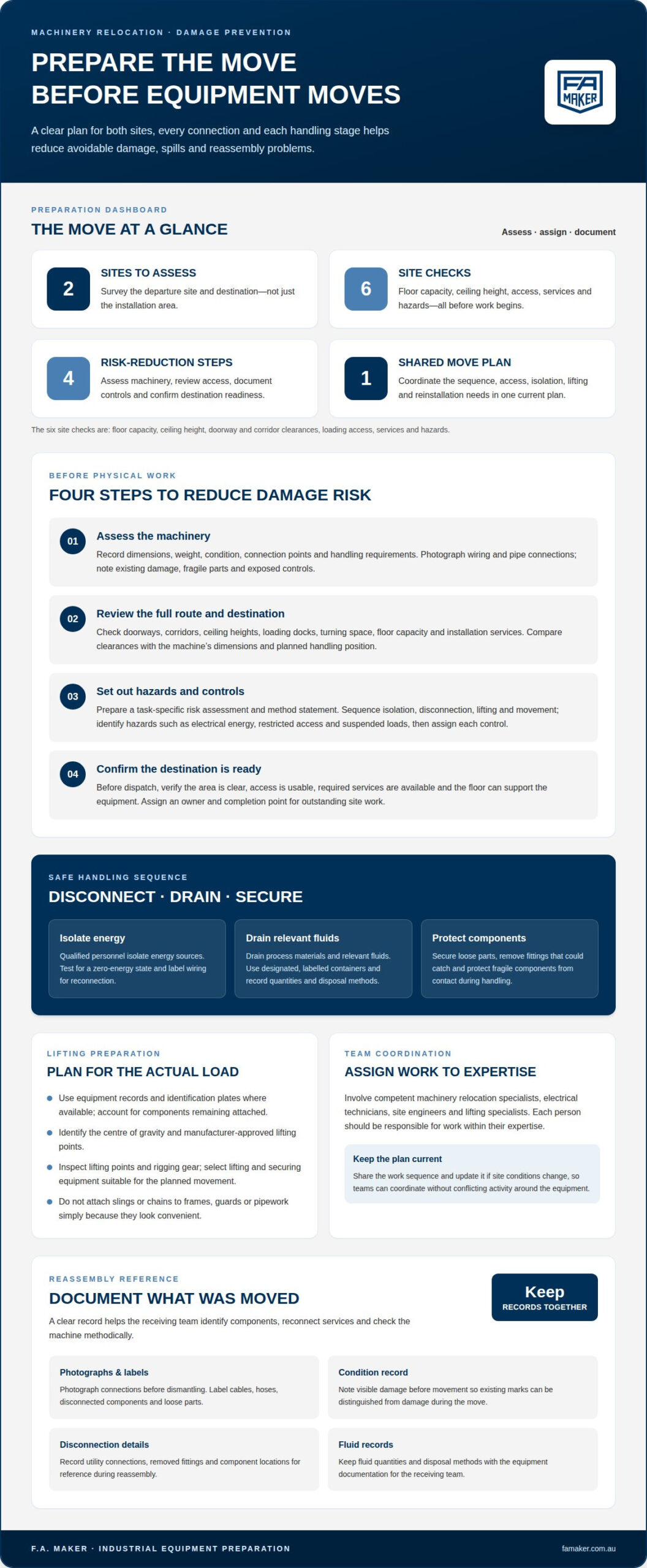
Damage risk falls when site preparation for machinery relocation is treated as part of the move, not a last-minute clearance task. Assess both sites for floor capacity, ceiling height, doorway and corridor clearances, loading access, services and hazards. Before moving equipment, plan its shutdown, isolation, drainage, lifting and transport, assign responsibility for each stage, and record connections, condition and loose components.
Careful preparation helps prevent avoidable contact damage, spills and reassembly problems. It also gives everyone a clear sequence of work, from preparing the destination to confirming the machine is secured for transport.
This guide explains how to assess the route and destination, assign responsibilities and prepare machinery for removal. You’ll learn what to disconnect, drain, label and secure, and how to document the work so components can be identified during reassembly.
Each step focuses on practical decisions that reduce risk before, during and after the move, including site access, service isolation, lifting preparation and final inspection.
Minimise damage risk by assessing the equipment, both sites and every stage of the move before work begins. In Australia, involve competent machinery relocation specialists, electrical technicians, site engineers and lifting specialists, with each responsible for work within their expertise.
Record each machine’s dimensions, weight, condition, connection points and handling requirements before planning its removal. Photograph the equipment, wiring and pipe connections, and label components that will be disconnected. Note fragile parts, exposed controls and existing damage so they can be protected and distinguished from damage during the move. Use these records to plan isolation, lifting and preparation.
Survey the full route at both sites, including doorways, corridors, ceiling heights and loading docks. Compare clearances with the machine’s dimensions and planned handling position, not just its footprint. Assess floor load capacity, turning space, access constraints and the services required at the installation point. An obstruction or inadequate floor capacity can force changes to lifting or delivery arrangements and cause delays.
Write a task-specific risk assessment and method statement before physical work starts. Set out the sequence for isolation, disconnection, lifting and movement, then identify hazards such as electrical energy, restricted access and suspended loads. The NSW Work Health and Safety Act is the Work Health and Safety Act 2011 (NSW), according to NSW Government legislation register. Apply controls to the identified risks and allocate responsibility for each control.
Have qualified personnel isolate energy sources before work on the equipment. After electrical isolation, test for a zero-energy state and label wiring for reconnection. Record who controls the isolation and how workers will confirm the equipment is safe to handle. These steps reduce the risk of unexpected operation during dismantling.
Inspect the destination before dispatch. Confirm the installation area is clear, the access route is usable, required services are available and the floor can support the equipment. Identify outstanding site work and assign an owner and completion point in the relocation schedule. Resolve these conditions before dispatch, as blocked access or incomplete infrastructure can interrupt installation and production.
Coordinate site, equipment and transport responsibilities in one move plan. Include the work sequence, access arrangements, isolation status, lifting sequence and reinstallation needs. Share the current plan with everyone carrying out a task, and update it if site conditions change. A documented sequence helps teams work consistently and prevents conflicting activity around the equipment.
Disconnect machinery in a planned sequence before lifting or transport. Uncontrolled connections, retained fluids and poorly assessed loads can damage equipment or create handling hazards.
Record overall dimensions and identify protruding controls, pipework and fragile fittings. Consider how the machine will be turned, raised and moved along the available route. These details affect the lifting arrangement, transport position and tools needed to avoid impacts or uneven loading.
Document every disconnection, including utility connections, removed fittings and component locations. Take clear photographs before dismantling, then label cables, hoses and loose parts for reassembly. Add a condition record noting visible damage before movement. These details provide a practical reference for handling and installation at the destination.
Select cranes, forklifts or hoists to suit the load and movement. Hydraulic jacks, rollers and dollies can assist with manoeuvring where suitable. Inspect lifting equipment and rigging gear before use, and select rated securing equipment appropriate to the planned lift. Qualified handlers should coordinate the lift and keep personnel clear of the suspended load.
Finish with a pre-transport inspection: account for components, confirm disconnections, and check that the machine is ready to move. A documented handling plan supports industrial machinery relocation planning and gives the receiving team a clear record of preparation.
Plan the move as one sequence, from dismantling and transport through installation and commissioning. In Australia, permit and road-access requirements depend on the load and route. Coordinate them with the safety plan before scheduling machinery movement.
Oversized or overweight loads may require approvals. The plan should also address heavy-vehicle mass limits, fatigue management, hazardous-goods rules and state-specific road restrictions.
Appoint a coordinator to maintain the schedule and share changes with site and transport teams. Assign separate owners for equipment preparation, rigging, vehicle access, destination readiness and installation. Record who can stop work if conditions change, such as an obstructed route or unstable load.
Include relevant specialists in the planning process. A qualified rigger can plan the lift, while site personnel coordinate access and production requirements. Identify who controls hydraulic equipment, manages isolation and receives the machinery. Clear responsibilities prevent missed handovers between dismantling, transport and reassembly.
Map the complete journey from the loading area to the destination, including site exits, public roads and final access. Compare the transport configuration with route constraints such as bridges, turning areas, overhead clearances and road restrictions. For an oversized load, identify required approvals, approved routes, travel times and escort arrangements before confirming dispatch.
Check whether the journey crosses state borders, as permitted routes and operating conditions can differ between jurisdictions. Consider the freight’s weight, dimensions and sensitivity when selecting the vehicle and rigging arrangement. Record route decisions in the move plan, and assess the actual load rather than assuming a familiar road is suitable.
Build the schedule around linked tasks: shutdown, disconnection, lifting, transport, installation and commissioning. Record which production activities depend on the machine, then plan its removal for a period that limits disruption. Allow time for destination access, delivery coordination and reassembly instead of scheduling transport as an isolated event.
Mark dependencies that could delay the move. For example, do not dispatch transport before the destination installation area is ready. Set update points for the coordinator, production team and transport contact, and communicate changes promptly. A visible schedule helps affected teams plan around the equipment’s absence.
Review the final schedule with site personnel, transport partners and those responsible for installation. Confirm the sequence, access arrangements, contact roles and handover points. Include contingencies for route changes, delayed access or weather affecting lifting work, and specify how updates will reach each team.
Keep one current move plan, with task owners and completion status. Before dispatch, confirm that transport, rigging and destination preparations align. At delivery, record receipt and pass the equipment documentation to the installation team. This organised handover supports commissioning and helps production staff plan the return to operation.
Shut down machinery in a controlled sequence, then isolate and disconnect its services before removal. In Australia, follow applicable WHS requirements and Australian Standards for the specific machinery, guarding and electrical work. Qualified personnel should identify the requirements relevant to the task.
Follow the machine’s shutdown procedure and remove process materials before dismantling connections. Isolate energy sources, then verify the equipment cannot operate before anyone handles cables, hoses or fittings. Label each connection at both ends and photograph its position so the receiving team can identify where it belongs during installation.
Record the disconnection sequence and note any component removed for transport. For a bottle filler, for example, identify connected services and protect exposed connection points after removal. Keep the record with the equipment so installation personnel can match connections to the correct machine.
Arrange electrical isolation through qualified personnel, then test for a zero-energy state before work proceeds. Label wiring clearly for reconnection, and protect cable ends from impact and contamination. Shut off compressed air at its supply and depressurise the system before disconnecting hoses or fittings.
For water and cooling systems, shut off the supply, drain the piping and contain residual water. For gas lines, close the source, cap connections and purge lines if needed. These service-specific steps help limit leaks and spills during handling and transport.
Secure loose parts and remove fittings that could catch on rigging or transport restraints. Protect fragile components, including guards, sensors and exposed control panels, with suitable padding—specialists such as Foam Packaging Direct supply custom protective foam packaging to cushion delicate parts during transport. Keep small parts together in labelled packages, and record their connection or mounting locations for accurate reassembly.
Keep isolation, fluid and condition records together. Clear labels and photographs give installation personnel useful references when reconnecting electrical services, air lines, water piping and gas connections. Reconnection should follow the equipment’s installation instructions and applicable requirements identified for the work.
Decommissioning involves more than disconnecting services. Careful planning protects components during dismantling, prepares the machine for transport and leaves both sites ready for the next stage.
Protect exposed surfaces and delicate components from impact, dust and moisture during handling. Secure doors, guards and movable sections in their transport positions. Keep a component register recording what was removed, how it was packed and where it belongs. This gives the installation team a clear sequence to follow at the destination.
For machinery shipped internationally, corrosion protection matters because cargo may spend weeks in humid maritime environments. Protect suitable surfaces and openings before packing, while keeping identification marks and inspection points accessible. Match the protective approach to the machine’s materials and expected transit conditions.
At the destination, compare the installation area with the machine’s layout and connection requirements. Reassembly should follow the manufacturer’s instructions, with the equipment correctly aligned and levelled. Keep assembly records available as components are fitted, and resolve mismatches before reconnecting services or beginning operation.
Careful records connect dismantling decisions with installation checks, reducing uncertainty when the machine returns to service. For help coordinating machinery preparation and relocation, discuss machinery relocation services.
F.A. Maker can help when machinery relocation leads you to review processing equipment needs at the destination. Its range includes Used Stainless Steel Tanks, Centrifuges and Separators, Industrial Mixers and Blenders, and Pumps and Valves.
Consider these categories when replacing equipment, planning a production-line change or deciding which machinery to install alongside relocated assets. Match the equipment type to the process and available site infrastructure, then plan access, installation space and service connections before delivery. This connects equipment selection with the preparation work covered in this guide.
For information about equipment options for your operation, contact F.A. Maker or visit famaker.com.au.
Use the relocation plan to make the next decision: will the existing production line be reinstalled as it stands or adjusted for the destination? That choice affects equipment selection, layout and the work needed before production resumes. Keep operational requirements in the move plan rather than treating equipment replacement as a separate decision.
F.A. Maker offers Used Stainless Steel Tanks, Centrifuges and Separators, and Industrial Mixers and Blenders. These categories may be relevant when reviewing processing equipment alongside site preparation for machinery relocation. Consider how each option fits the process and available installation space before moving the project forward.
When you’re ready to discuss equipment for the move, contact F.A. Maker about your move. A clear next step helps turn careful preparation into a workable plan for the site and its production needs.
Industrial relocation time depends on the machine, dismantling scope, transport route and destination readiness. A single machine with clear access requires a different schedule from a production line needing staged removal and reassembly. Include time for route approvals where needed, installation and commissioning, not just vehicle travel. Map dependencies such as site works and production shutdowns before setting the move window.
Site preparation means making the work area accessible, stable and ready for its intended use. At an industrial site, this can include clearing obstructions, establishing access routes, checking drainage and assessing ground or floor condition. Plan where materials and equipment will be staged so they do not block vehicle movement or work areas. The work required depends on the site’s existing condition and planned activity.
Preparation covers both the removal area and the destination, making each ready for the machine’s movement and installation. Define the equipment footprint, installation orientation and space operators need to access the machine after placement. Identify any base or anchoring work, along with the services required at the final position. A layout drawing can help coordinate site work, transport access and the production-line arrangement.
Survey the route from the machine’s current position to the loading point, then inspect access at the destination. Measure doorways, corridors, ceiling clearances and loading areas against the machine’s transport dimensions. Note turns, obstructions, uneven surfaces and shared access that could affect movement. Record where the vehicle can load and unload, and whether the destination can receive the machine in its planned orientation.
The required capacity depends on the machine’s operating weight, support points and foundation design. A machine on concentrated feet can load a floor differently from one supported across a broad base. Account for the equipment configuration during operation, not just its unloaded transport condition. Assess the floor or foundation against the machine’s installation information, then complete any reinforcement or levelling work before positioning it.
Prepare the connection points and routes specified for the machine, including electrical supply, compressed air, hydraulic services, water, cooling and gas where applicable. Align connection locations with the final layout so lines do not obstruct access or maintenance areas. Use the machine’s installation documentation to identify connection requirements and interfaces. Leave enough working space around service points for safe installation, isolation and later inspection. For property and business owners also evaluating power infrastructure for residential sites, Makn Energy provides solar panel and battery storage solutions across Adelaide.
The lifting arrangement depends on the load’s weight, dimensions, centre of gravity and approved lifting points. Cranes, forklifts or hoists may suit different moves; jacks, rollers or dollies can help with positioning. Assess route clearances for the machine in its actual lifting or transport configuration. Confirm vehicle access, loading space and unloading position, then coordinate rigging with site constraints and the planned movement sequence.
Start with a site survey and machine layout, then identify access, floor and service work. Schedule clearing, foundation preparation or utility changes before delivery. Next, confirm the installation area is ready and coordinate unloading and positioning through the move plan. Include assembly, alignment, service connections and commissioning in the sequence. The overall timeline depends chiefly on site work, equipment configuration and access readiness.