

The dash meter is a clue, not a condition report. When learning how to verify used machinery condition, compare the displayed hours with ECM data where available, service records and physical wear, then investigate any mismatch. A low reading alone does not show how hard a machine has worked.
Hours matter, but they need context. A machine with more recorded hours and consistent maintenance may be a better prospect than one with fewer hours, limited servicing or signs of harsh use. The component condition and the history behind the reading help you make that distinction.
This guide explains how to compare hour readings with ECM records and wear on controls, hoses and other components. It also covers structural areas to inspect for cracks or repairs, signs of oil contamination and Australian purchase records that can help complete your assessment. The aim is to build a clearer picture of the machine’s condition before you decide.
Start with the hour-meter reading, then compare it with the machine’s service history, previous ownership and operating environment. Ask about major repairs, modifications, accident damage and storage conditions. The dash does not tell you whether the machine worked in demanding conditions or received consistent maintenance. Both details affect how useful the reading is.
Worksite conditions matter. Ask where the machine operated and what work it performed. Dusty, abrasive or wet environments can affect components differently from cleaner, less demanding conditions. On tracked equipment, inspect the tracks, rollers, idlers, sprockets, track chains, bushes and track pads. Sharp excavator sprocket teeth indicate wear. Flat link bushings warrant closer attention because bushings should be round. On wheeled equipment, inspect the tyres, rims, axles, suspension and steering components.
Use operating tests to compare the machine’s history with its current performance. If possible, start it cold and observe how the engine starts and idles. Note excessive smoke, fluid leaks, warning lights or unusual noises. Then operate the machine where safe and practical; relying on qualified personnel with heavy equipment training from providers like Alika Training College can help ensure functional checks are handled safely and effectively. Check for slow movements, inconsistent hydraulic performance and unusual transmission behaviour. Test the attachment through its normal movements and watch for delayed or uneven responses. These checks do not establish the cause of a fault, but they identify areas for closer assessment.
How do you inspect a used machine’s engine, hydraulics, electrical systems and structural condition? Start the engine and operate the hydraulics and transmission. Check for leaks, smoke, unusual noises and warning lights. Inspect electrical components and safety systems, then examine the frame and other structural areas for visible damage or repairs.
Include the cab in your walk-around. Adjust the operator seat through its available range, then check that it holds its position and allows comfortable access to the controls. Test the displays, lights, cameras, radio, heating and air conditioning, along with warning and safety systems. A seat that will not adjust or controls that feel inconsistent are practical findings to record, not dismiss.
Interpret the hour figure in context. A used wheel loader showing 8,000 to 10,000 operating hours with no prior transmission work may be nearing the transmission’s expected life. That does not make the reading a verdict; it makes transmission history and current operation important parts of the assessment. Record the dash reading, observed symptoms and supporting service information together, so an inconsistency has a clear basis for follow-up.
Inspect high-stress structural areas before buying, including the frame, chassis, boom, blade mounts, articulation points, buckets, rippers and attachment mounting points. Look for cracks, distortion, fresh paint, uneven welds and changes in surface texture. Check both sides of each component where accessible. A clean exterior can conceal an older repair or damage on the opposite side. Photograph each concern and note its location so you can compare it with repair records.
A weld repair isn’t automatically a reason to reject a machine. Establish what was repaired, why the work was needed and whether the repair appears appropriate for that component. A repaired boom plate, for example, should be considered alongside the surrounding structure and the machine’s work history. In one inspection example, a rewelded boom plate was discovered six weeks after the initial inspection. That repair ultimately cost more than 22% of the machine’s purchase price, showing why location and repair history matter.
Inspect pin bores closely at bucket, boom, linkage and attachment joints. Check for oval wear, damaged edges, cracks around the bore and movement that suggests excessive clearance. Compare corresponding joints where possible. Uneven wear can indicate that one section has taken more load or that pins and bushes have not been maintained evenly. A loose attachment connection can affect operation and may require machining or replacement, so record the affected joint rather than simply calling it “worn”.
Inspect the ROPS, or rollover protective structure, separately. Examine all four corner posts for dents, bends, cracks and previous repairs. Look for welds, drilled holes or other damage, which can compromise structural integrity. Do not treat a painted or straight-looking surface as proof of sound condition. Note visible alterations and compare them with available repair documentation.
How do you compare used machinery prices and estimate repair or refurbishment costs in Australia? Compare machines with similar age, configuration, attachments and documented condition, then list the work needed for each. Repair and refurbishment pricing depends on the scope, parts, labour, access and transport. Request a quote for an estimate.
Use inspection findings to separate cosmetic work from structural concerns. A crack at an attachment mount, a distorted chassis section or a repaired ROPS calls for more scrutiny than surface wear on a non-structural panel. For a machine requiring a move after assessment, machinery relocation planning can be part of the next operational decision.
A machine can appear serviceable while its oil shows evidence of internal wear. Before purchase, include oil sampling in the assessment of heavy equipment, particularly the hydraulic system, engine and transmission. A sample can reveal contamination that a walk-around or short operating test may not. Read the results alongside maintenance records and operating history, rather than treating a single laboratory value as a complete diagnosis.
Take samples from the relevant systems and label each one with the machine and component. Use clean sampling equipment, avoid introducing dirt during collection, and record the displayed hours at the time. Sampling several systems can help distinguish a local issue from a broader maintenance concern. For example, wear metals in transmission oil alongside clean hydraulic oil suggest a different pattern from contamination in both systems.
Interpret particle counts against the type of hydraulic system. A high-pressure hydraulic system is typically expected to have a particle count no worse than ISO 18/16/13. Precision or hydrostatic hydraulic systems may require ISO 16/14/11 or cleaner. These are system-specific cleanliness levels, not universal pass marks for every oil sample. Compare the result with the machine’s system requirements and other evidence from inspection and servicing.
Metal results need context. Iron, copper, lead, tin and aluminium can point to wear in different components, but the presence of a metal alone does not identify a failed part. Consider the concentration, combination of metals, service history and operating symptoms. A sample taken after recent servicing may tell a different story from one collected during routine operation, so note relevant maintenance details.
Contamination can have serious consequences in hydraulic equipment. Hydraulic contamination can damage a piston pump within 500 hours of machine operation. That figure makes a clean-looking reservoir insufficient evidence on its own. A loader with sluggish hydraulic response, for example, should be assessed alongside its oil cleanliness results, rather than cleared solely because it completes a brief function test.
Ask the dealer for available fluid analysis and servicing records, then compare sample dates and machine hours with the maintenance timeline. If results show excess water, elevated particles or metals, connect those findings to the affected system and reported repairs. Oil analysis combined with mechanical checks can reveal problems that are not immediately apparent during visual inspection, helping you make a more informed purchase decision.
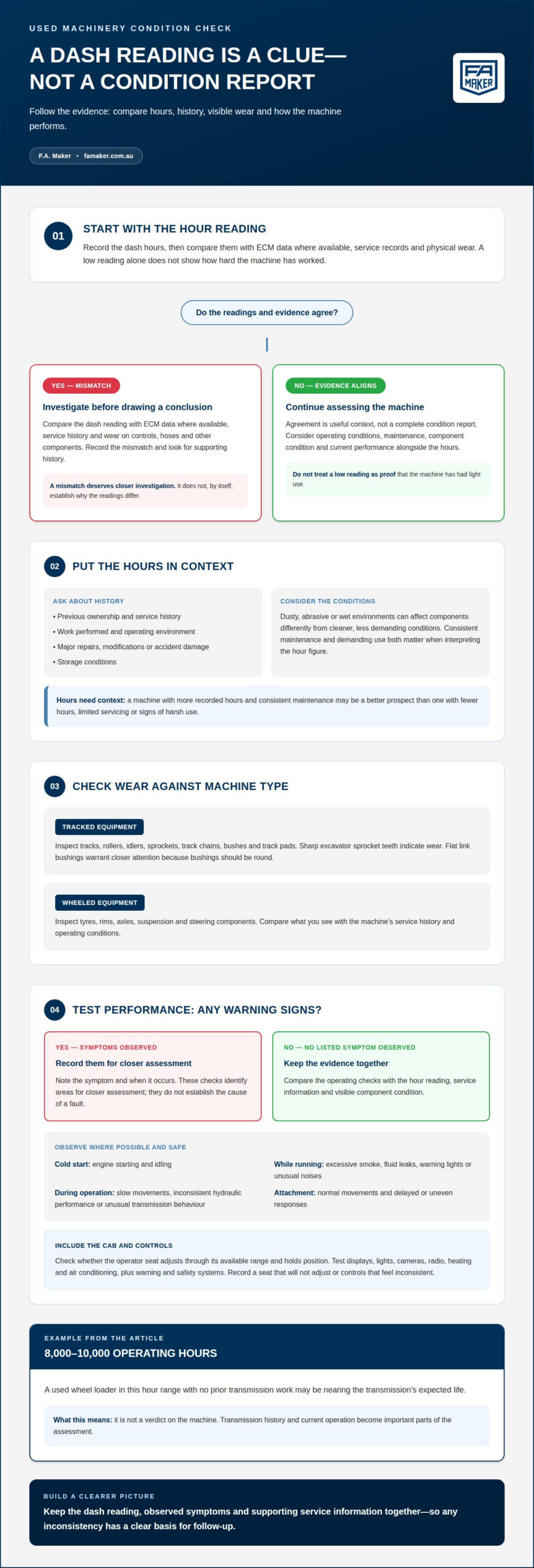
Compare the dash reading with available ECM data, service records and visible wear. Record each reading alongside the machine’s serial number and inspection date. If the display has been replaced, ask for the replacement history and any recorded reading from before the replacement. A difference does not prove the hours were altered, but it needs an explanation supported by records or machine data.
A discrepancy of 2,000 hours between the display and other evidence is described as common on high-hour machines with replaced dash displays. Treat that gap as a reason to investigate, not as a stand-alone conclusion. Check whether service invoices, maintenance entries or earlier inspection records show readings that form a consistent sequence. A reading that jumps backwards or stops matching the documented timeline needs closer review.
ECM data can provide another comparison point when the machine’s system makes relevant operating information available. Match the ECM reading to the machine’s identity, then compare it with the dash and dated service records. Note what each source measures and when the record was made. A replacement display may explain a mismatch, while an unexplained gap across several records leaves the operating history uncertain.
Physical wear helps test whether the stated hours fit the machine’s use. Examine pedals, control handles, seat adjustments, steps and frequently used switches. On tracked equipment, compare the claimed hours with undercarriage wear, including track components and sprockets. Look for consistency across the machine: one worn pedal may reflect a replaced part, while several heavily worn contact points suggest harder use.
For example, a machine described as having 3,000 hours but fitted with six-year-old hoses and heavily worn pedals may have worked harder than its stated hours suggest. Hose age alone doesn’t establish operating hours, so compare it with ECM data, service history and wear elsewhere. Record conflicting evidence separately, then seek an explanation before relying on the dash figure in a purchase decision.
What Australian safety, registration and compliance requirements apply to used machinery? Assess whether the machine suits its intended site and consider applicable compliance and transport requirements, including dimensions, weight and dispatch preparation. Site-specific changes may include attachments, guarding, fire suppression, machine control, auto greasing or electrical upgrades.
The cost of a professional pre-purchase inspection depends on the machine, inspection scope, location and testing required. Request a quote, with those factors shaping the work involved.
For an Australian purchase agreement, record the machine identity, stated hours, condition, known repairs, included attachments and agreed handover terms. Set out any warranty expressly, including its scope, duration and exclusions; don’t rely on an informal description of condition when written terms can clarify the agreement.
Build a document trail around the machine’s identity, operating hours and maintenance history. Start with its serial number, model details and current hour reading, then compare those identifiers across service records, repair invoices and inspection documents. A mismatch can complicate your assessment, especially if records describe a different machine or omit part of its ownership history.
Ask for records of servicing, major repairs, refurbishment and machine setup. These documents help establish what work has been completed and whether recurring faults appear in the history. Compare dates and recorded hours across invoices and service entries. An hour figure on an older maintenance record, for example, can help you check whether later dash or ECM readings follow a consistent sequence.
Condition reports provide another reference point. Condition reports can provide a useful reference point, but their availability may vary by sale. Read any report alongside repair invoices and inspection findings, noting which components were assessed and what work was recommended. A report describing recent refurbishment should align with supporting records that identify the work completed and the affected components.
Check the Personal Property Securities Register (PPSR) before completing an Australian machinery purchase. A registration may indicate that money is owing to a lender, which may repossess the machinery if the purchase proceeds. Do not proceed with a second-hand machinery purchase until any PPSR registration against it has been removed.
The search may require the seller’s details. For a sole trader, this can include their name and date of birth; for a business seller, it can include the company ACN. Use the correct seller and machinery details so the search relates to the transaction. Keep the search result with your other purchase records, along with any documentation showing that a registration has been removed.
Before agreeing to buy, bring the paperwork together: machine identity, service and repair history, condition report, refurbishment details, setup information and PPSR result. Compare the documents with the machine’s physical condition and recorded hours. If a repair is visible on the machine but missing from its records, or a service entry conflicts with the meter history, resolve the discrepancy before relying on the paperwork.
Also consider the machine’s intended Australian site and the practical requirements for transport and dispatch. Dimensions, weight and preparation can affect the move, while site-specific setup may involve attachments, guarding, fire suppression, machine control, auto greasing or electrical upgrades. If relocation is part of the purchase plan, arrange machinery relocation services as part of coordinating the equipment’s move.
F.A. Maker is a practical next step when your production requirements call for used stainless steel tanks or related processing equipment. After assessing the condition, operating history and documentation, compare the machine’s configuration with your process needs, capacity requirements and plant connections. F.A. Maker also offers centrifuges and separators, industrial mixers and blenders, and pumps and valves for processing operations.
Turn to F.A. Maker when sourcing used equipment for a production line and considering suitable machinery against your assessment findings. Share the equipment type and intended application to focus the discussion on relevant options.
Contact F.A. Maker to discuss used stainless steel tanks or related processing equipment.
Knowing how to verify used machinery condition is valuable when your findings support a clear decision, not just an inspection file. Turn observations into practical requirements: what needs attention before commissioning, what can be scheduled later, and whether the machine suits its intended process. This helps you assess operational readiness without treating every defect as equally important.
Before proceeding, set out the machine’s intended role, required configuration and any work needed before installation. Keep the inspection notes and supporting documents together so your decision remains grounded in evidence. If the equipment does not fit your production needs, reconsidering its suitability matters as much as assessing its physical condition.
For processing equipment, F.A. Maker offers used stainless steel tanks, centrifuges and separators, and industrial mixers and blenders. If you’re considering used machinery for your operation, contact F.A. Maker about used machinery to discuss suitable equipment. A careful assessment gives you a sound basis for moving forward.
Compare the dash reading with ECM data and records from different points in the machine’s history. A practical way to verify used machinery condition is to check whether those sources agree with one another and with component wear. If the dash display has been replaced, request the replacement reading and date, then compare them with earlier maintenance entries. Record unexplained differences and treat them as unresolved until supporting evidence explains the gap.
Reduce the risk of a remote inspection by arranging a detailed assessment before committing to purchase and requesting dated records tied to the machine’s serial number. Ask for clear images of identification plates, major components and visible damage, along with documentation of repairs and servicing. For transport planning to Australia, establish the machine’s dimensions, weight and dispatch preparation needs. Keep inspection findings, shipping arrangements and machine identification together to avoid confusion during handover.
Test the machine through its normal operating cycle rather than relying on an idle run. Observe startup, idle, controls, movement and shutdown, and note changes in sound, response or fluid leakage. Operate each available function and attachment under suitable conditions, then check displays, warning systems and safety devices. Record the functions tested and any operating limits. This gives you a useful comparison if commissioning later reveals different behaviour.
Build a timeline from dated service entries, invoices, repair reports and recorded hour readings. Check whether the hours progress consistently and whether repairs correspond to components showing wear. A record of a replaced part can explain why that component looks newer than surrounding equipment. Note gaps in the timeline, repeated repairs and changes in machine configuration, then use those details to ask specific questions about the machine’s use.
Buying without an inspection can leave faults, wear or an incomplete repair history undiscovered until the machine is operating. Equipment dealers typically provide condition reports, while auctions do not, so available documentation may differ. Working with established machinery specialists such as Ematech, who handle sales and servicing for heavy equipment, helps ensure maintenance histories and mechanical condition are thoroughly documented. If the machine cannot be tested before purchase, identify the evidence available and the functions that remain unassessed. Factor those unknowns into your decision, especially if the machine must meet a specific production requirement.