A plant move is more than lifting machinery onto trucks. Industrial plant dismantling and relocation means planning the shutdown, isolating and dismantling equipment, protecting and documenting components, then transporting and recommissioning them at the new site.
That sequence matters because equipment, utilities, floor space, transport access and operating constraints all shape how a move is organised. A relocation plan should cover every stage, from removal to installation, alignment and commissioning, so teams can manage dependencies and reduce avoidable disruption.
This guide explains industrial decommissioning, equipment handling and safety planning, and how approvals and contractor coordination fit into the work. It also highlights common planning gaps, such as overlooked storage needs, transport routes and workflow sequencing, to help facility teams prepare a practical move plan for an Australian operation.
Key Takeaways
- Map equipment, utilities, space and operational constraints before setting the relocation sequence.
- Plan isolation, dismantling, protective packing and documentation as connected stages of equipment handling.
- Build hazard assessment, site safety controls, inspections and required approvals into the move plan.
- Coordinate contractors around clear responsibilities, milestones, transport routes and storage needs.
- Sequence shutdown and restart activities around operational priorities to help manage downtime.
What Does It Mean to Decommission an Industrial Plant for Relocation?
Decommissioning for relocation means preparing a facility for shutdown, removing and transporting equipment, then installing and commissioning it at another site. In Australia, industrial relocation contractors specialise in coordinating these stages, from equipment removal and transport through to recommissioning.
Equipment and Site Constraint Assessment
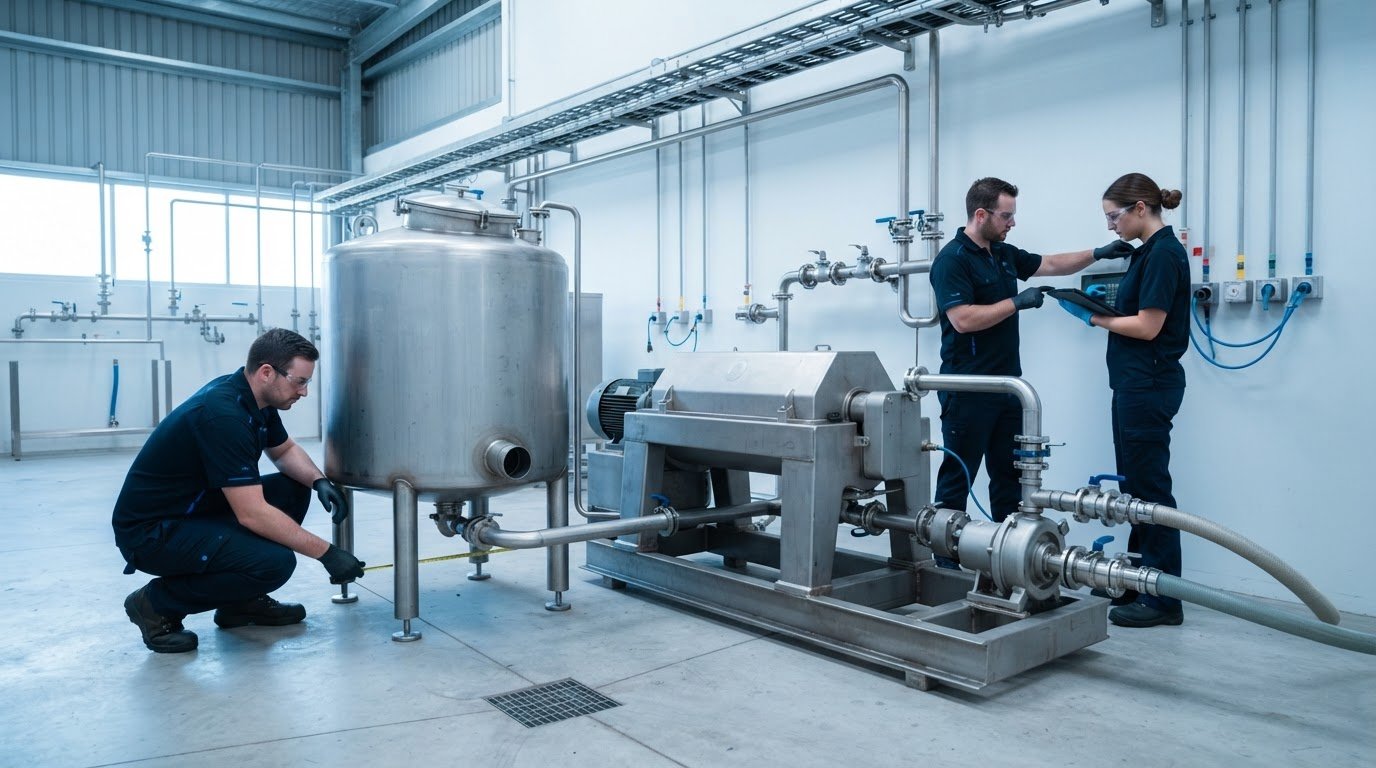
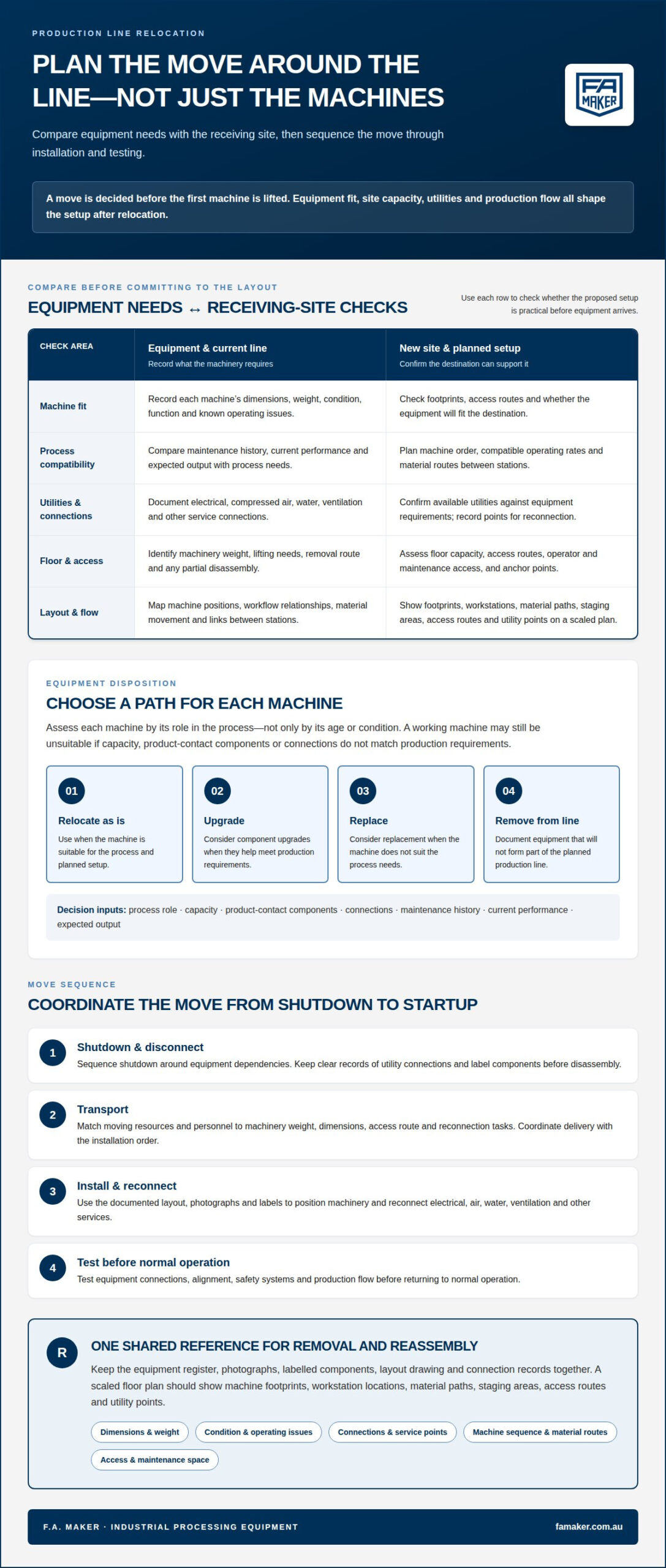
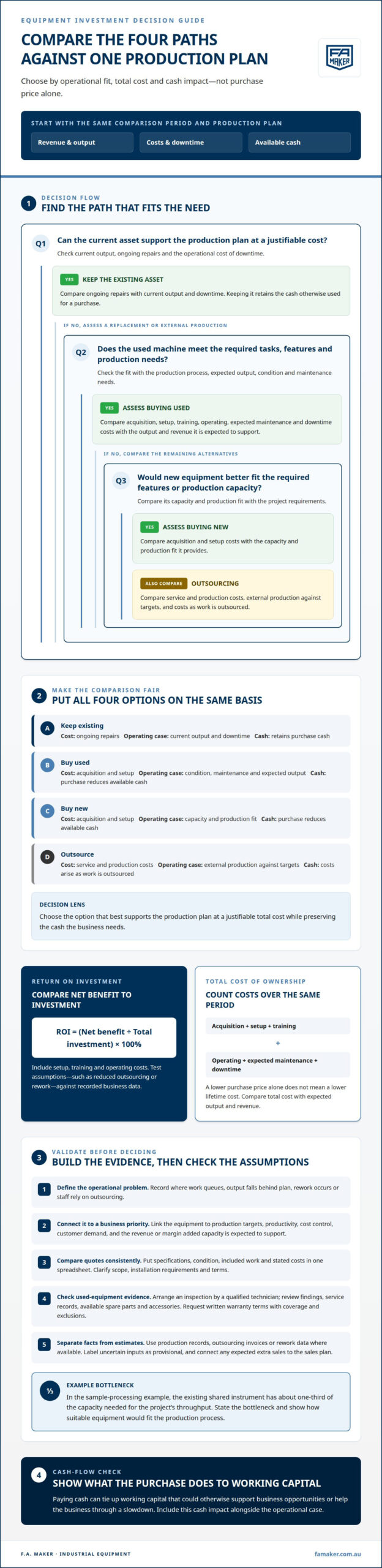
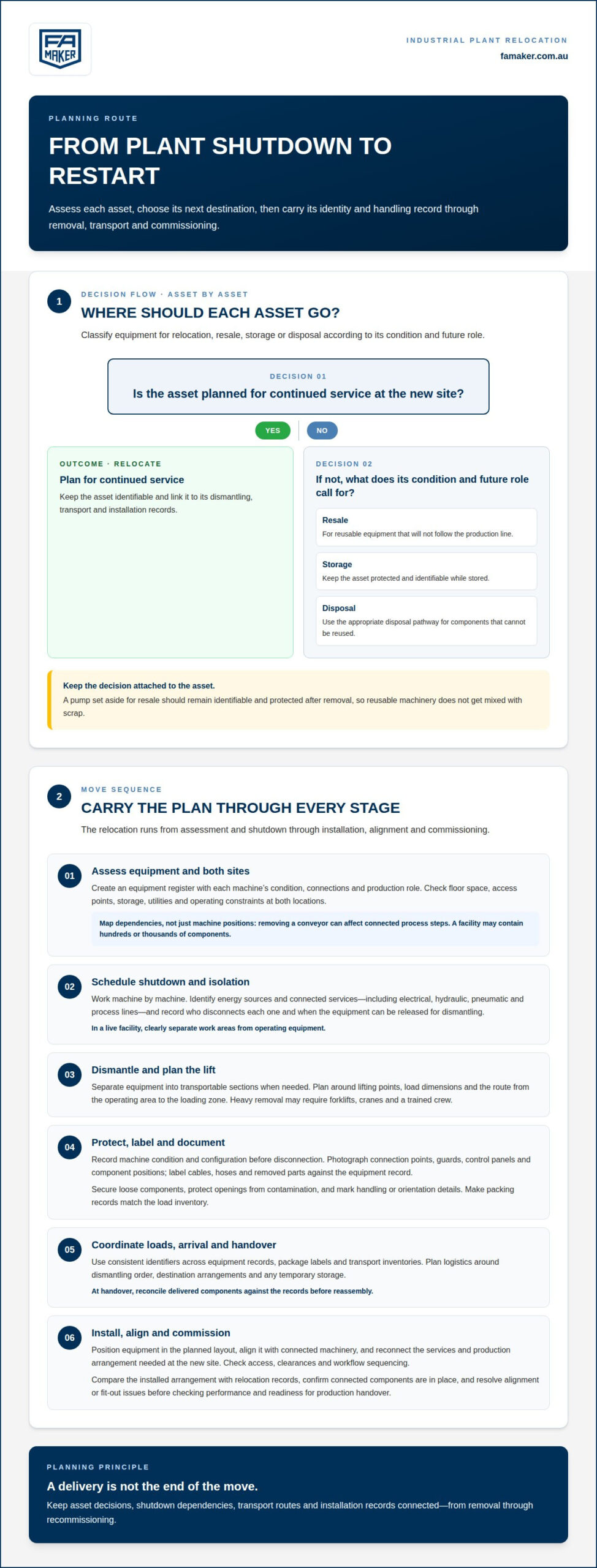
Start with an equipment register recording each machine, its condition, connections and role in production. Then assess floor space, access points, storage, utilities and operating constraints at both sites. This information shows which equipment can move intact, which needs dismantling, and where installation might conflict with existing services or production workflows.
Plan the sequence around dependencies, not just machine locations. A conveyor, for example, may connect several process steps, so removing it can affect equipment beyond its immediate footprint. Account for the whole facility and its components, which may number in the hundreds or thousands.
Dismantling, Rigging, and Transport
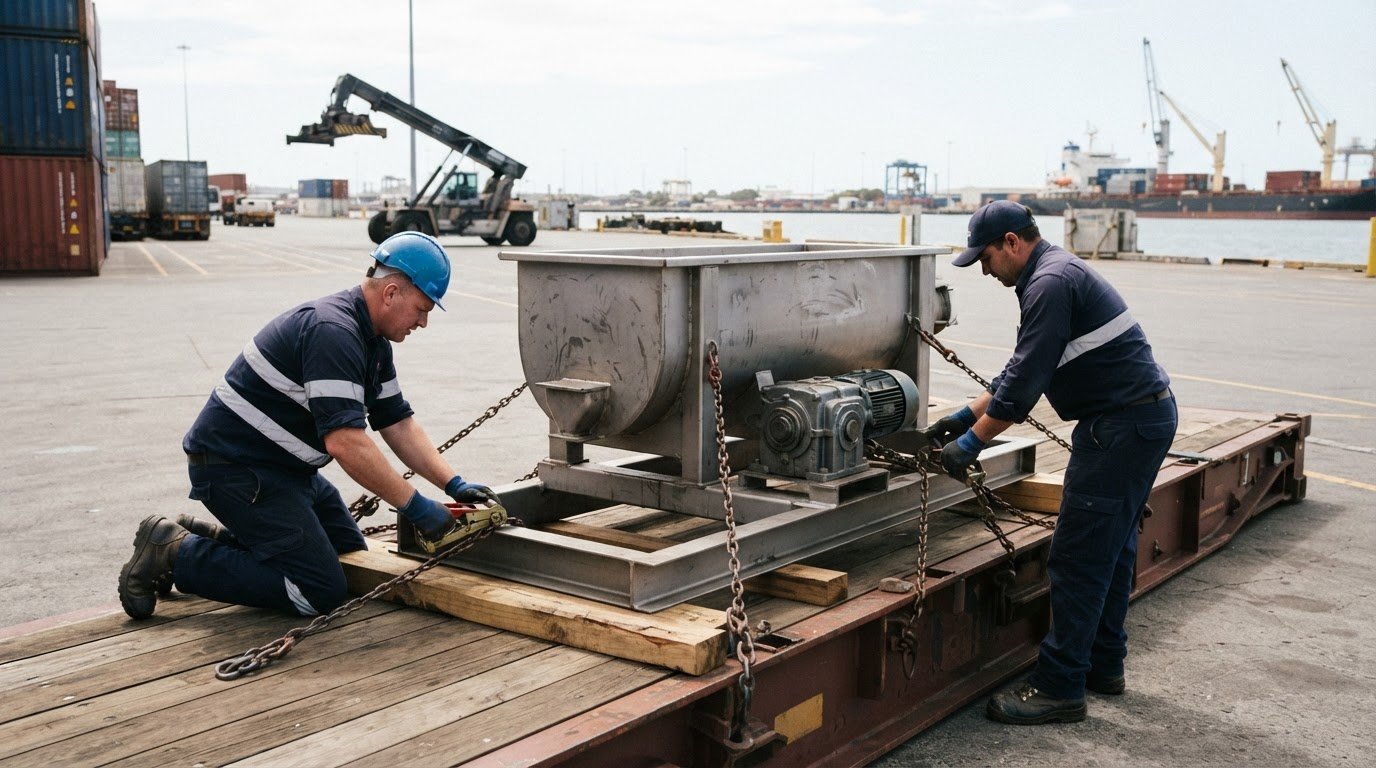
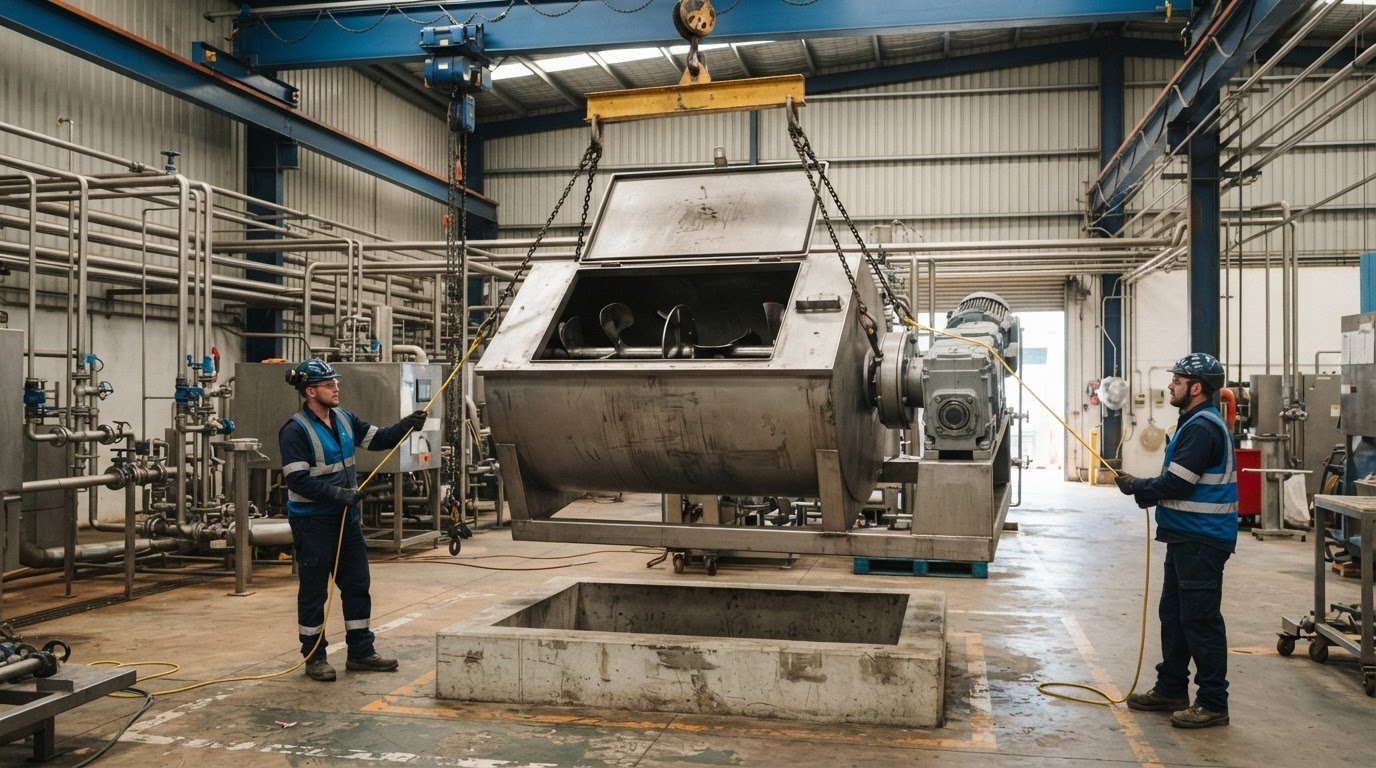
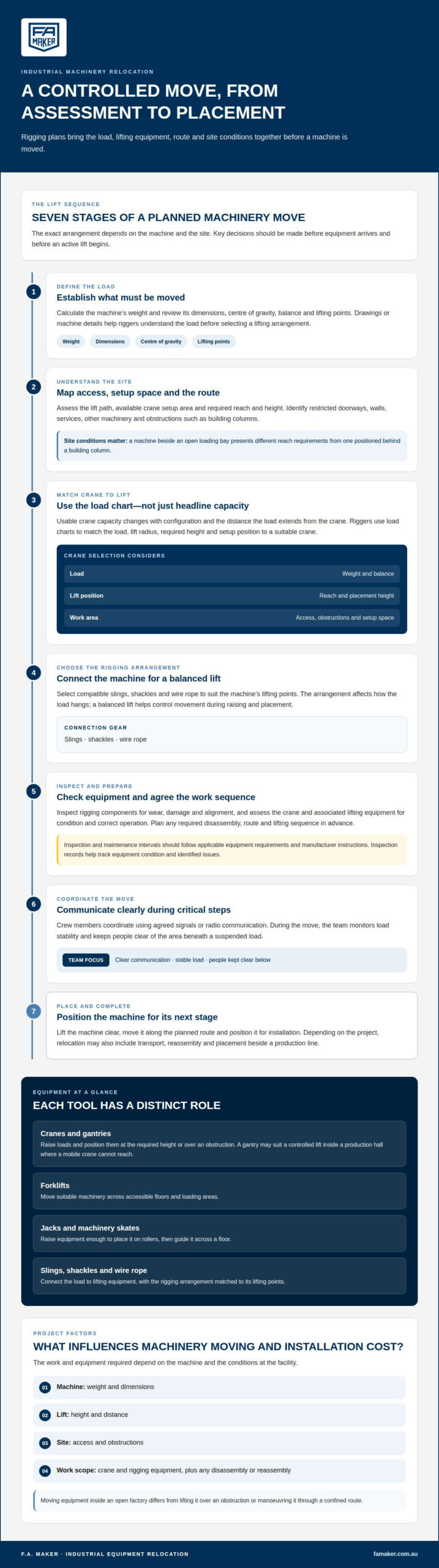
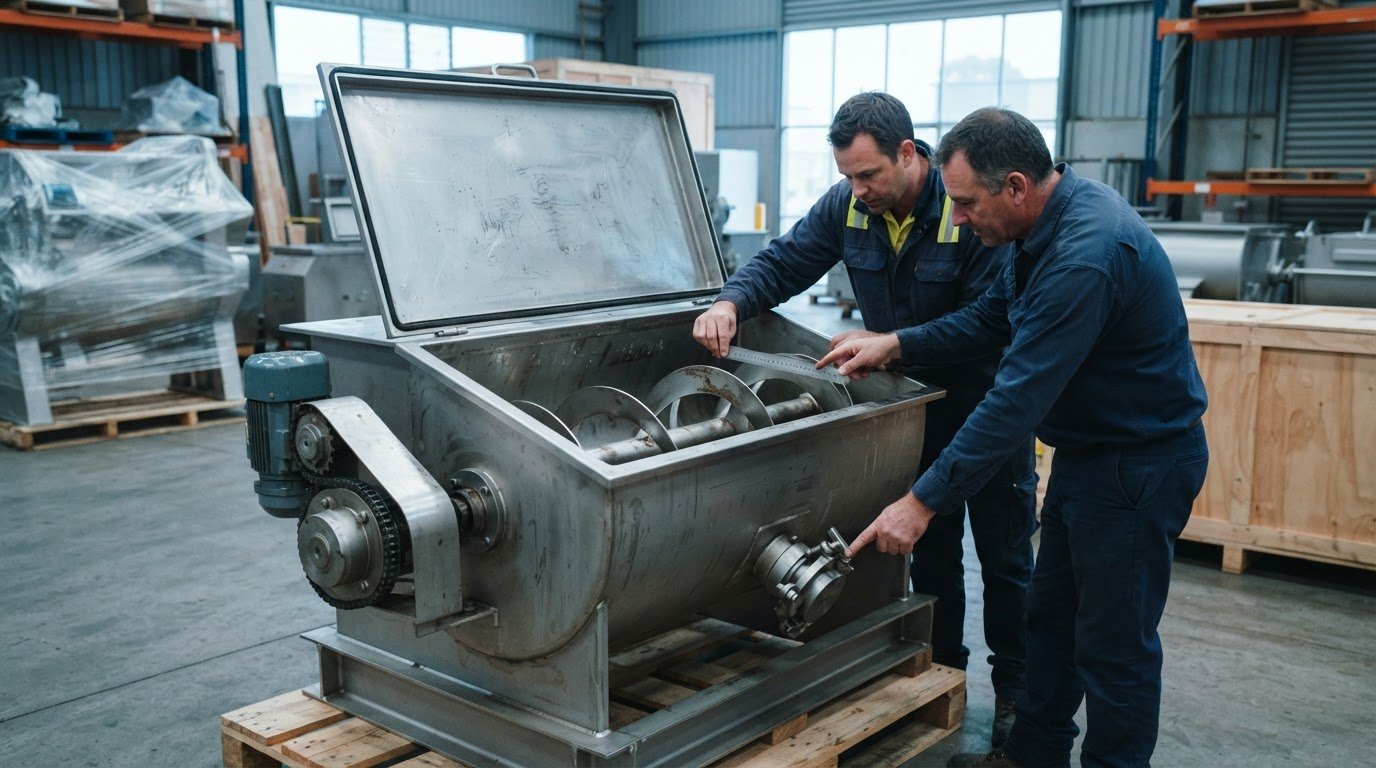
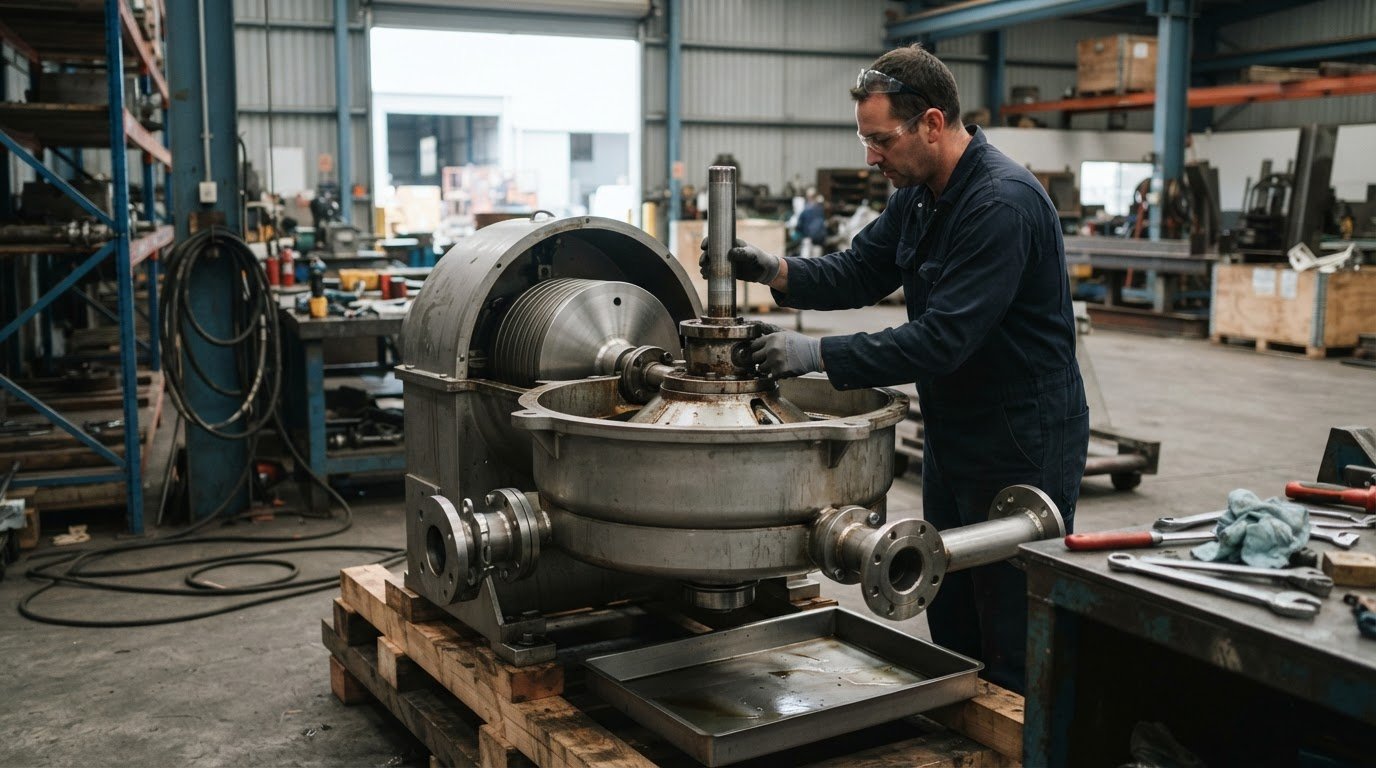
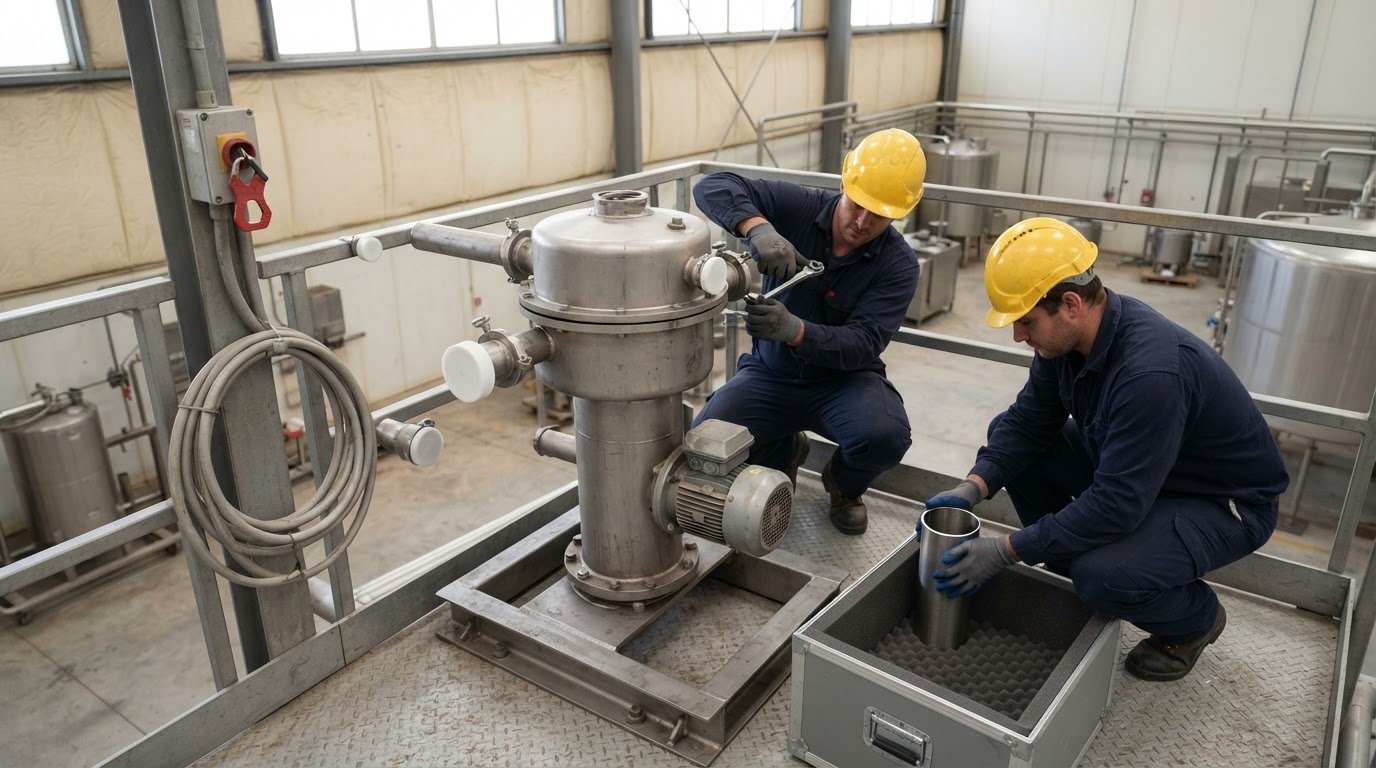
Once shutdown arrangements are set, machinery is isolated and prepared for removal. Dismantling separates equipment into transportable sections where needed. Rigging plans then account for lifting points, load dimensions and the route from the operating area to the loading zone. Heavy equipment removal may require forklifts, cranes and a trained crew.
Documentation should link each component to its original machine and destination. Marking connections, recording the dismantling sequence and protecting exposed surfaces help crews handle equipment consistently during packing and transport. Distinguish reusable items from material requiring disposal so components are not misplaced or mistakenly treated as scrap.
Relocation and Resale of Reusable Equipment
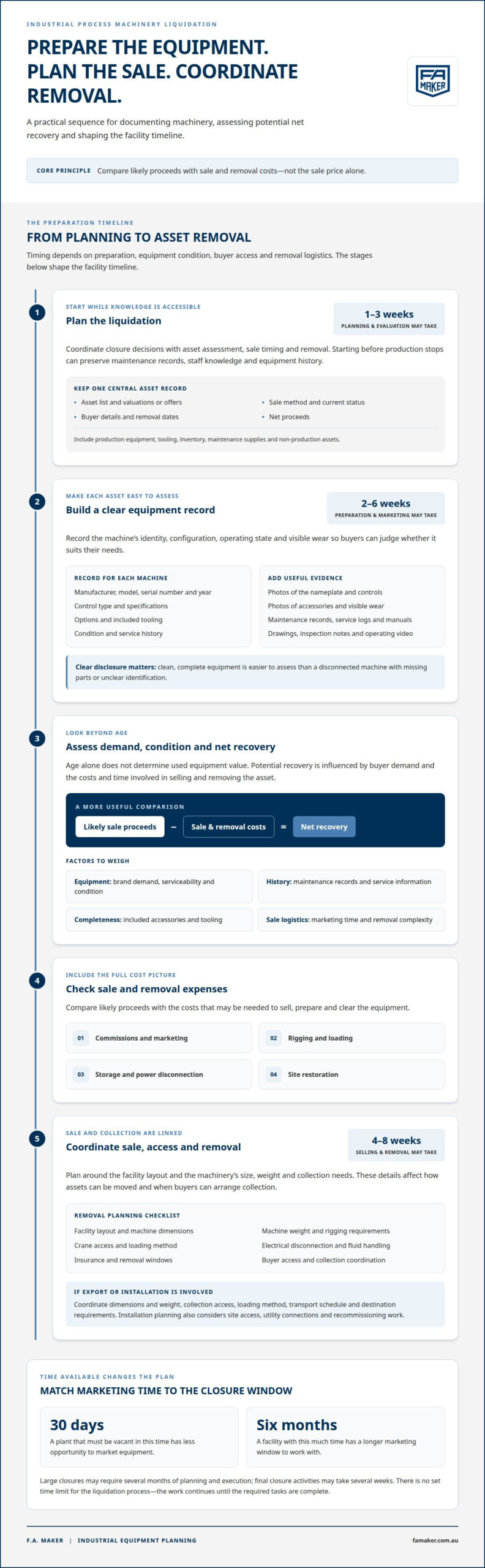
Not every asset needs to follow the production line to its new site. During assessment, classify equipment for relocation, resale, storage or disposal based on its condition and future role. Reusable equipment can be relocated for continued service or resold, while components that cannot be reused should follow the appropriate disposal pathway.
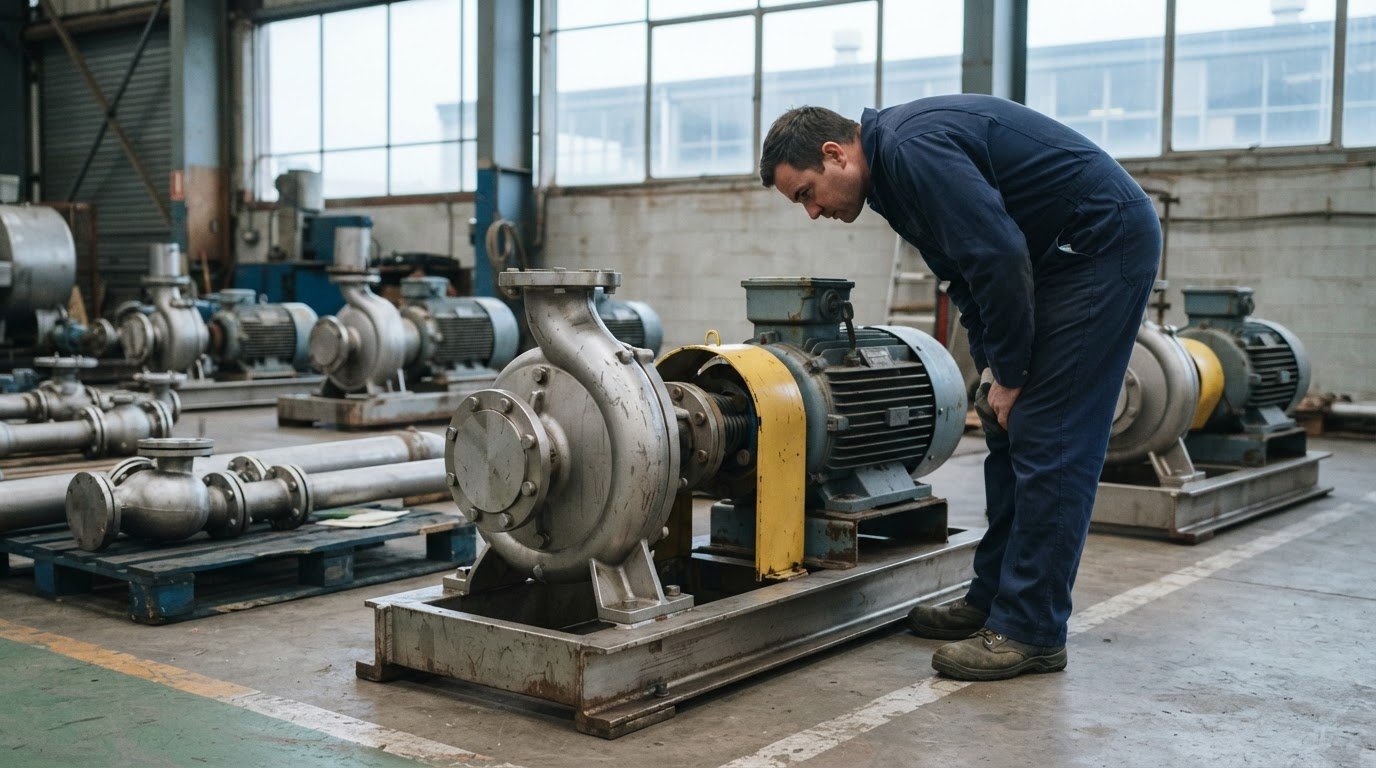
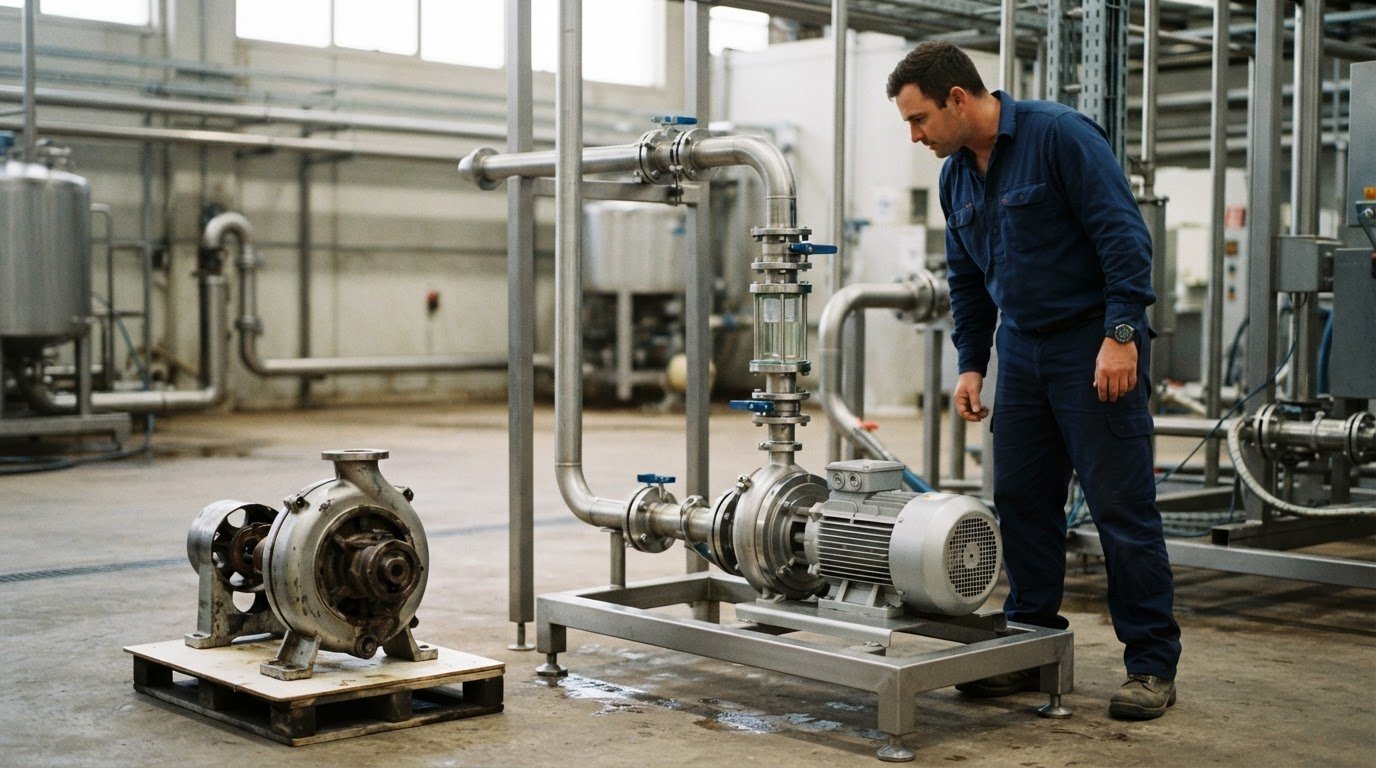
Keep each asset decision connected to its dismantling record. A pump set aside for resale, for example, should remain identifiable and protected after removal. This prevents reusable machinery from getting mixed with scrap and keeps the inventory clear through transport, storage and handover.
Alignment, Fit-Out, and Commissioning
At the destination, installation means positioning equipment in the planned layout and aligning it with connected machinery. Fit-out reconnects equipment to the services and production arrangement needed at the new premises. Access, clearances and workflow sequencing all affect where machines can sit and how the line will operate.
Commissioning checks equipment performance and readiness before operations restart. Compare the installed arrangement with the relocation documentation, confirm connected components are in place, and resolve alignment or fit-out issues before production handover. Delivery to the new site is not the end of the move.
Machinery isolation, dismantling, packing and documentation
Machinery preparation connects shutdown decisions with transport and the return to production. A controlled sequence keeps equipment identity, isolation status and handling instructions clear throughout the move.
Machinery Isolation, Packing, and Documentation
Begin with a machine-by-machine isolation schedule. Identify each asset, its energy sources and connected services, including electrical, hydraulic, pneumatic and process lines. Record who is responsible for each disconnection and when equipment can be released for dismantling. In a live facility, clearly separate work areas from operating equipment.
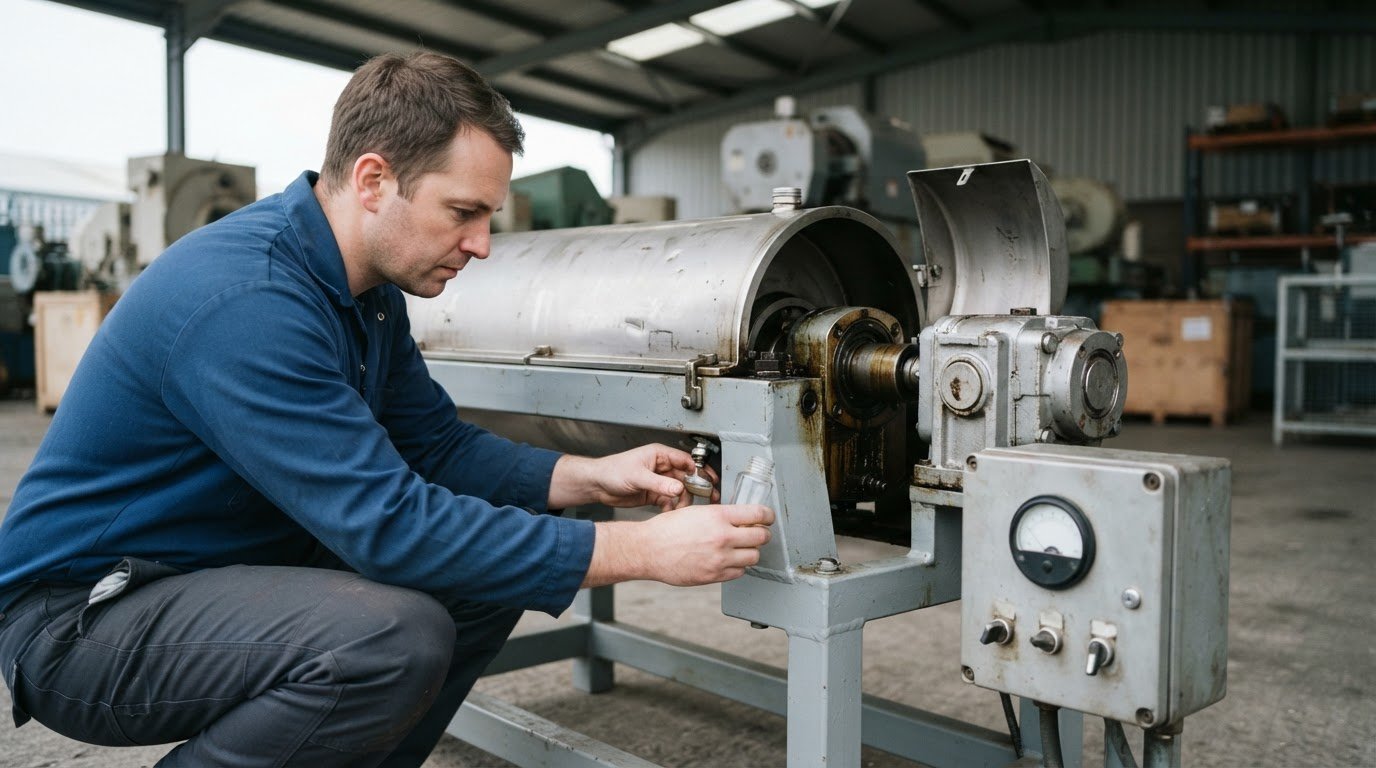
Before disconnection, record each machine’s condition and configuration. Photograph connection points, guards, control panels and component positions. Label cables, hoses and removed parts against the equipment record. Keeping a pump’s coupling components together, for example, reduces uncertainty during reassembly.
Match protective packing to the equipment and its exposed surfaces. Secure loose components, protect openings from contamination, and mark handling or orientation details on the package. Ensure packing records match the load inventory so every item can be identified during loading, transport and arrival.
Production Line Decommissioning and Disassembly
Machine relocation concerns an individual asset and its direct interfaces. Plant relocation has a wider scope: production lines, utilities and linked equipment must be decommissioned in a workable sequence. A filler connected to conveyors, for instance, cannot be treated as an isolated item if the line’s sequence affects removal or installation.
Production line decommissioning starts by mapping dependencies between machines. Identify which equipment must stop or be removed first, and document how each connection will be separated. This execution plan helps coordinate production shutdown, disassembly, loading and site access without mixing up machine parts.
During industrial plant and machinery disassembly, divide equipment into sections only when the transport plan requires it. Record the removal order and link each section to its original machine. This is especially important when separate loads arrive at different times or components need temporary storage before installation.
Connect logistics planning with the dismantling sequence, load preparation and destination arrangements. Use consistent identifiers across equipment records, package labels and transport inventories. At handover, reconcile delivered components against the records before reassembly. Clear documentation gives installation teams a practical reference for restoring the production arrangement and tracing missing or misplaced parts.
Safety compliance, inspections and approvals
Plan risk controls, inspections and approvals alongside equipment removal and transport. Unassessed hazards, unclear site controls, hazardous materials, or late approvals and transport arrangements can lead to equipment damage or delays.
Workplace Health and Safety Precautions
Before dismantling begins, coordinate shutdown so machinery can be isolated, services managed and work areas made safe. Set clear access boundaries between the relocation crew and nearby personnel. Workers handling machinery should use personal protective equipment suited to the tasks and site conditions.
Give hazardous materials particular attention during removal and storage. Older transformers, capacitors and oil used in motors and hydraulic systems may contain PCBs, according to the U.S. Environmental Protection Agency. Identifying this risk early helps teams plan safe handling and keep potentially hazardous materials separate from ordinary equipment or waste.
Risk Assessments and Worksite Safety
A relocation risk assessment identifies hazards before work begins and assigns controls to each stage. Consider lifting and rigging, machine access, stored energy, vehicle movements, work at height and interaction with ongoing production. For example, a crane lift near an operating line requires a defined work zone and coordinated timing.
Tailor site controls to the equipment, layout and work sequence. The plan should cover access to restricted areas, load routes through the site and separation of storage from active work. Reassess controls when conditions change, such as a revised lift path or unexpected equipment configuration.
Safety Procedures and Quality Checks
Use documented procedures for isolation, disassembly, lifting, packing and loading. A supervisor can record key hold points, such as confirming isolation before disconnection or checking that a load is secured before transport. These checks support safe work, protect equipment and help prevent components from being misplaced.
Include the destination and assembly stages in inspections. Confirm the receiving area is ready for equipment placement, then inspect items on arrival and before installation. A condition record can identify transport damage promptly and distinguish it from pre-existing wear, supporting accurate handover and follow-up.
Worker Safety Requirements
Assign tasks according to each worker’s role, skills and familiarity with the machinery. The site plan should identify who controls isolation, directs lifting operations and coordinates transport movements. Clear responsibilities help prevent conflicting instructions when several crews work around connected equipment.
Relocation planning should account for applicable safety and industry requirements. Businesses should obtain necessary permits and regulatory approvals before relocating a plant. Record inspection outcomes and approval status in the project documentation to track requirements through removal, transport and installation.
Common planning and contractor coordination mistakes
Relocation projects can lose time when scope, responsibilities or site constraints emerge only after work begins. Early project management connects the facility assessment, schedule, specialist equipment and contractor handovers.
Pre-Decommissioning Planning and Site Assessment
A common mistake is planning around machinery alone. Assess the existing facility and destination together, including access, utilities, operating constraints and available storage. Record which assets will move, remain, be resold or be disposed of. This gives contractors a shared scope and helps identify dependencies before decommissioning.
Give site access specific attention. A machine may fit the new production area but still be difficult to move through a doorway or loading zone. Map removal routes, staging areas and destination access, then include them in the work plan. An overlooked route constraint can disrupt dismantling and transport sequencing.
Feasibility Studies and Relocation Planning
Feasibility work tests whether the proposed move supports the intended operation. Compare the destination’s space, utility connections, workflow and storage capacity with the equipment being relocated. A production line, for example, may need a different arrangement if service points differ from those at the original site.
Do not assume every asset is suitable for relocation. Record each machine’s condition, operational role and destination requirements. This gives the project team a basis for sequencing, storage and transport decisions, and helps distinguish equipment for reuse from assets better suited to resale or disposal.
Project Timelines and Relocation Planning
Complex industrial plant moves should begin early. The Kaizen Institute recommends planning 1 to 3 years ahead for complex moves. For a mid-to-large facility, allow at least 6 to 12 months of pre-work before relocation. These planning periods help organise scope, milestones, personnel and specialised equipment.
A schedule is unreliable if it lists dates without showing dependencies. Link shutdown, contractor access, equipment removal, transport and destination readiness as sequential milestones. Assign an owner to each handover and record what must be complete before the next task starts. A delayed destination fit-out, for example, can affect arrival and installation sequencing.
Dismantling Logistics
Connect workflow sequencing with packing methods, storage needs and transport routes. Specify where dismantled components will be staged, how loads will be identified and when each area must be cleared. If storage is overlooked, equipment can obstruct later removal or become separated from its destination sequence.
Contractor coordination can also falter when responsibilities overlap or leave gaps. Establish who controls site access, loading areas, equipment handovers and schedule updates. Share one project schedule with relevant personnel and record changes against affected milestones to keep each contractor aligned with the facility plan.
Use a change process throughout the project. When an asset, route or destination constraint changes, assess the effect on dismantling, transport, storage and installation before revising the schedule. Document the decision and notify affected contractors. A traceable plan helps prevent conflicting instructions at either site.
Minimising operational downtime
Downtime depends on shutdown timing, equipment dependencies and destination readiness. Coordinating these factors helps manufacturing teams plan production around the relocation sequence.
Shutdown Coordination and Production Downtime
Start by identifying which production areas can stop independently and which rely on shared machinery or services. Sequence shutdown tasks around those dependencies so removing one machine does not unexpectedly halt another line. Moving a bottle filler, for example, may also require planning for connected conveyors and upstream process equipment.
Coordinate the shutdown window with dismantling, transport and destination installation milestones. Assign responsibility for each handover, including when equipment is released, loaded and ready for assembly. A schedule covering these stages gives operations personnel a clearer view of when production can restart.
If unaffected areas can keep operating, separate them from relocation work. Define access routes and work boundaries, and keep operations teams informed about changes to equipment availability. This helps the facility manage partial production rather than treating the entire site as one shutdown area.
Relocation Budgeting and Downtime
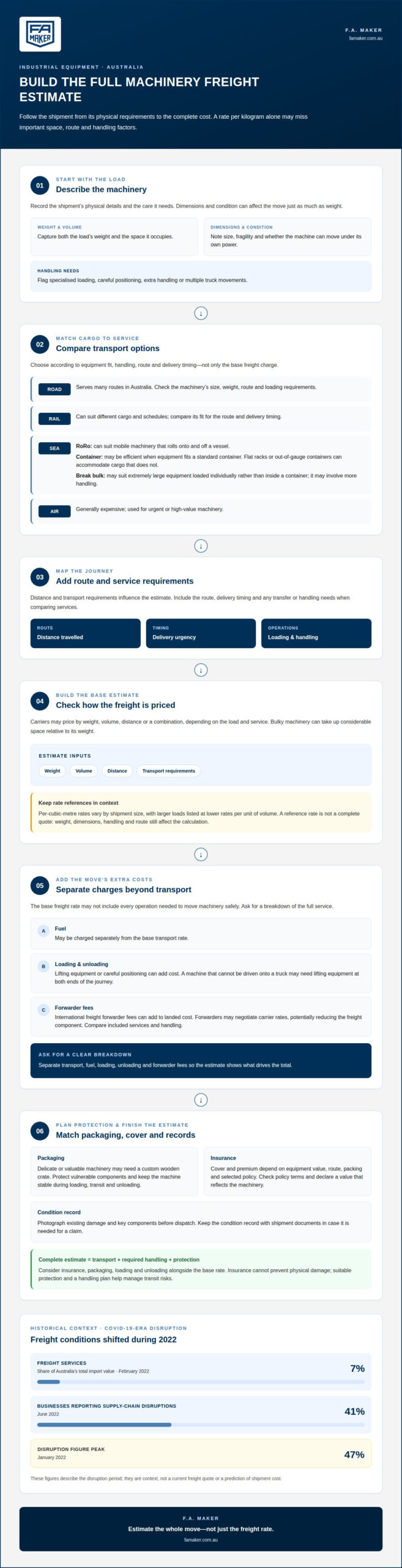
Build the project budget around the actual scope, not transport alone. Relevant cost factors include dismantling complexity, specialised lifting and handling, protective packing, storage, transport logistics, destination fit-out and commissioning. The schedule matters too: delays at one stage can extend the period before manufacturing resumes.
Connect budget assumptions to project milestones. If destination services are not ready when machinery arrives, for example, additional storage and handling may be needed. Changes to equipment scope can also affect dismantling, packing and transport plans. Recording these dependencies clarifies how revisions may affect expenditure and downtime.
Comparing Contractors and Quotes
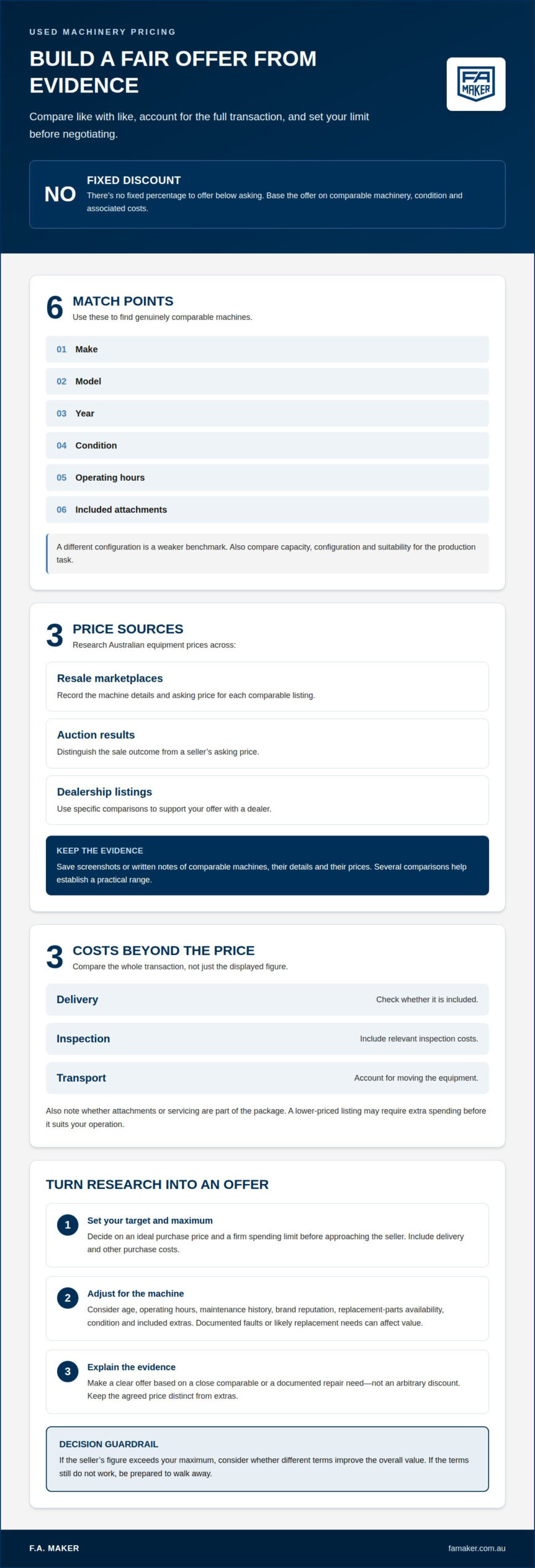
Compare quotes by matching their scope, not just their totals. Check whether each proposal covers the same assets, dismantling, rigging, packing, transport, storage, installation and commissioning. Ask how the sequence and handovers are represented, and whether site coordination responsibilities are clear.
Then compare schedule assumptions and exclusions. A quote omitting destination fit-out or commissioning may leave those activities outside its stated scope. Assess how each plan handles dependencies, changes and operational downtime. To compare amounts fairly, align scope, responsibilities, milestones and exclusions first.
For a planned move involving industrial machinery, discuss machinery relocation requirements as part of coordinating shutdown and restart planning.
F.A. Maker: Industrial Mixers and Blenders
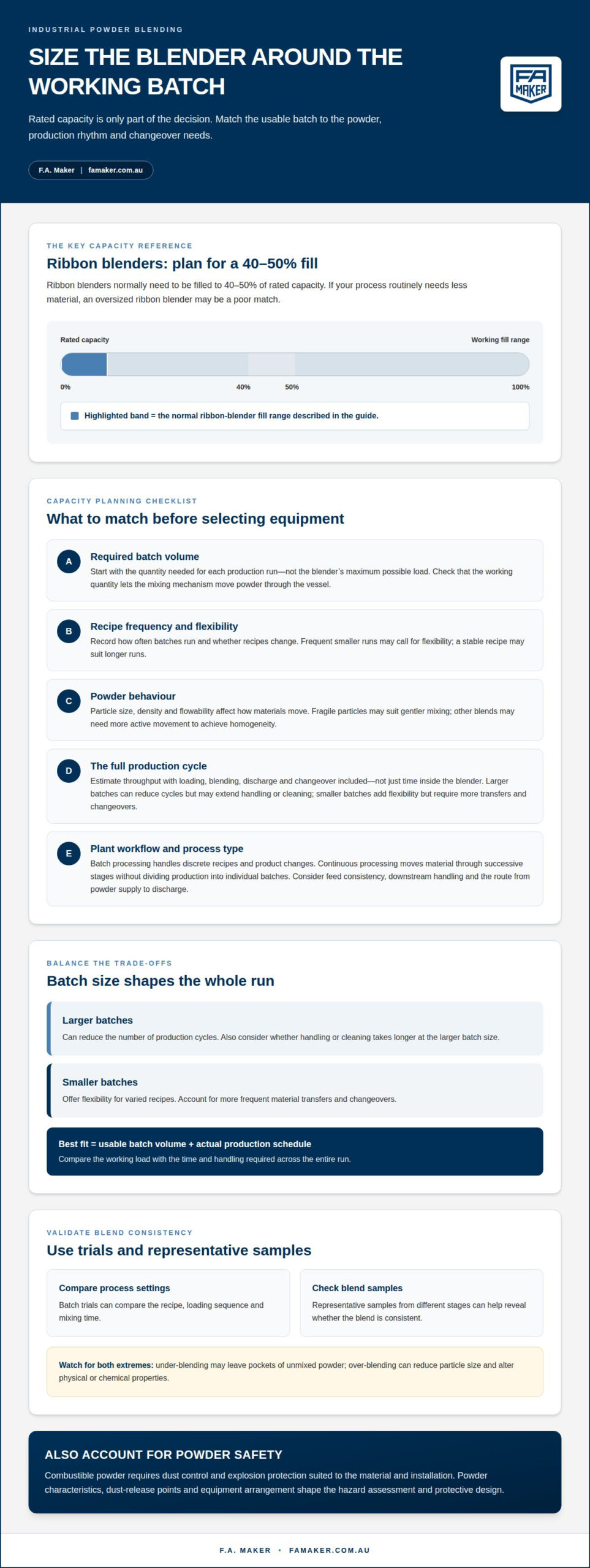
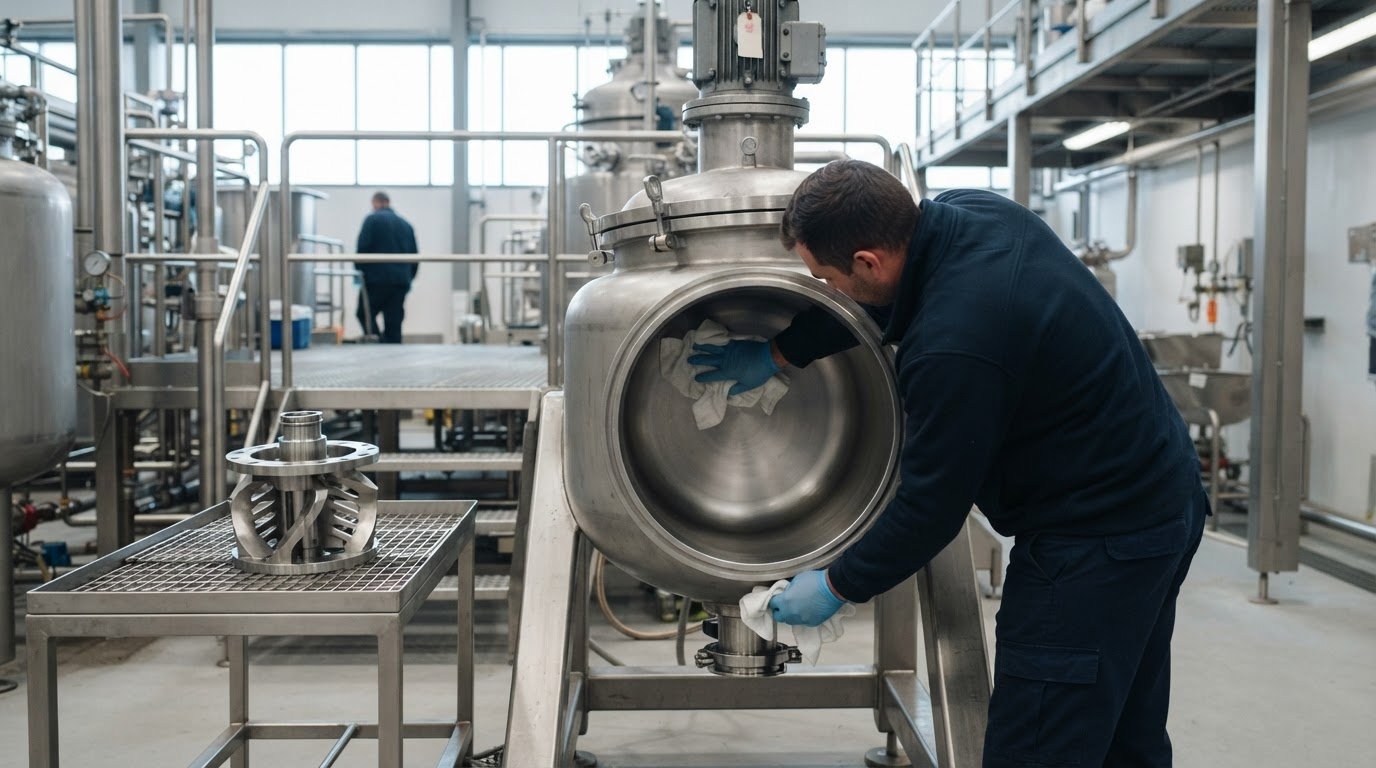
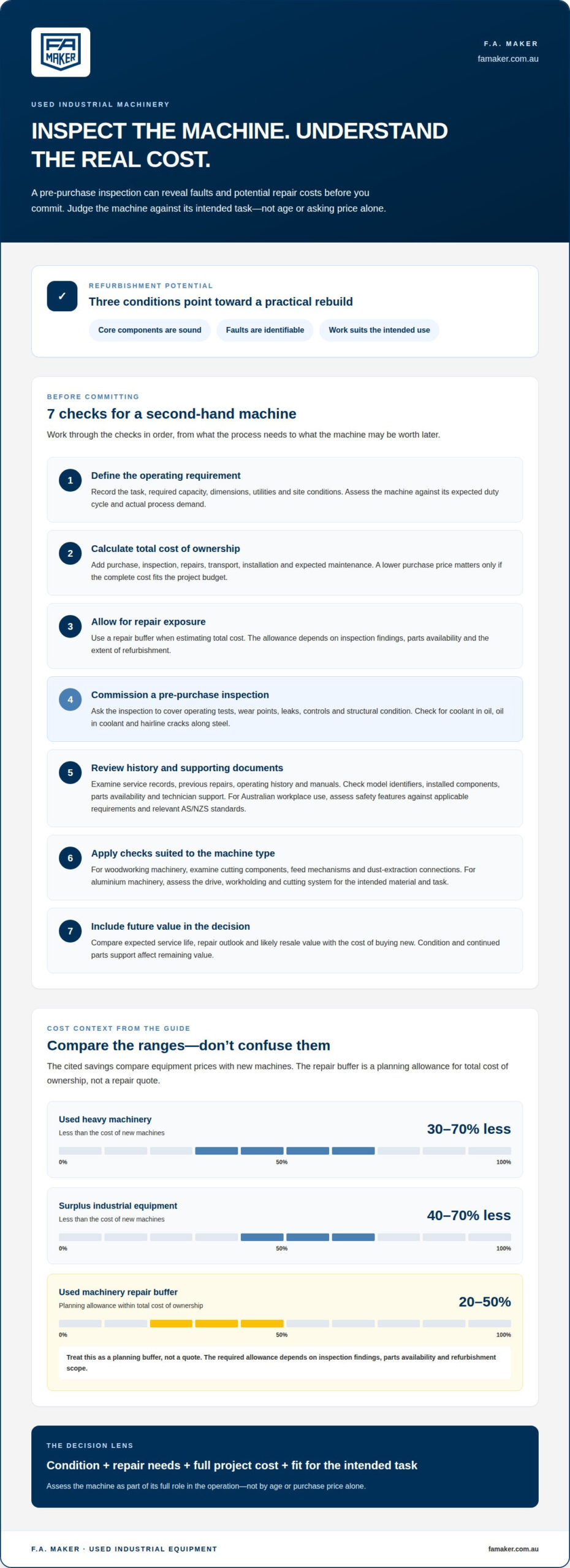
F.A. Maker supports facility teams planning machinery changes with machinery relocation services and a range of processing equipment, including industrial mixers and blenders. These offerings suit production moves involving process equipment or machinery decisions for a new site. Related equipment categories include used stainless steel tanks and centrifuges and separators.
Aligning equipment decisions with the relocation plan helps teams assess how machinery will fit the intended production layout. The right choices depend on the facility’s process requirements and which assets are moving, staying or being replaced.
For help with your equipment or relocation requirements, contact F.A. Maker.
Set the Next Move in Motion
Use the relocation plan to make deliberate decisions about the facility’s next operating phase. Before scheduling work, define what the future production arrangement needs to achieve and which equipment decisions support it. A clear project brief gives operational and technical teams a shared basis for resolving changes as the move progresses.
Industrial plant dismantling and relocation is also an opportunity to reassess how the equipment portfolio serves the business. Consider whether each asset remains suited to production needs at the destination, and carry those decisions into the relocation scope. This keeps the project connected to operating priorities, rather than treating physical movement as the only measure of completion.
With the next steps defined, facility teams can move from planning into a focused discussion about their machinery requirements. Contact F.A. Maker to discuss your relocation and the equipment that may support your operation. A considered start can help your team approach the move with a clear purpose.
Frequently Asked Questions
Why hire a specialist for installation and removal?
A specialist coordinates machinery handling with the production layout, site access and transport sequence. This is useful when equipment is heavy, connected to other machines or needs careful alignment at the destination. Removing one machine from a connected line, for example, may affect access to neighbouring equipment. Coordinated planning manages these interfaces and gives installation teams clear equipment records.
What does industrial plant dismantling and relocation involve?
Industrial plant dismantling and relocation involves preparing machinery for removal, moving it to another site and returning it to operation. A machine-only move focuses on one asset and its interfaces; a plant move may also involve connected production equipment and facility-wide dependencies. The scope depends on which assets are moving, what remains in operation and how the destination will use the equipment.
What are the steps for dismantling, transporting and reinstalling industrial equipment?
The work typically progresses from scope and condition records to shutdown coordination, machinery isolation, disassembly, packing and transport. At the destination, crews receive and inspect equipment, install it in the planned position, align connected machinery, complete fit-out and commission the system. For a connected line, preserve the relationships between components so installation follows the production arrangement, not simply the order in which loads arrive.
How much does industrial plant dismantling and relocation cost in Australia?
Cost depends on project scope and is provided after a quote request. Key factors include the number and condition of assets, dismantling complexity, lifting and packing needs, transport route, storage, destination fit-out and commissioning. Compare quotes only when they cover equivalent tasks and responsibilities. A proposal excluding destination installation, for example, is not equivalent to one covering the complete relocation scope.
What permits and approvals are required for industrial plant dismantling in Australia?
Required permits and approvals depend on the project, site and applicable local or industry requirements. Businesses should identify and obtain necessary approvals before relocating a plant, including those relevant to planned transport and worksite activities. Include this task in project planning rather than leaving it until loading is scheduled. Record the approval pathway according to the actual scope, location and equipment movement.
What WHS requirements apply to dismantling and relocating industrial machinery in Australia?
Plan for hazards, machinery isolation, safe work areas and suitable personal protective equipment before work begins. The relevant workplace health and safety framework depends on the Australian jurisdiction and worksite. Relocation planning should account for WorkSafe NSW and SafeWork Australia standards, alongside applicable local and industry requirements. Record risk controls and inspections so crews can follow agreed procedures during removal, transport and installation.
How long does an industrial plant dismantling and relocation project take?
Project duration depends on facility size, equipment complexity, site readiness, transport logistics and the sequence needed to resume production. For complex plant moves, the Kaizen Institute recommends beginning planning 1 to 3 years ahead. For a mid-to-large facility, allow at least 6 to 12 months of pre-work before relocation. These are planning periods, not a fixed duration for dismantling or transport itself.
How should machinery be inspected, packed and recommissioned after relocation?
Record equipment condition on receipt and compare it with the pre-transport record, noting visible changes before installation. Keep labels and component records with the corresponding machine, then inspect for loose or damaged items as packing is removed. After installation, check alignment and connected components, complete the required fit-out, and commission the equipment to assess performance and readiness before production restarts.